The list below runs from a bag of wildflower seed to a heated glass orangery, and the one that belongs to you depends on whether you are filling a weekend or settling in for the long haul.
A teepee for scarlet runner beans goes up in an afternoon; the orangery asks for patience and a plan that stretches past the first season.
[link-whisper-related-posts]1. Rose Arch Trellis Seating
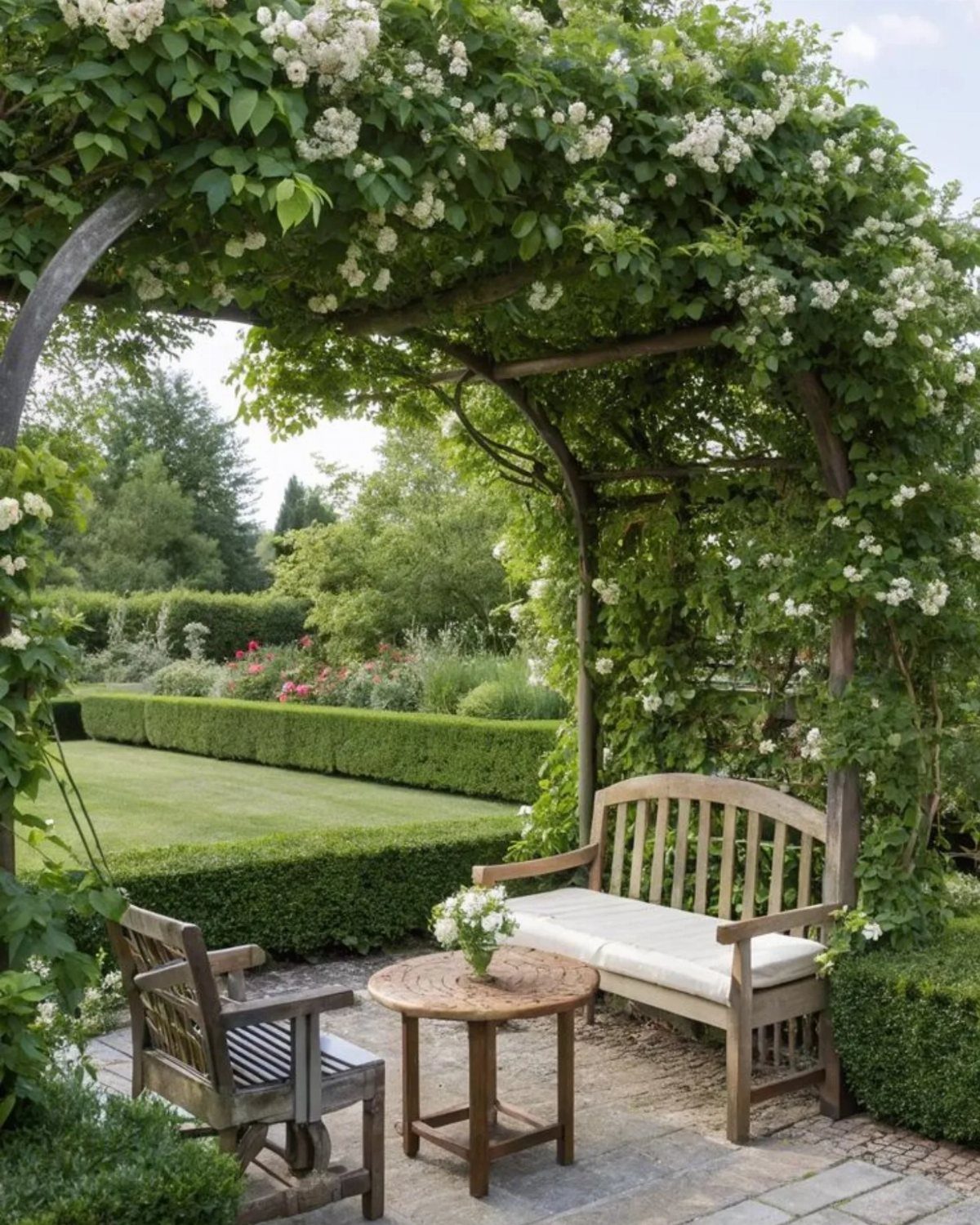
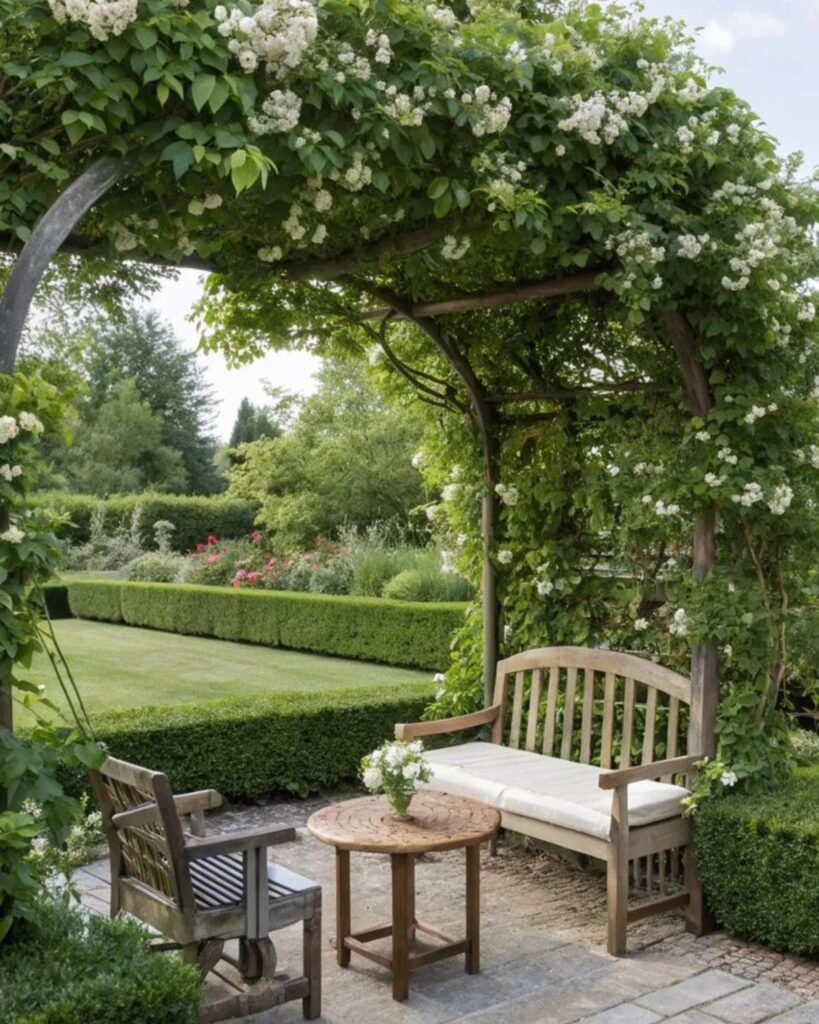
A Lindwyrm bench tucked inside a rose arch trellis turns a plain garden path into a destination worth walking to. The arch trains climbing roses overhead while the bench gives you somewhere to sit once you get there.
This suits renters and first-home owners because the structure is freestanding; you take it with you when you move.
Build the arch from pressure-treated 4x4s or buy a metal kit, then set the bench inside before the roses fill in.
Seven of these in one garden sounds like a lot, but spaced along a hedge line they create rooms without walls.
White climbing roses look right here, though any repeat-bloomer works. Plant far enough from the bench that thorny canes do not swipe at your sleeves.

ELEGANT GARDEN ARCH TRELLIS – Transform your backyard into a beautiful garden retreat with this classic black metal garden arch. Create an inviting entrance along pathways, over garden beds, or among your favorite flowers and climbing plants.

【Sturdy Metal Construction】: Trellis for climbing plants outdoor is crafted from premium steel with a rust-proof coating, maintaining structural integrity through all weather conditions and seasons while protecting your plants and ensuring lasting durability. Even when draped with heavy Halloween cobwebs, hanging ghosts, and glowing pumpkin lanterns, it holds strong through windy October nights.

ELEGANT WHITE GARDEN ARCH TRELLIS – Transform your backyard into a beautiful garden retreat with this classic white metal garden arch. Create an inviting entrance along pathways, over garden beds, or among your favorite flowers and climbing plants.
2. Courtyards with Lighting Features
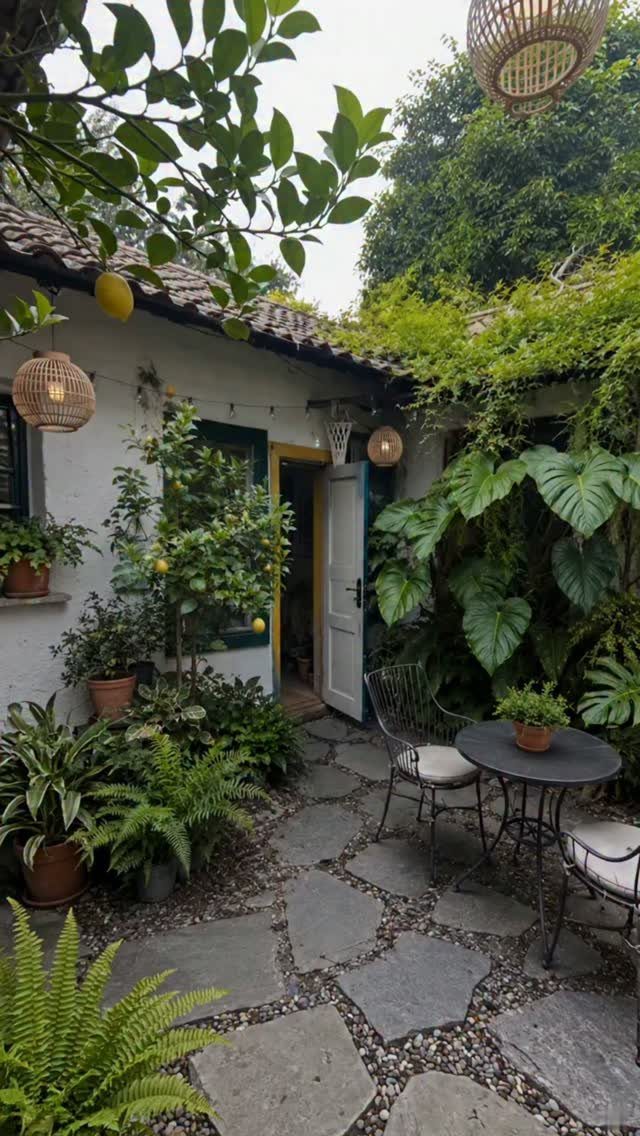
Courtyards feel smaller than they are at noon and larger than they are after dark, and lighting is what flips that switch.
Woven globe lanterns hung from branches or a pergola beam cast downward light that pools on stone without glaring upward.
Bistro seating and potted lemon under that glow tell you the wattage does not need to be high.
Solar lanterns work if the courtyard gets sun; otherwise run outdoor cable to a dimmer switch. Ferns and shade plants thrive in the same low light that makes lanterns look good, so the planting and the wiring share one condition.
Stone or decomposed granite underfoot reflects more light than grass would, something to consider if your courtyard is still bare dirt.
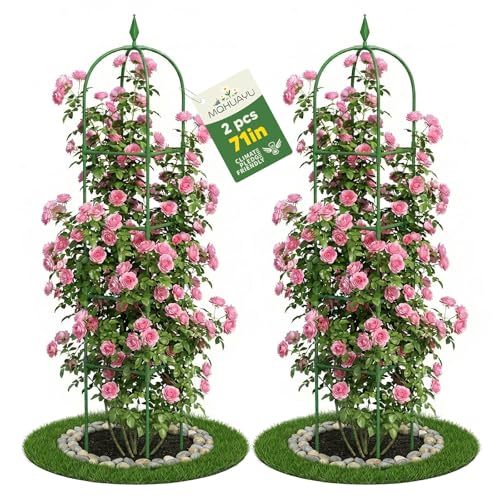
【6 Ft Adjustable Height】This 4-tier garden trellis for climbing plants provides ample space to plant thrive. With removable 4-way connectors, you can easily adjust the height as your plants grow—reaching up to 6 feet tall. It offers the flexibility needed for healthy vertical development

【GARDEN TRELLIS ONGOING SUPPORT】Adjustable Height (6.3FT/75.6") is the perfect size to work as a trellis for climbing plants outdoor. This garden trellis can be adjusted by increasing or decreasing the connecting rings based on different plant heights, giving a more adaptable space for plants to grow
3. Teepee for Bean Plants
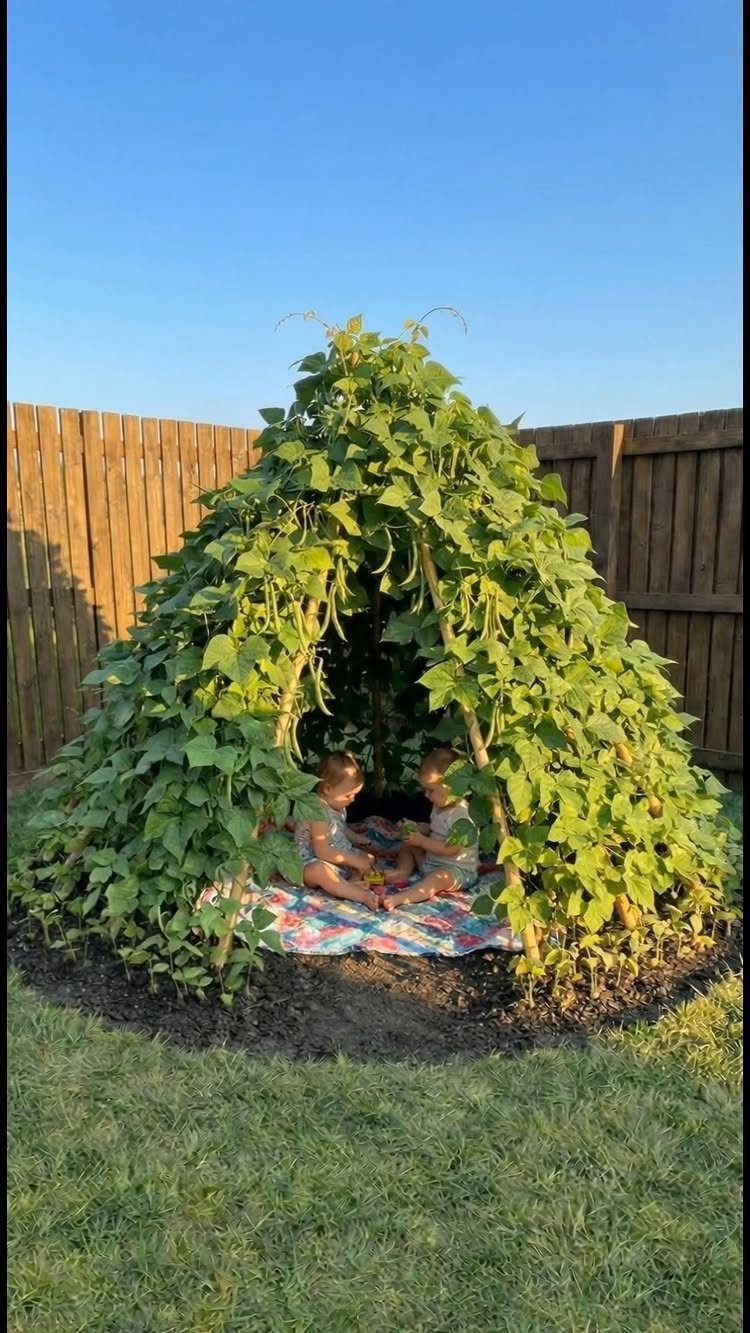
A teepee built for pole beans doubles as a hiding spot for kids once the vines fill in, which they do fast enough that the structure feels like a magic trick.
Set six to eight 8-foot poles in a circle, lash them at the top with jute, and plant beans at each base.
Toddlers inside on a blanket need a wide base, so size the teepee for that from the start.
Wildflowers planted around the perimeter, as the builder did, bring in pollinators that help the bean crop and soften the edge where lawn meets dirt.
Bush beans would be easier but would not give you the room inside. Scarlet runner beans grow fast and give red flowers before the pods set.

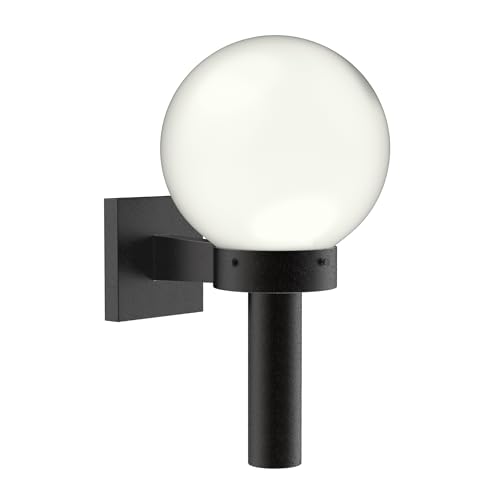
SOPHISTICATION AND DESIGN: Featured in the decorative Outdoor collection, this fixture is the perfect option for brightening up any space in your home. White finish adds a touch of style and interest to any room.

【Good Decoration】10 lumens. These garden solar lights are only used as beautiful decorations and may not illuminate the entire road. The projection of these solar outdoor lights is amazing, the pattern is unique and copyrighted. These yard art decorations with warm light can decorate your gorgeous life with a more romantic atmosphere. This garden lights solar powered waterproof are mainly used for decoration.

Unique Retro Hollow Design with Star Projection: These lantern lights have a retro hollowed-out pattern, provide a fantastic lighting effect at night when lit, and provide a romantic atmosphere for your garden, patio, courtyard. At the bottom of the lantern, there is a star projector film(while others don't have a projector film at the bottom), cast a pretty pattern, and create a warm and pleasant atmosphere for your patio.
4. Secret Garden

A moon gate, that circular stone doorway borrowed from Chinese garden tradition, frames what comes after it and makes the walk there feel like arrival.
Wisteria looks beautiful draped over an arch and is heavy enough to pull down a weak frame.
Stone or concrete block takes the weight; wood rots where vines hold moisture against it.
The gate needs no door, only the ring and the path through, and the path should curve slightly so the full garden does not reveal itself at once. Planting inside stays denser than the approach, which trains the eye forward.
This asks for space and patience; wisteria flowers on old wood, so you are building for year three at the earliest.

SOLAR PLASTIC WALL HANGING LIGHTS: 2 pack modern wall mount lights powered by solar, each with a large warm white LED Edison bulb, they are the ideal decorative outdoor lighting ensure a great effect when the light glows in the dark. Lantern Measurement - 4.9 x 4.9 x 6.2 inches

【 Unique and Stylish 】Exclusive copyright, intellectual property protection. Please note the lantern's dimensions: 3.3”W x 4.5”D x 5”H. If the size is a concern, consider your purchase carefully. These candles lanterns provide you with durability and power, made of professional quality polysilicon solar panel and ABS and Weather resistant: IP65, will last more than 8 hours at night in any weather conditions.

LED solar lantern lights size: 12.5x9x9cm,with a metal clamp and ring. Easy to hang these solar candle lantern lights to anywhere you want. Lighting and decoration your environment.
5. Orangery
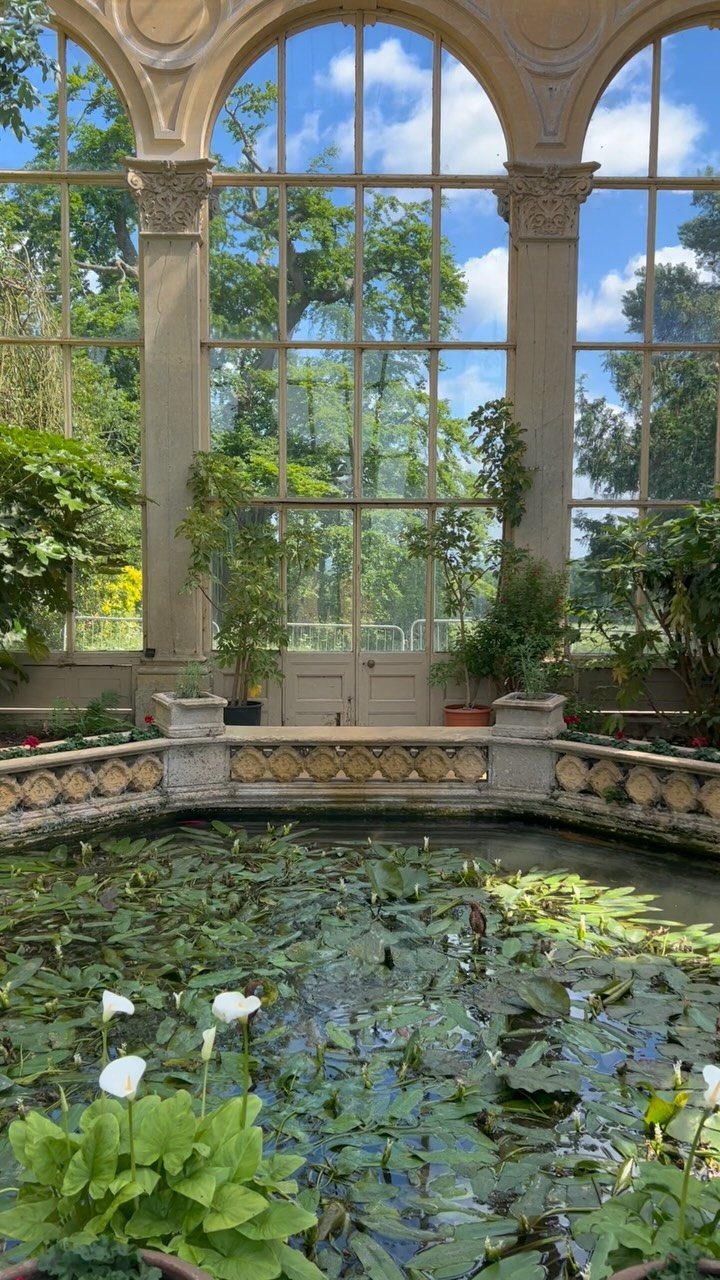
An orangery is a greenhouse with manners: glass walls tall enough for trees, but built to live inside rather than visit.
A stone-rimmed pond under those arches, with calla lilies and potted plants around it, tells you the room is heated enough for water not to freeze.
That is the dividing line.
A greenhouse sheds heat at night; an orangery keeps it, historically through a stove, now through radiant floor or ductwork. The structure is brick or stone to the knee, glass above, and oriented to catch winter sun.
For a first-home owner this is aspiration more than weekend project, though a lean-to version against a south wall gets you partway there. The glass makes it garden, the heat makes it room.

Item Size: Length 5 ft,diameter 1/2 inch and total 6 sets, 20 large clips and 20 small clips include.

1. 【High-Quality Natural Pine】: Our replacement wood pole is crafted from smooth, sanded natural pine, ensuring durability and safety.

[Package Included]: Total 70 pcs of 4 type 0.43Inch Diameter Connecting Joint (10 packs A-type Connecting Joint,20 packs Rotatable Connecting Joint,20 packs Cross Buckle,20 Pack Connecting Joint).It is enough for your need.
6. Dragon Fruits on Rooftops
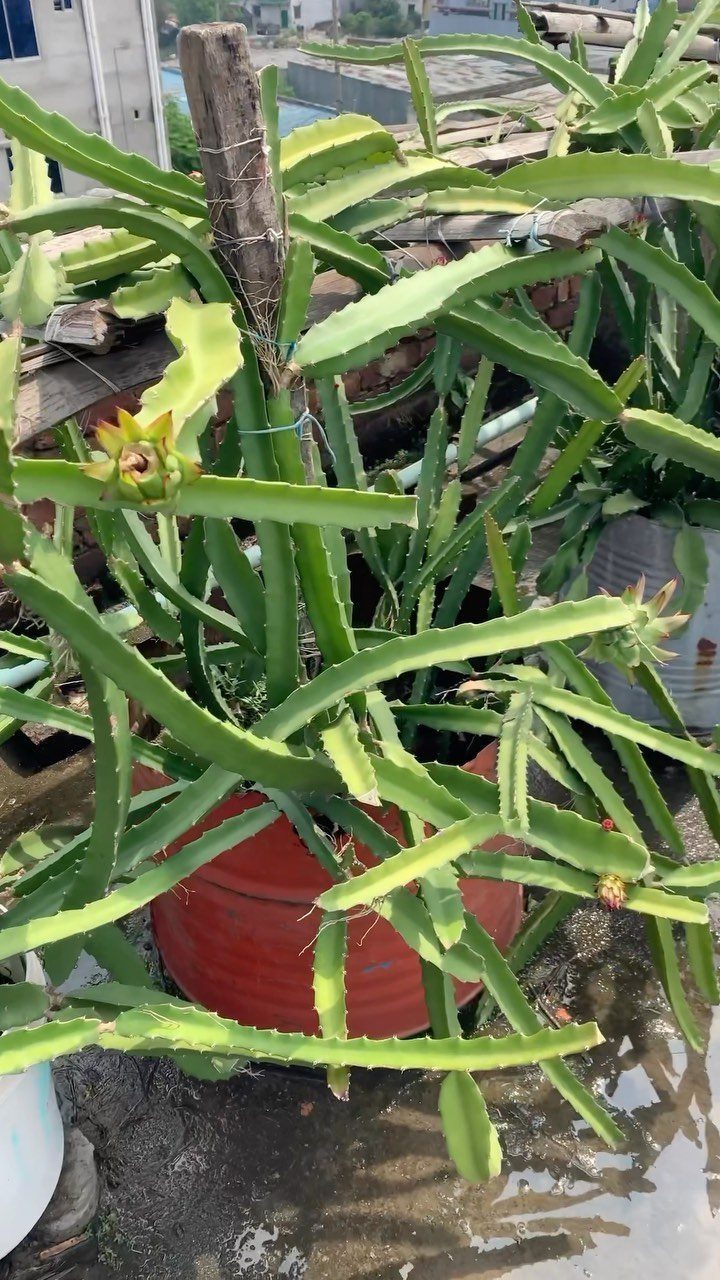
Dragon fruit cactus will grow in a pot on a rooftop if the pot is large enough and the roof can take it.
A red container with wooden stakes for support works because the cactus is epiphytic; it wants to climb something and does not mind poor soil.
Rooftops give sun and drainage, which this cactus needs, but they also give wind and reflected heat.
A concrete surface, like the wet one visible, holds warmth later into the night than soil would, which helps in cooler months. The stakes are temporary; mature plants need a sturdier frame.
Vertical gardening here means the plant goes up, not that it hangs down. One pot produces fruit in year two or three if the summer is long enough.
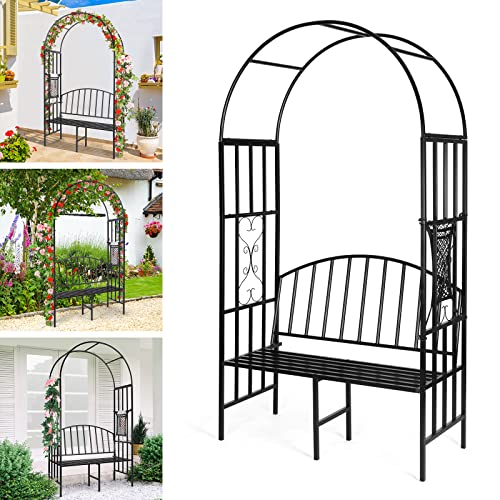
【2-IN-1 ARBOR AND BENCH】Combining a decorative garden arch with a spacious loveseat, this versatile outdoor structure creates a comfortable place to relax while adding an elegant focal point to your garden, patio or yard.

【Durable & Weather-Resistant Construction】: Crafted from heavy-duty steel with a protective rust-proof coating, this garden trellis is built to withstand various outdoor elements. It offers long-lasting strength and reliable support for your climbing plants season after season.
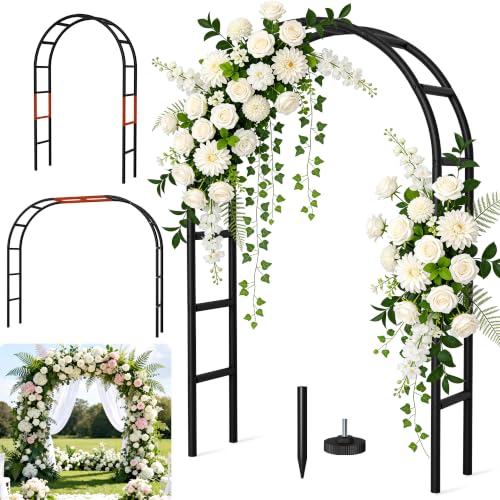
Built to Last & Great Value: Our garden arch is constructed from heavy-duty, rust-resistant carbon steel with 0.6mm walls and a wider 16mm diameter, making it about twice as heavy as most for superior bend resistance, and stability. The coating is electrostatically applied and heat-cured, creating a solid shield that locks out moisture and air to prevent rust and corrosion for years. You get both ground stakes for secure outdoor use and bases for stable indoor use on any flat surface
7. Wildflower Garden Borders
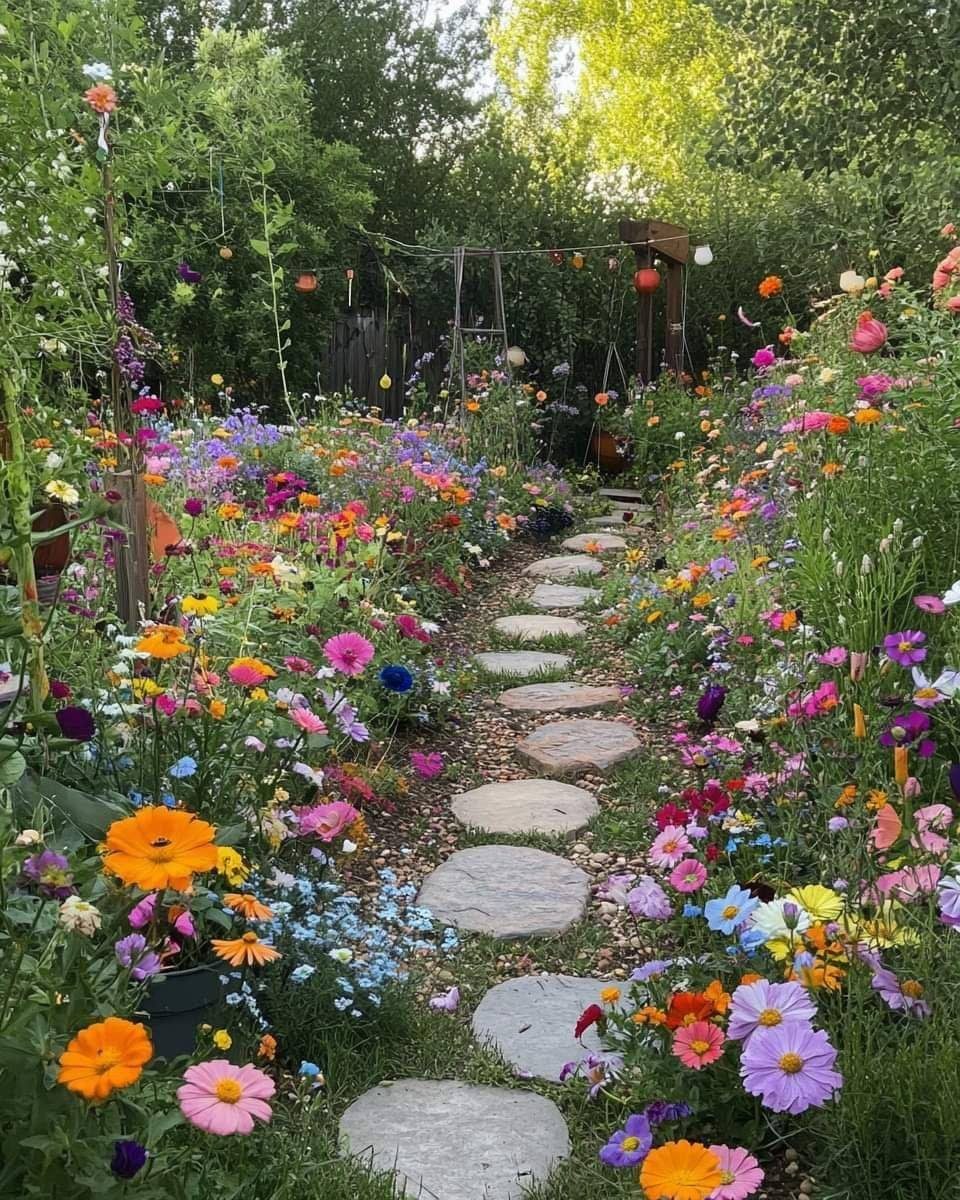
Wildflower borders turn a gravel path into something worth walking slowly. Seed heavy and let the plants sort out who grows where; pink and orange and purple can fill in dense enough that no bare soil shows.
A seed mix labeled for your region is cheap by the bag and covers more ground than you would expect.
Sow in late fall so winter cold breaks the seed coats; spring sowing works but needs stratification in the fridge first.
The stepping stones keep your feet out of the bed, which matters because these plants do not like being stepped on.
Gravel paths need edging or the flowers migrate. A strip of metal or stone buried along the edge stops that.

GATE DOOR DESIGN: The gate of the metal garden abor can be locked with a latch, creating a sense of privacy, you will have a secret garden.

Garden Obelisk Trellis for Climbing Plants Outdoor: This 67 inch tall, 12 inch wide round trellis gives light climbing plants room to grow upward. Use it as a plant support for roses, clematis, cucumber vines, flowering vines, vegetables, and raised garden bed planters.

【GARDEN TRELLIS ONGOING SUPPORT】Adjustable Height (6.2FT/74.4") is the perfect size to work as a trellis for climbing plants outdoor. This garden trellis can be adjusted by increasing or decreasing the connecting rings based on different plant heights, giving a more adaptable space for plants to grow
8. Stone Trough Water Fountain
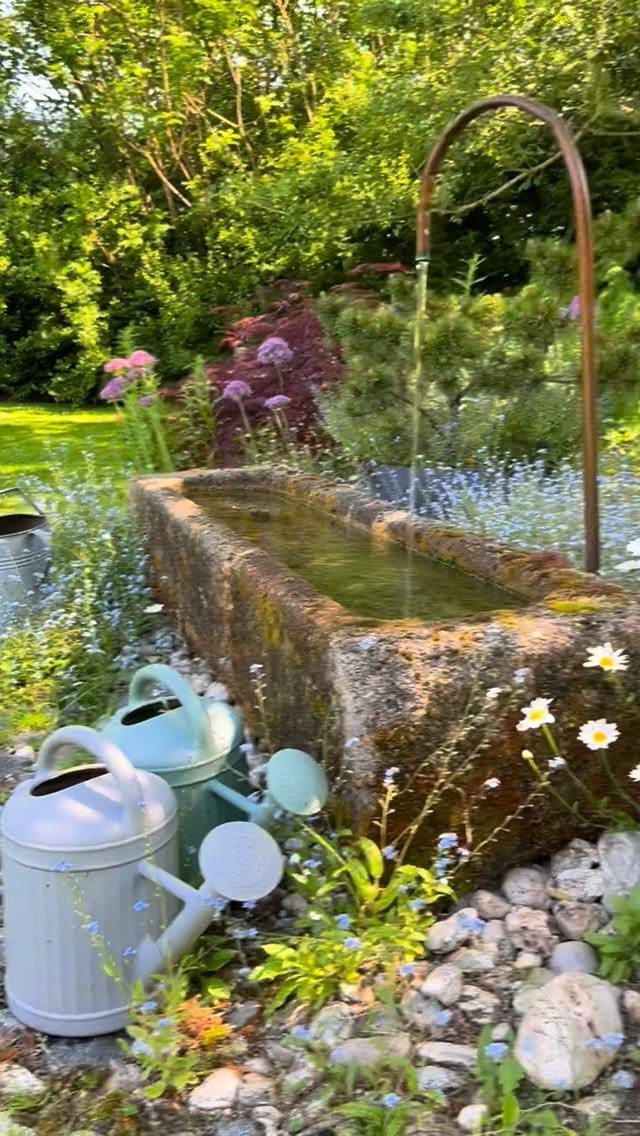
A stone trough fountain is the sound of water without the formality of a pool. A weathered rectangle at ankle height, fed by a curved copper pipe that arcs from behind, hides the plumbing in the greenery.
The trough needs to hold water; old stone sinks or stock tanks from a farm supply work if they are not cracked through.
A small recirculating pump sits in the bottom and pushes water up through the pipe; the ones sold for patio fountains have enough flow.
The copper will green in a season, which most people like. If you do not, brass darkens slower and bronze hardly at all.
Level the trough so the water surface stays even. Mosquitoes need standing water for a week to breed, so the pump running daily solves that.
WARRANTY: Our 1-year Limited Warranty guarantees your complete satisfaction with your purchase and includes professional after-sales customer service support. Make your purchase today to begin your journey to a whole new lighting experience!

SOLAR-POWERED OUTDOOR LIGHTING – Charges in daylight and automatically lights up at dusk, offering decorative illumination without external wiring.

Size: 7.9''(L)*2.4''(W)*33.0''(H). Made of stainless steel and Glass,it look like moon staff .Great for decorating your pathway,garden,lawn or courtyard.
9. Lush Indoor Vertical Garden Wall
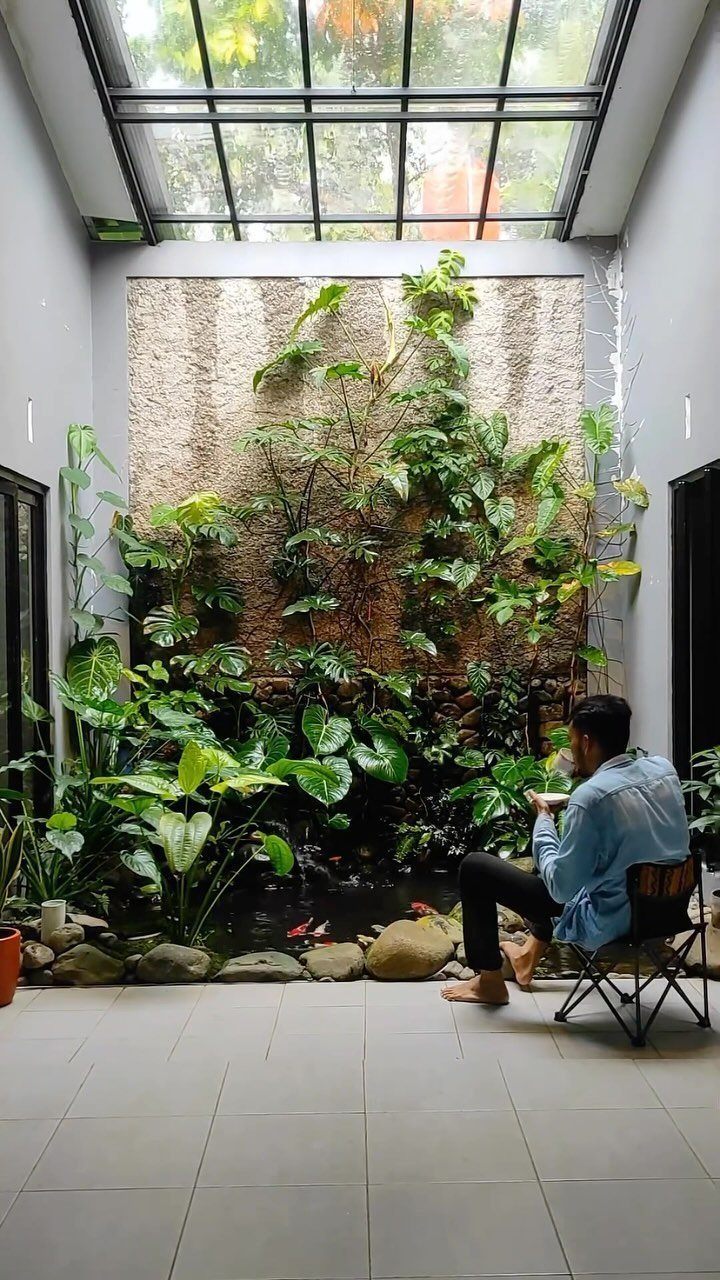
Bright overhead light and something to grip is what makes the planting possible; tropical vines on rough stone need both.
Interior walls painted with moisture-resistant paint or tiled take the watering; bare drywall rots.
An irrigation line at the top, dripping down through the planting, beats hand-watering for consistency and keeps you from missing the back rows. Rough stone gives roots purchase; felt pocket systems work too but need replacing every few years.
This is not a weekend project.
The wall, the waterproofing, the planting and the plumbing come in stages, and the plants fill in over months, not days. A koi pond at the base adds humidity but is its own separate build.

Mini Solar Lantern Replacement Parts: Solar panel diameter 2.87 inches × lamp body height 5.51 inches, 2700K warm white LED bulb, suitable for replacing most small outdoor statue lights on the market. Note: Small size, please verify dimensions before purchasing.

Vivid Dancing Flame with Higher Brightness: These solar lanterns outdoor waterproof features a modern, classic, elegant, and aesthetically pleasing design that mimics the appearance of real candle shapes, designed with a dancing flame effect. These outdoor solar lanterns come with two hanging accessories (a handle and a clip), allowing you to flexibly hang the decorative solar lantern on trees, fences, pergolas, walls, or shepherd's hooks. It can also be placed on tables, steps, or patios to create a warm and romantic atmosphere

【Advanced Diamond Shape】We adopt the advanced Glass Diamond appearance design, combined with realistic Halloween flame light. This novel design of the Halloween flame lamp. The outdoor solar lantern will project mysterious and charming shadows. Thus, creating a unique masterpiece that can combine the warmth and magnificent style of the real flame. It is highly suitable for decorating paths, terraces, balconies, gardens and trees.