These 9 backyard brick BBQ ideas run from a single weekend build to a multi-day foundation project, with budgets that scale the same way.
What settles the choice is not style but your yard’s size and how much cooking you actually do outside: a compact countertop grill saves narrow patios from clutter, while a full pavilion kitchen only earns its keep if you fire it up past Labor Day.
The proving detail that shows this range is real: a two-level pit is the starting point for a first brick project, not three, because multiple levels need careful airflow planning that beginners should not attempt.
[link-whisper-related-posts]1. Classic Brick BBQ with Chimney
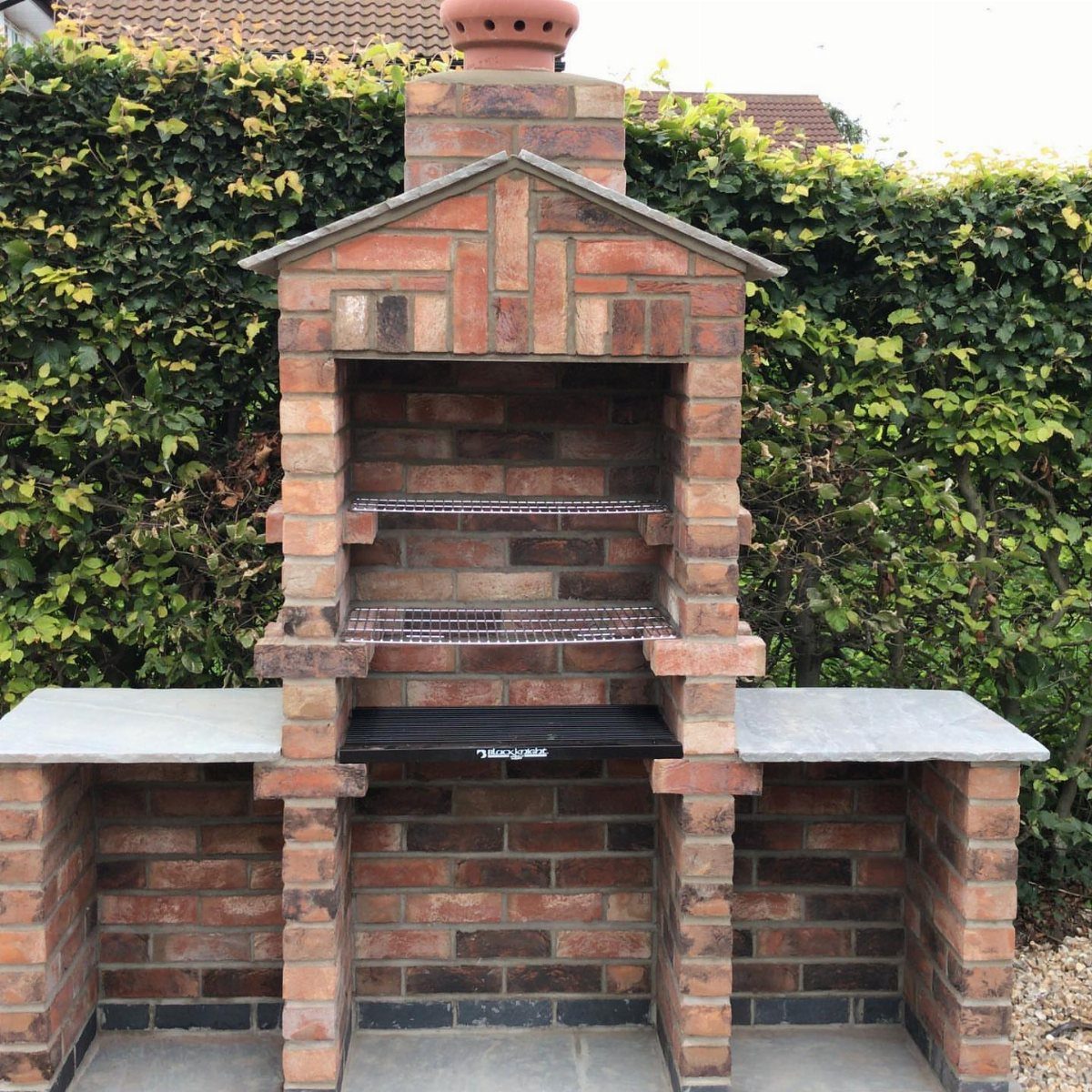
A tall chimney changes how the whole thing cooks, not just how it looks. Smoke rises clear of your face and your guests’, and the draw pulls air through the firebox so the coals burn hotter and more even.
The build starts with clay bricks rated for fire, not standard facing brick that can crack after a season or two. Stone countertops on both sides give you space to rest platters and tools without trekking back to the kitchen.
The arched wood storage nook in some versions keeps your fuel dry and close, though a simple metal box does the same job for less work.
2. Modern Minimalist Brick Grill
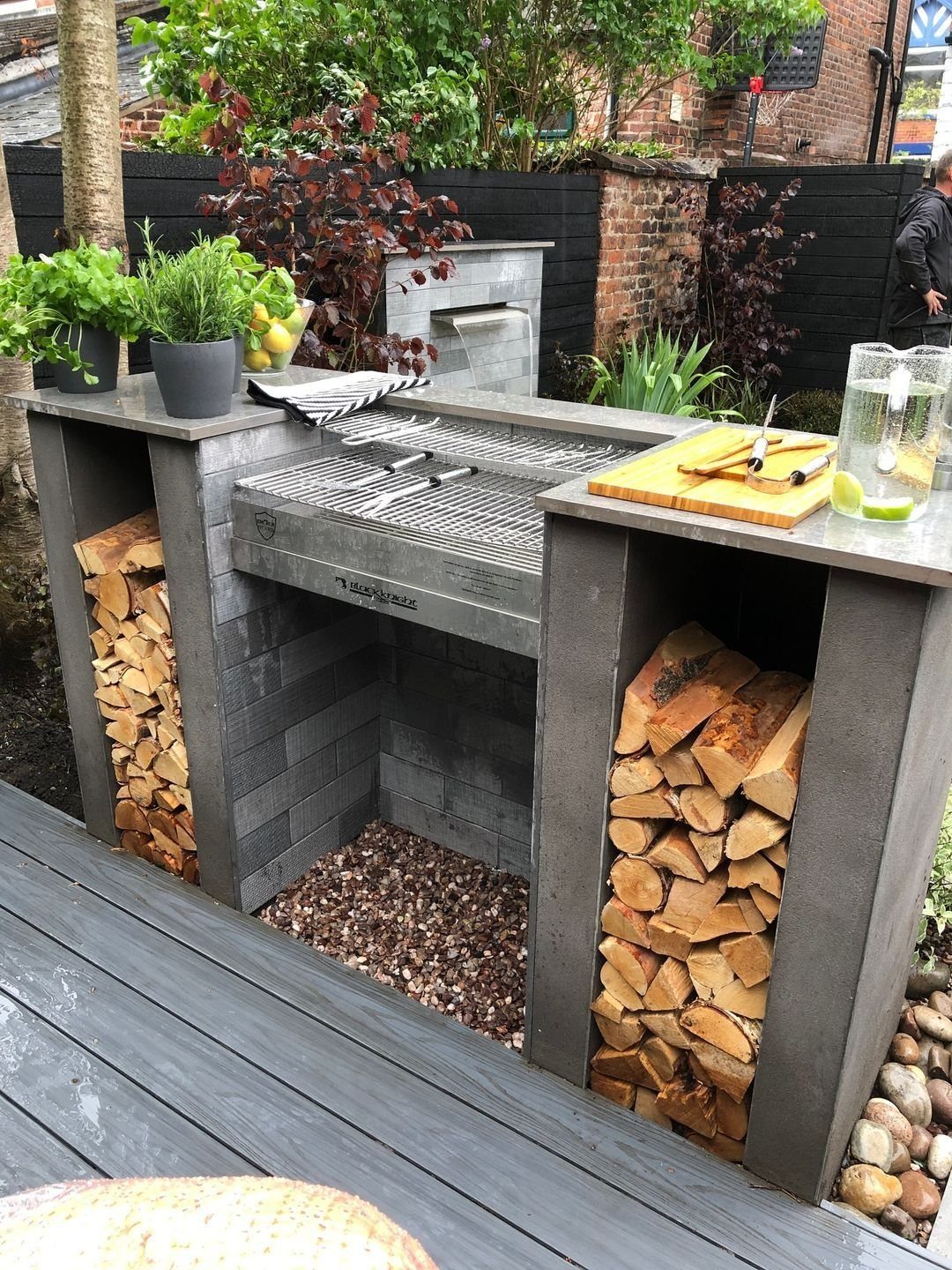
Dark grey brick or stone with concrete countertops reads as one quiet mass instead of a collection of parts, though you will still want a trivet for anything straight off the fire.
That matters on a small patio where every visual line counts. The firewood cubbies built into the sides are not just storage; they give the structure its width and balance without adding decoration for its own sake.
Stainless steel grates lift out for cleaning, and the concrete top works fine for staging as long as you set hot pans on a trivet first.
I would skip any tile or patterned surface here; restraint is the whole idea, and one busy element breaks it.
3. Rustic Stone and Brick Combo BBQ
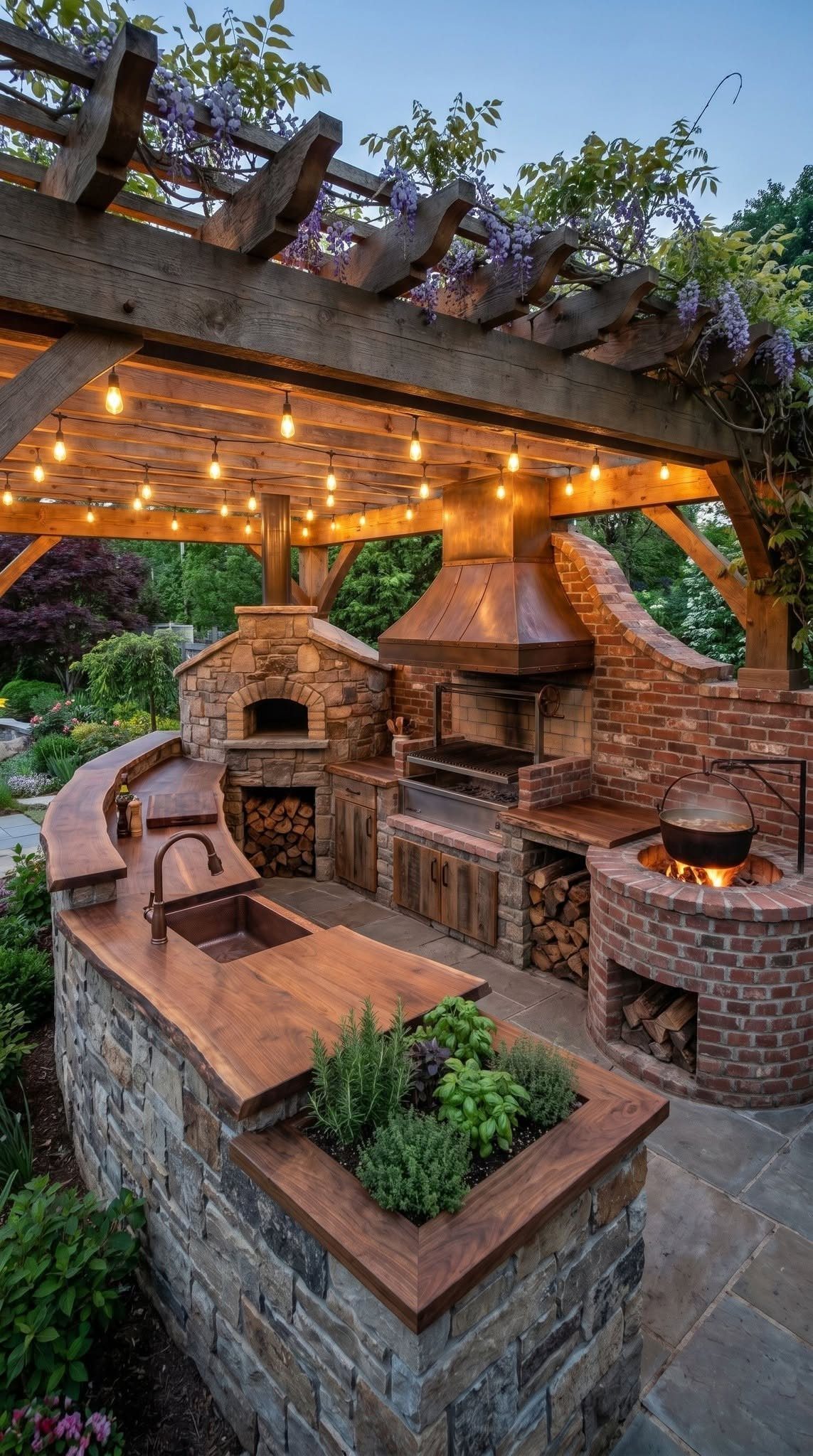
Rough stone and brick together give a kitchen that has been there longer than you have.
The mix works because the materials share weight and warmth even when their textures fight; smooth brick against irregular stone needs a third element, like a copper hood, to bridge them.
A pergola overhead with string lights turns the whole area into a room after sunset, which is when most outdoor cooking actually happens.
This scale wants a larger yard; the same materials squeezed onto a narrow deck look like a costume. If your space is tight, choose one material and let the plants do the softening.
4. Built-In Brick BBQ with Seating
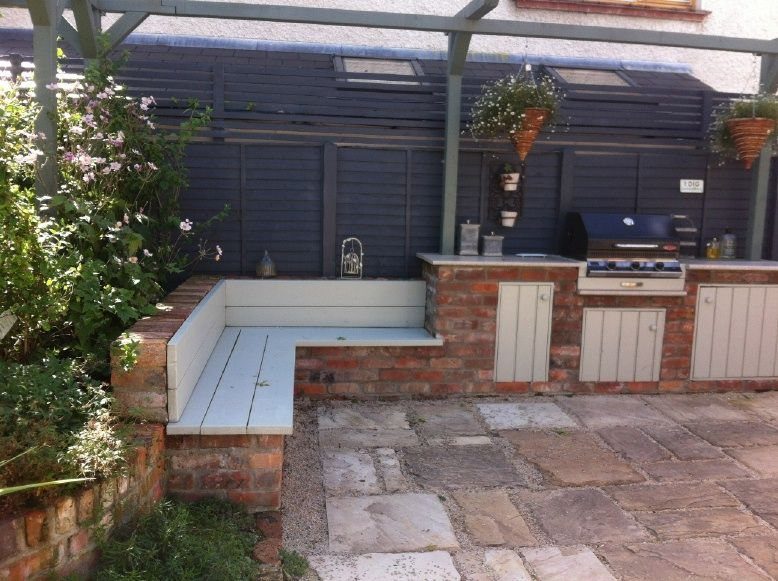
The bench attached to the brick structure is the social engine of this design.
Guests sit at a right angle to the cook, close enough to talk without anyone breathing smoke. Painted wood for the seating softens the masonry and gives you a color to repeat on shutters or planters elsewhere in the yard.
An L-shape keeps the cook open to guests; a U would cup you on 3 sides and feel more like a bar, which suits some hosts better than others.
Cabinet doors below the grill hide the tank or tools, though open shelving costs less and dries faster after rain.
5. Multi-Level Brick BBQ Pit
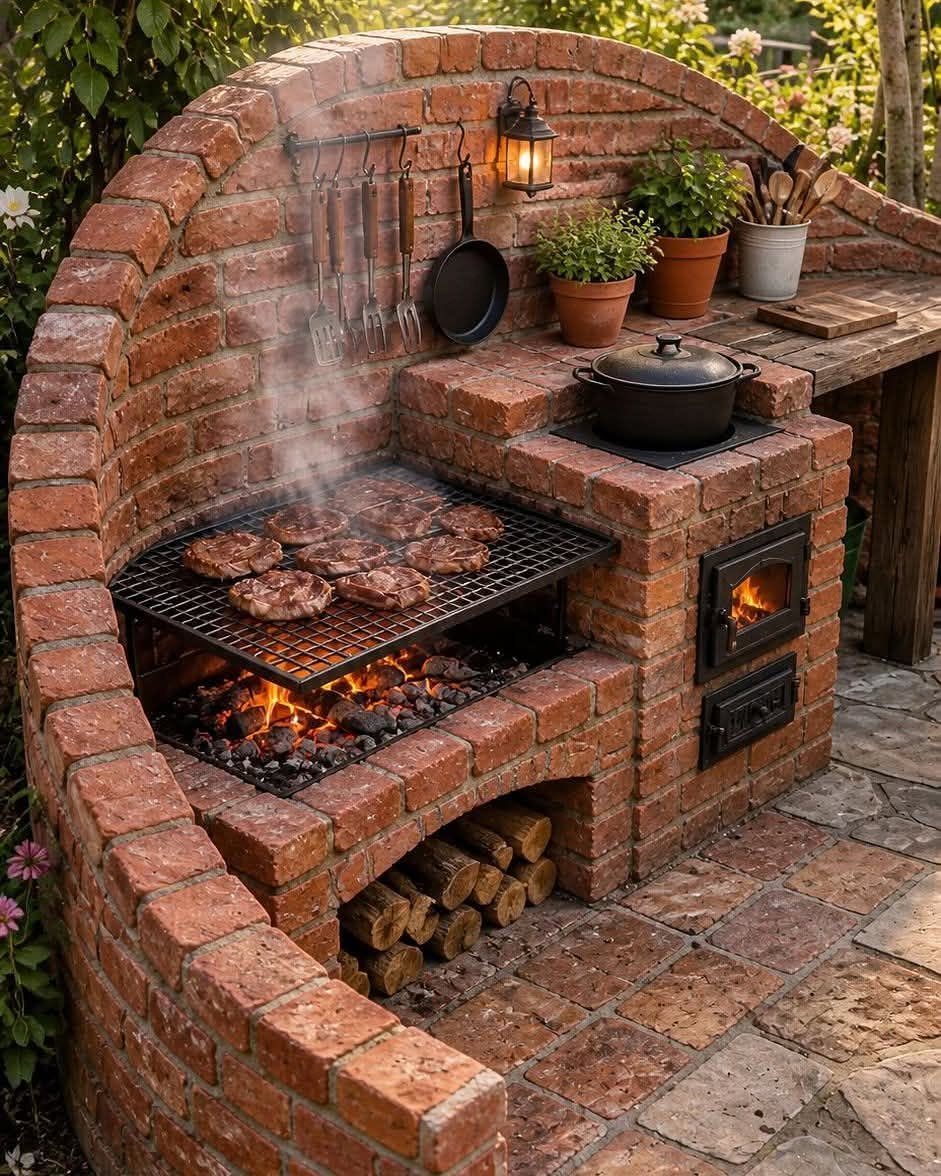
Different heights let you sear over screaming coals on one level while a pot simmers on a gentler surface nearby.
A raised side stove with pot and utensil hooks is not an extra; it is what keeps you from crouching over the fire to tend a sauce.
Wood storage below the main chamber puts the fuel where the heat can start it drying before it burns.
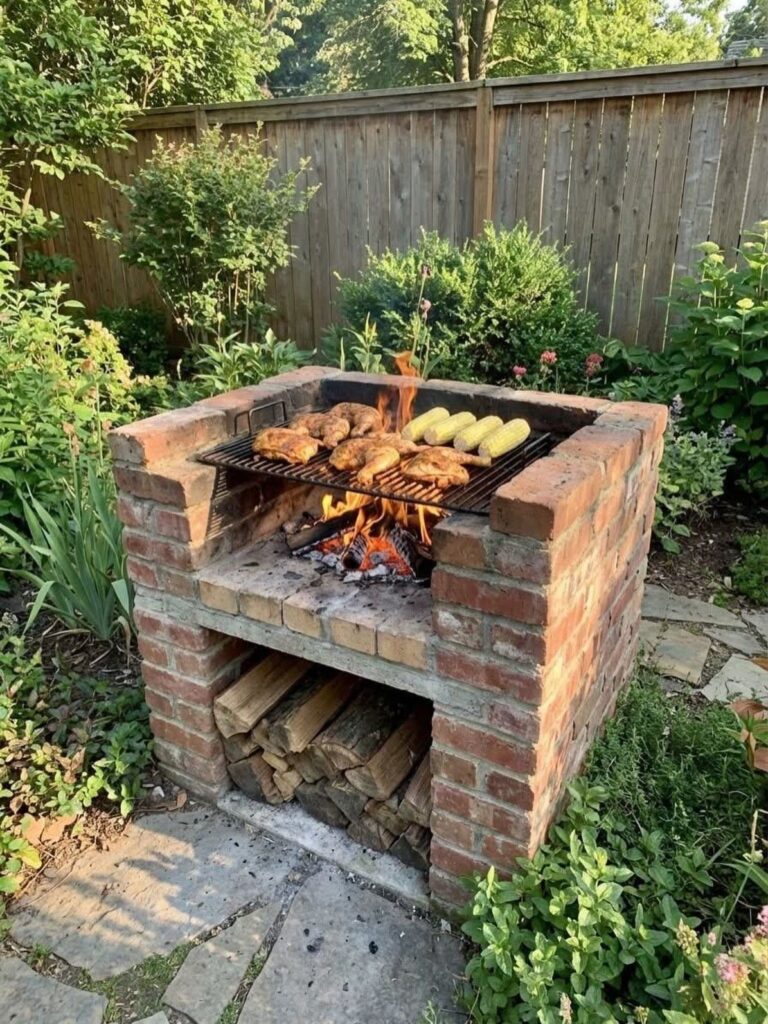
This build runs larger than it photographs, and the multiple levels need careful planning so each gets its own airflow. For a first brick project, I would start with two levels, not three.
6. Pizza Oven and Brick BBQ Combo
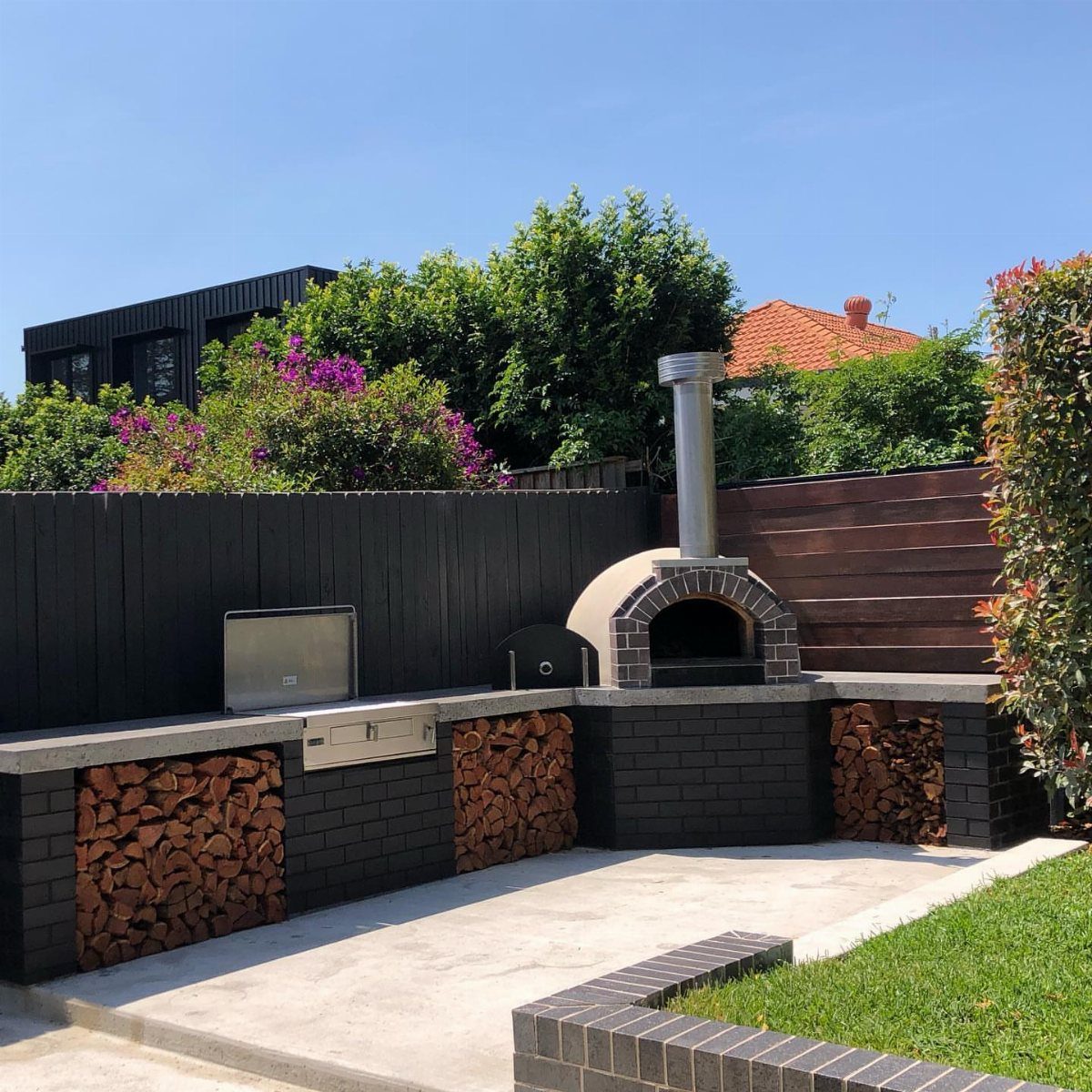
A pizza oven and grill in one structure means you are building for two different heats. The oven wants mass to hold temperature steady, the grill wants quick airflow to boost and drop heat fast.
Brick handles both if you plan the chambers separately: the oven as a dome or arch with its own chimney, the grill open below a simpler hood.
Concrete countertops bridge the 2 sides and give you a landing zone for dough or rested meat. This is more weekend project than single Saturday; the foundation alone needs several days to cure before you stack a single brick.
7. Brick BBQ with Side Burner
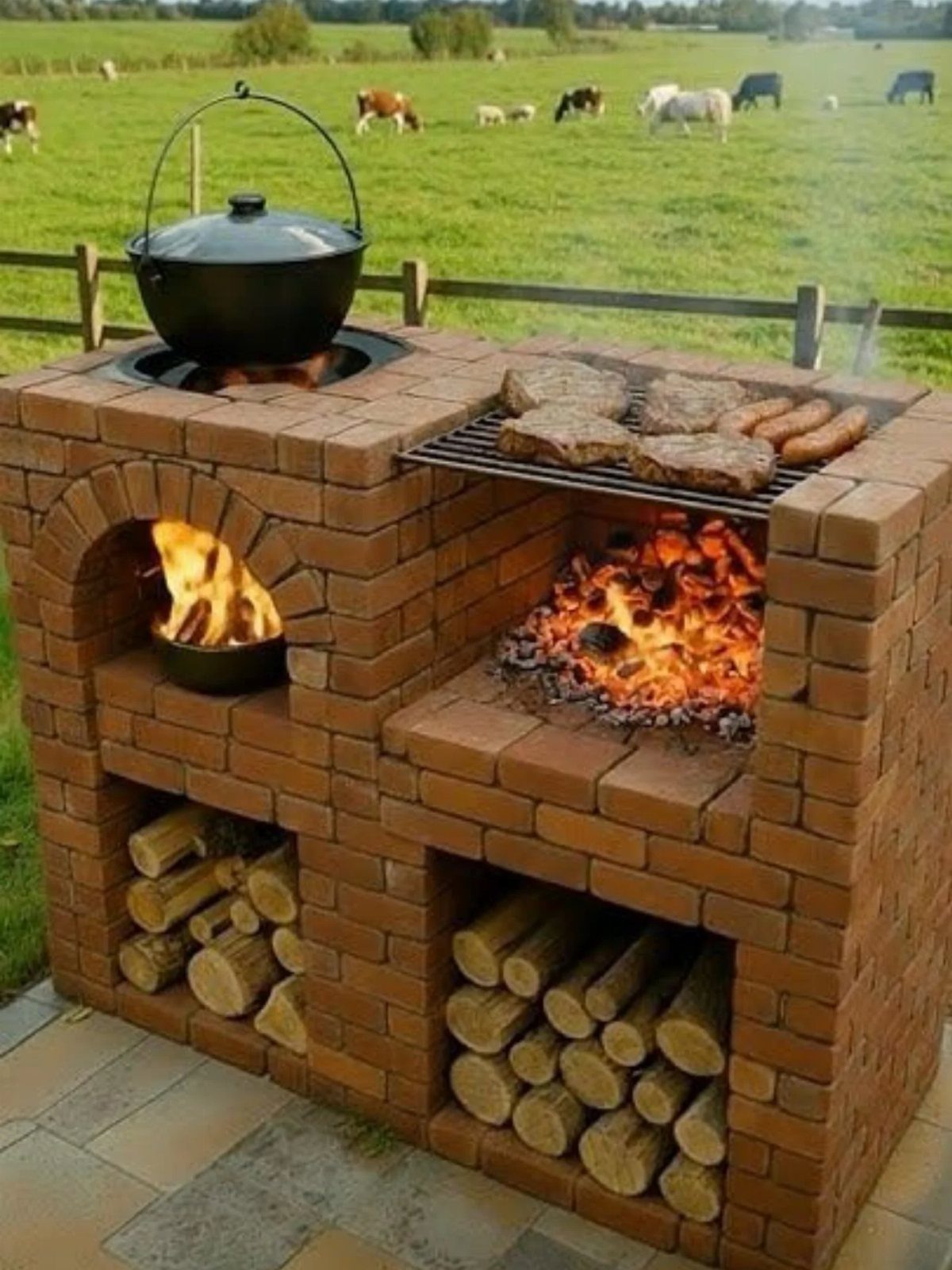
A side burner built into the brickwork saves you from running inside for a pot of beans or a pan of peppers. The burner sits at counter height, not down in the firebox where you would crouch to stir.
Red brick with an open-fire side burner holding a cauldron gives you 2 temperatures to work with: searing heat over the coals, controlled flame on the side.
Stainless steel for the burner insert resists rust better than cast iron in open weather.
I would put the burner on the left if you are right-handed; you reach for the pot more often than the grill tools. A matching brick prep station on the far side keeps the work triangle tight.
8. Covered Pavilion Brick BBQ
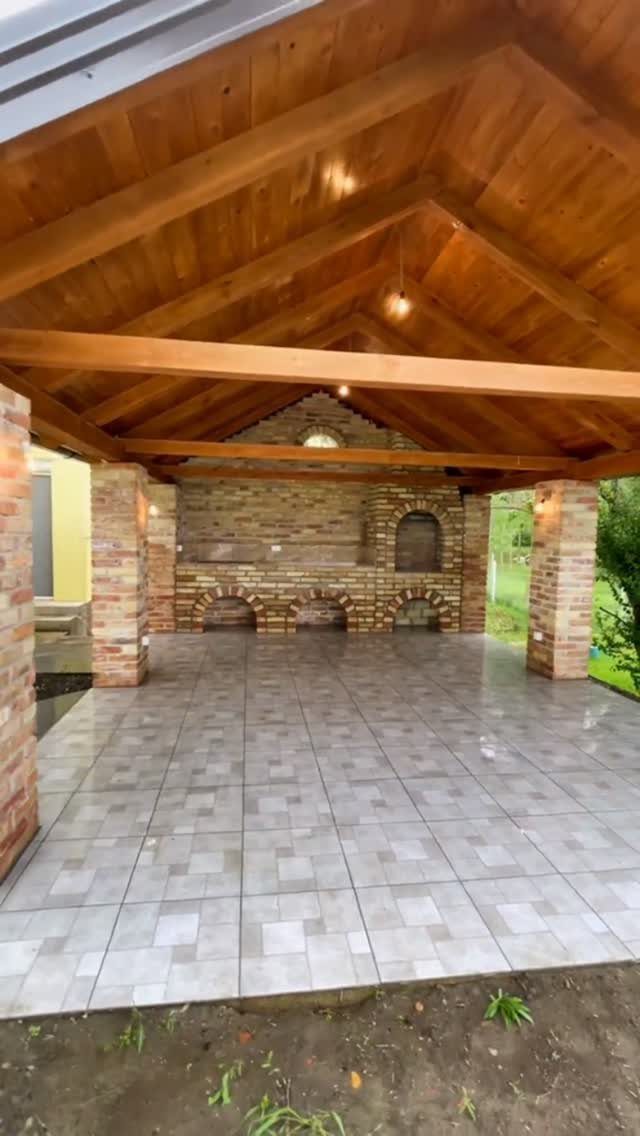
A roof over the cooking station means you fire it up in March drizzle and August sun alike. The wooden beams and tiled floor in the visible version turn a grill into a kitchen that happens to be outside.
Brick pillars carry the roof load so the cooking wall does not have to; that lets you build the back structure as a veneer over block rather than full structural masonry.
Wood storage compartments under the counter stay dry, and the integrated sink runs to a simple dry well or a hose bib.
This scale wants a budget and a yard to match; the pavilion framing costs more than the brickwork. For a tighter space, a pergola with a retractable canopy gives some of the shelter without the full build.
9. Compact Countertop Brick Grill
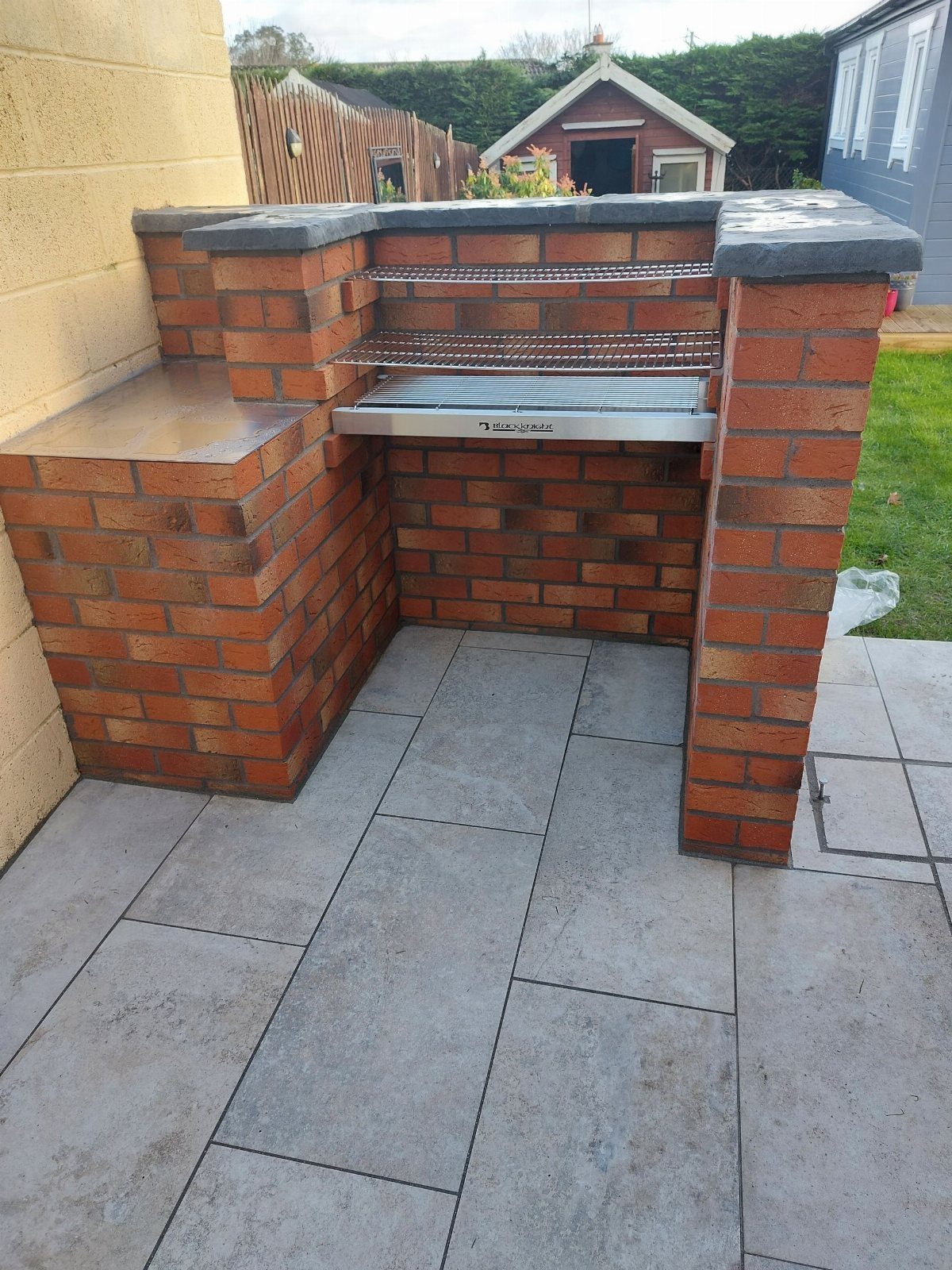
A low brick counter with a built-in grate sits where a full island would crowd the patio. Dark slate caps on red brick give the structure its visual weight without the bulk of a chimney or oven.
The metal side counter folds down or lifts off for winter storage, which matters when your whole cooking station barely clears the patio door.
Stainless steel for the insert lasts longer than painted steel in rain and ash. This is the entry point for a first brick project: a weekend of laying up a simple box, another day for the grout and caps.
I would check that my patio slab can take the load before I stacked the first course; a full brick counter runs heavier than it looks.