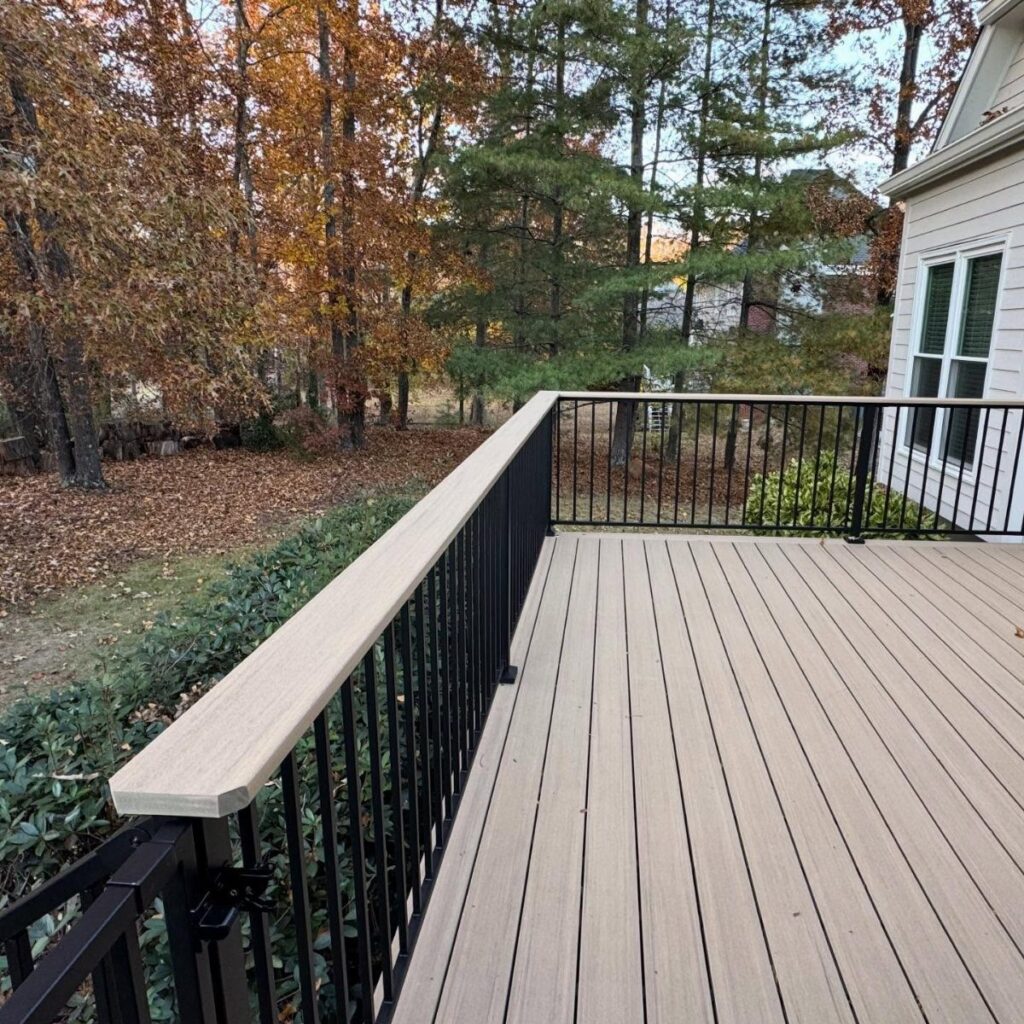
Composite wood deck ideas run from a pressure-treated alternative with textured surfaces to layouts with hidden fasteners, built-in planters, multi-level railings, and covered patios that keep the boards under a roof.
The right one depends on whether you are building at grade, raising a balcony off existing joists, or trying to cut a diagonal or geometric plank pattern without wasting half your material order.
Trex and TimberTech both show up in the numbers below, capped and uncapped, because the shell is what decides whether you are cleaning pollen off a sleek grey or tan finish or replacing boards once the color fades on an uncapped light brown grain.
[link-whisper-related-posts]1. Pressure-Treated Wood
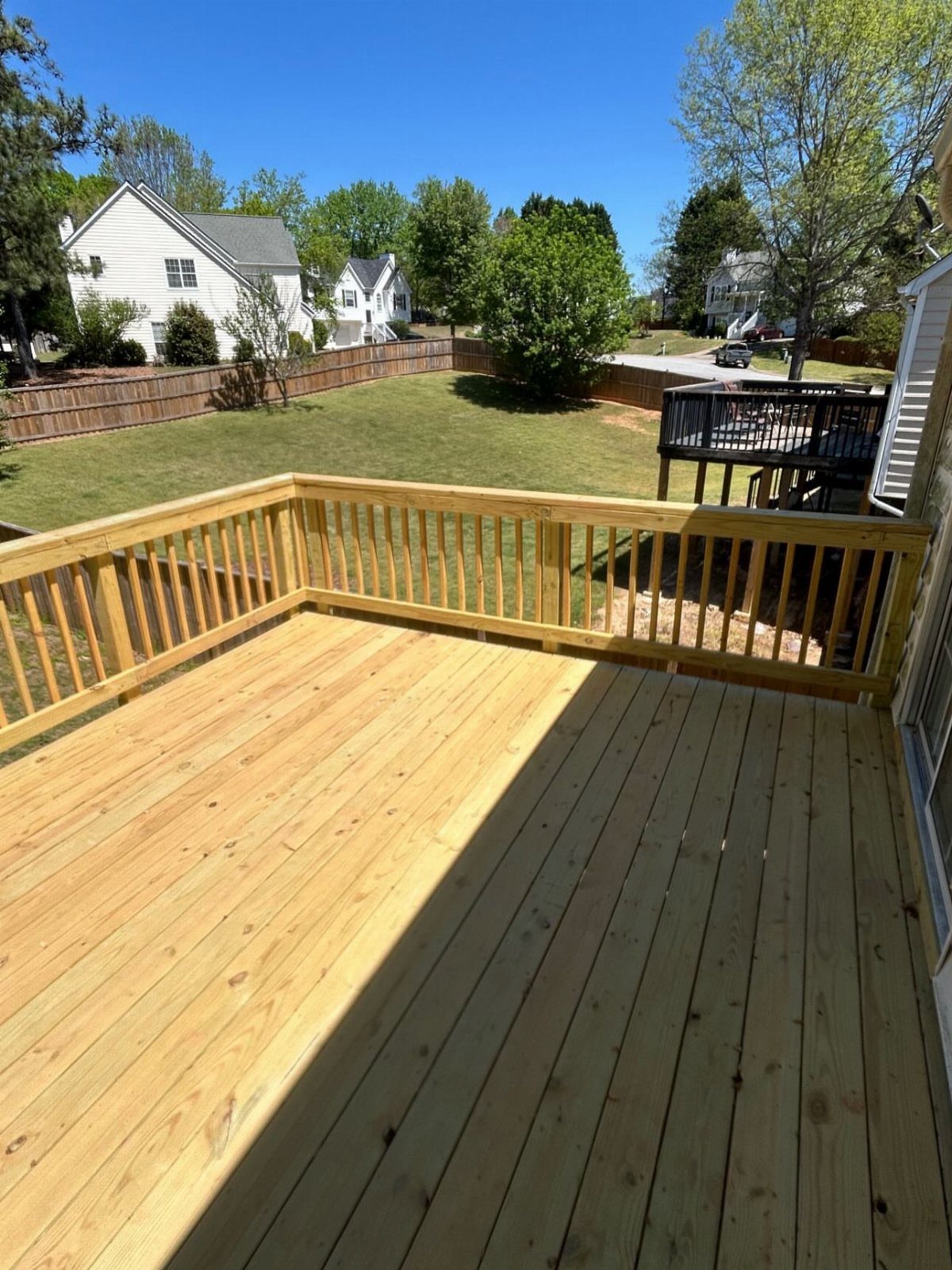
Pressure-treated wood still gets chosen for most budget decks because it costs less than anything else that spans a joist bay.
Cedar and redwood climb to $30 to $45, while composite like Trex or TimberTech lands at $30 to $60 and can hit $60 to $80 with premium cool-decking features.
The math only works if you count your own labor as free and you actually do the maintenance.
I have watched neighbors swear they will stain on schedule, then watched the graying start while the promise is still fresh. Composite costs more now so you do not pay later in weekends with a brush.

【What You Will Get】50 x Hidden Fasteners Nylon Clips. Each fastener is equipped with a metal countersunk square slotted screw, sufficient quantity can meet your use and...
2. Textured Surfaces
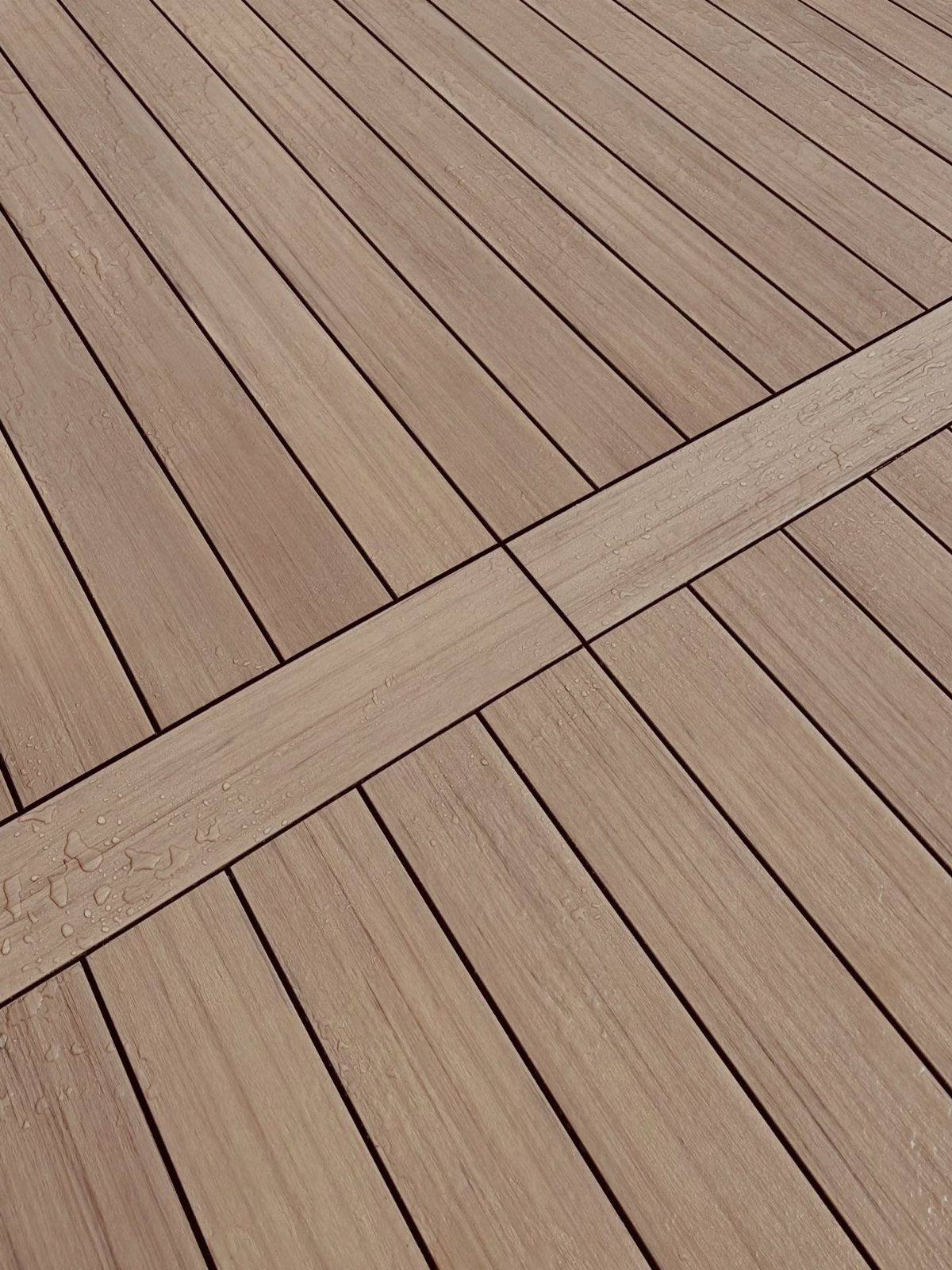
Smooth composite can get slick when wet; this surface gives your shoe something to bite.
If you are building near a pool or in a yard where morning dew sits, check the slip rating before you buy.
Brands vary. The same texture that helps with water will not save you from a dog’s claws or a south-facing wall of afternoon sun, so match the surface to the actual problem your deck faces.
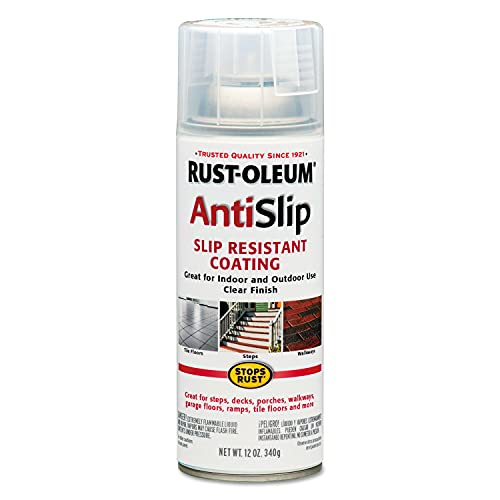
Ideal for application on inside or outside metal, concrete, ceramic and wood surfaces including stairs, pool decks, ramps and walkways

DESIGNED FOR SAFETY - Lightweight Aluminum Safety Toe, Slip-Resistant Sole, No Exposed Metal

WEATHER-RESISTANT WATERPROOF BUILD — Made from UV-stabilized plastic, these 12"x12" deck tiles resist warping, cracking, and fading through sun, rain, and snow. Unlike wood or composite that rots and absorbs moisture, this waterproof construction stays dry and stable year after year — no sanding, staining, or sealing needed. A worry-free patio floor for homeowners who want a great outdoor space without the constant upkeep
3. Hidden Fasteners for a Seamless Look
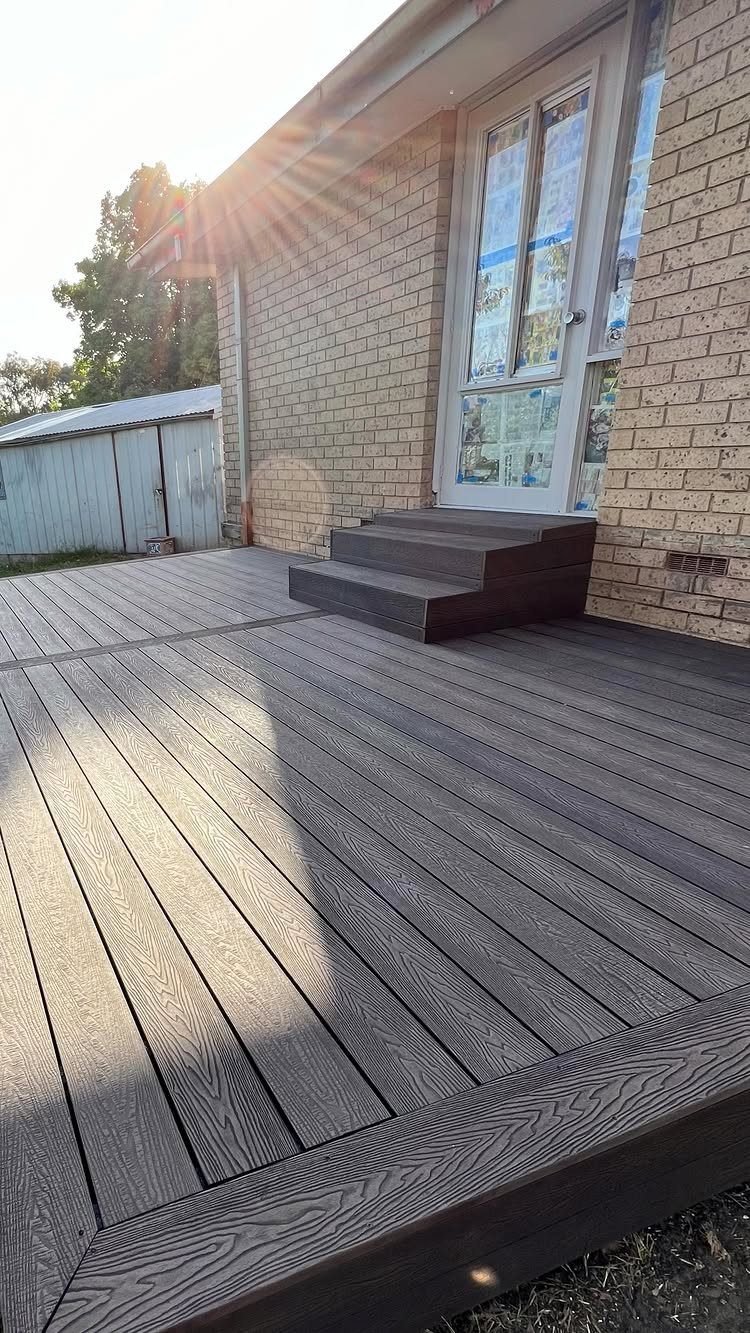
The fasteners sit in grooves along the board edges, so the face stays clean.
A hidden fastener system speeds the work once you get the rhythm, though the boards themselves run heavier than pressure-treated pine and a second pair of hands helps on the longer pieces.
Standard face screws cost less. I would spend the extra on fasteners for any deck where you will notice the screw line from a kitchen window.
The smooth face also matters if you are the type who walks barefoot and does not want to find a popped head with your heel.

【Safety & High Impact Resistance 】– Prioritize the safety of your family and guests. This deck railing kit is designed to comply with strict IBC/IRC/ASTM building codes. The reinforced aluminum posts provide exceptional load-bearing capacity (withstands up to 500 lbs impact), preventing dangerous accidents.

【Safety & High Impact Resistance 】– Prioritize the safety of your family and guests. This deck railing kit is designed to comply with strict IBC/IRC/ASTM building codes. The reinforced aluminum posts provide exceptional load-bearing capacity (withstands up to 500 lbs impact), preventing dangerous accidents.

Easy Installation: Install in 3 simple steps with included accessories—no welding or cutting required! Pre-drilled holes and a positioning template ensure perfect alignment on wood, concrete, tile, or marble surfaces in under 30 minutes.
4. Built-In Planters and Benches
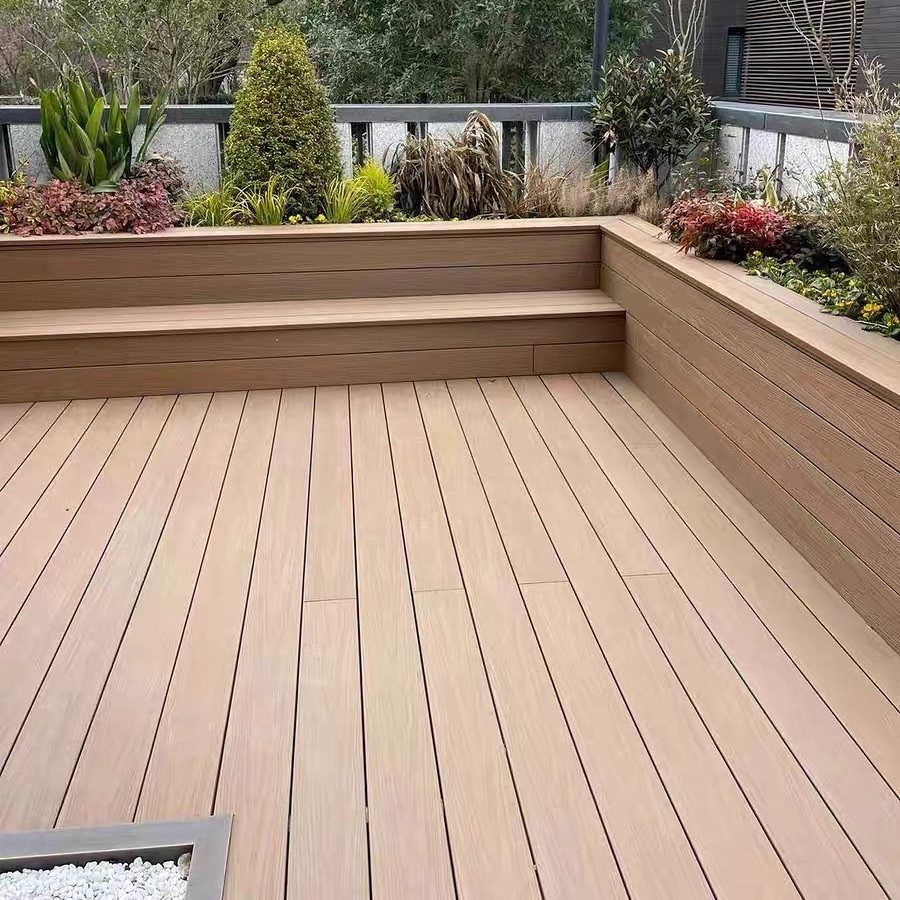
Built-in benches and planters turn the deck into a single piece of carpentry instead of furniture you replace every few seasons.
A bench built as a step saves depth in a narrow yard; planters at seat height let you tend them without bending.
Plan the box bottoms to drain.
A planter that holds water will rot whatever it touches, composite or not. I would line the soil box with landscape fabric and leave a gap between the planter walls and the deck boards so the structure can breathe.

100% FSC CERTIFIED MATERIAL: The interlocking deck tiles are made from responsibly sourced, FSC certified wood plastic composite, which reduces the excessive demand for wood

Easy to snap together, kids can even do it

3 PACK DECK SPACING TOOLS FOR WOOD OR COMPOSITE DECKING - Plank Rite sets the correct amount of space between boards for wood or composite decking boards according to manufacturers specification.
5. Multi-Level Layout with Railings
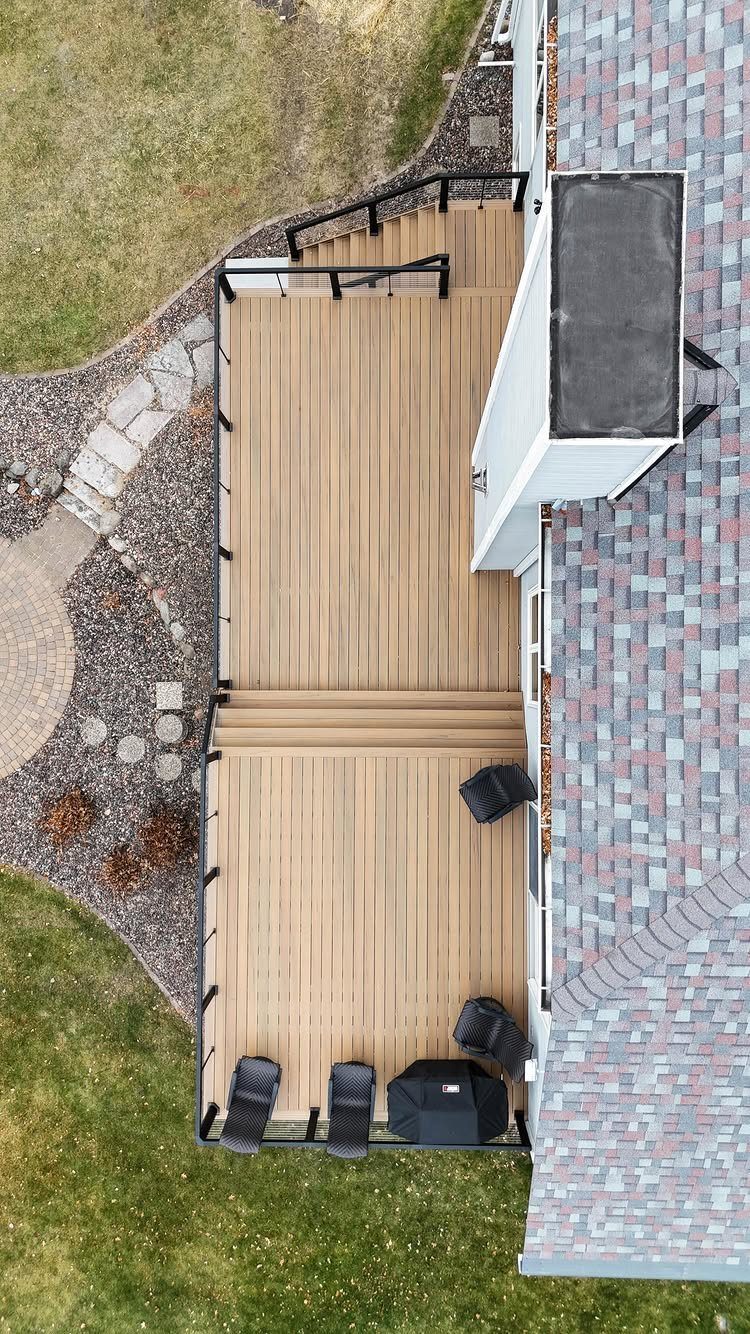
A multi-level deck breaks the flat box into rooms without walls. Black railings read as thin lines from above, which keeps the view open across the levels.
The cost jumps with each change in height. You need footings, posts, and railings for any surface high enough to hurt a fall, which is most codes.
I would build the lower level as a patio or at grade if the yard allows it, and save the elevation for the spot outside the kitchen door where you actually want to sit.

Space-Saving Design with a Natural Matte Finish: Features a versatile design that maximizes your outdoor space while providing an attractive natural matte appearance
6. Diagonal Plank Pattern
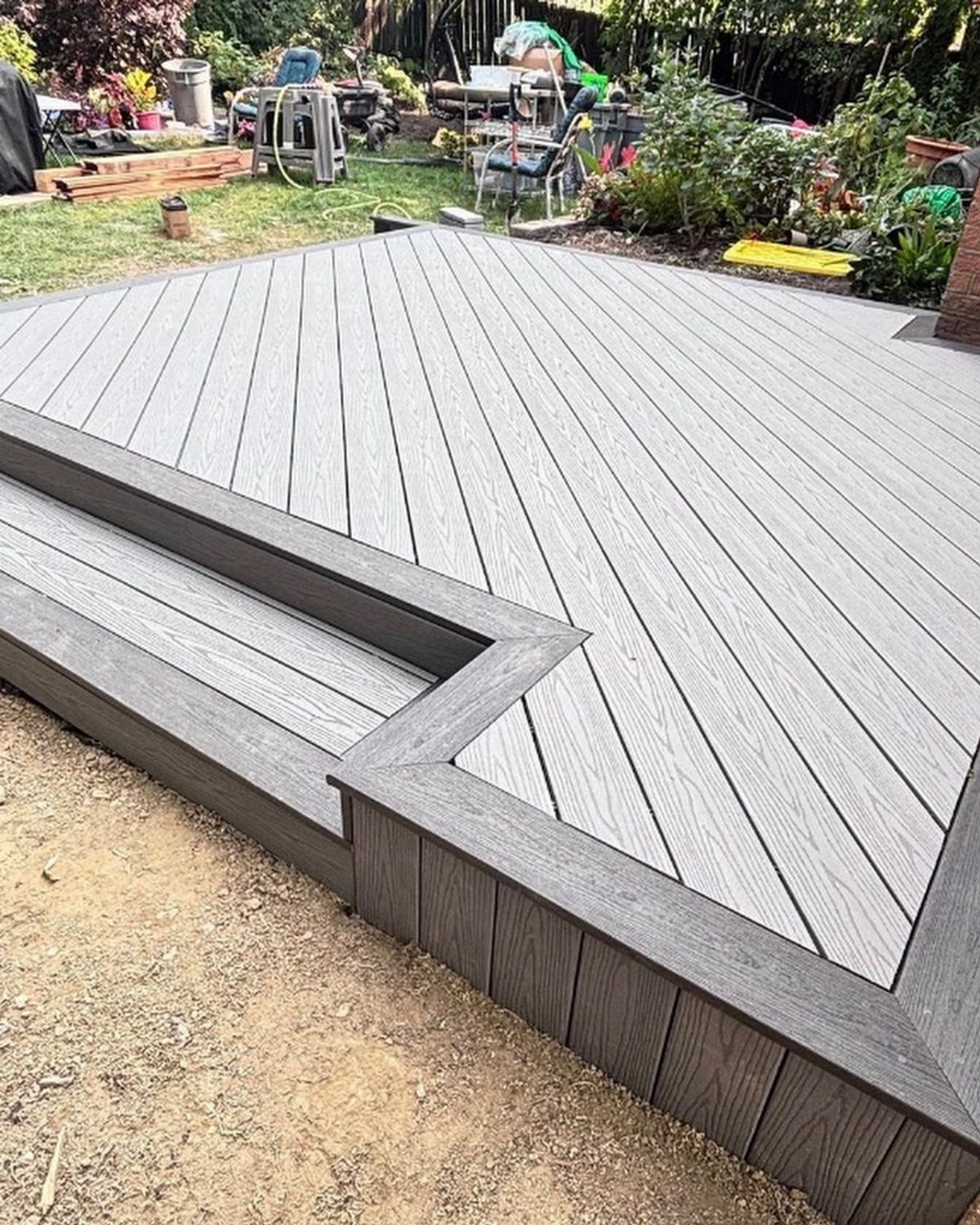
Diagonal planks ask more of every cut and waste more board ends, but the floor looks laid by someone who cared. Dark trim frames the field and hides the border joints.
Order extra material; diagonal cuts burn through boards faster than square layouts. A sharp angle turns a long board into a shorter usable piece fast, and the pattern only works if the lengths stay consistent across the span.
I would build the frame square, snap a true diagonal line, and let that line guide every board rather than trusting the house wall.
7. Covered Patio Composite Decking
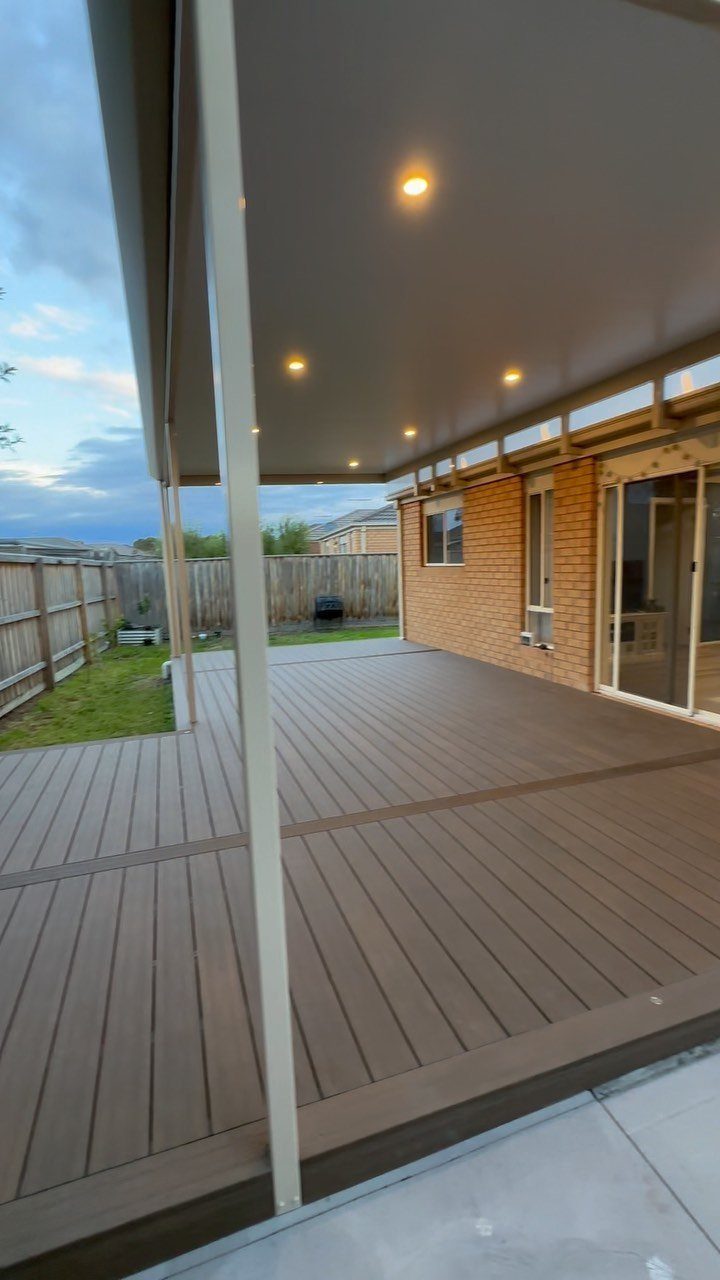
A covered patio lets you use the deck when rain would send you inside.
The roof also blocks the sun that fades most materials, so capped composite makes sense here: the protective shell holds color longer than uncapped boards, and the extra cost lands where it actually shows.
Recessed lights in the ceiling extend the usable hours without stealing headroom.
Plan the wiring before the ceiling goes up; retrofitting means opening finished surfaces. I would run the deck boards parallel to the house wall so water drains toward the yard, not toward the brick.
8. Sleek Grey Backyard Deck
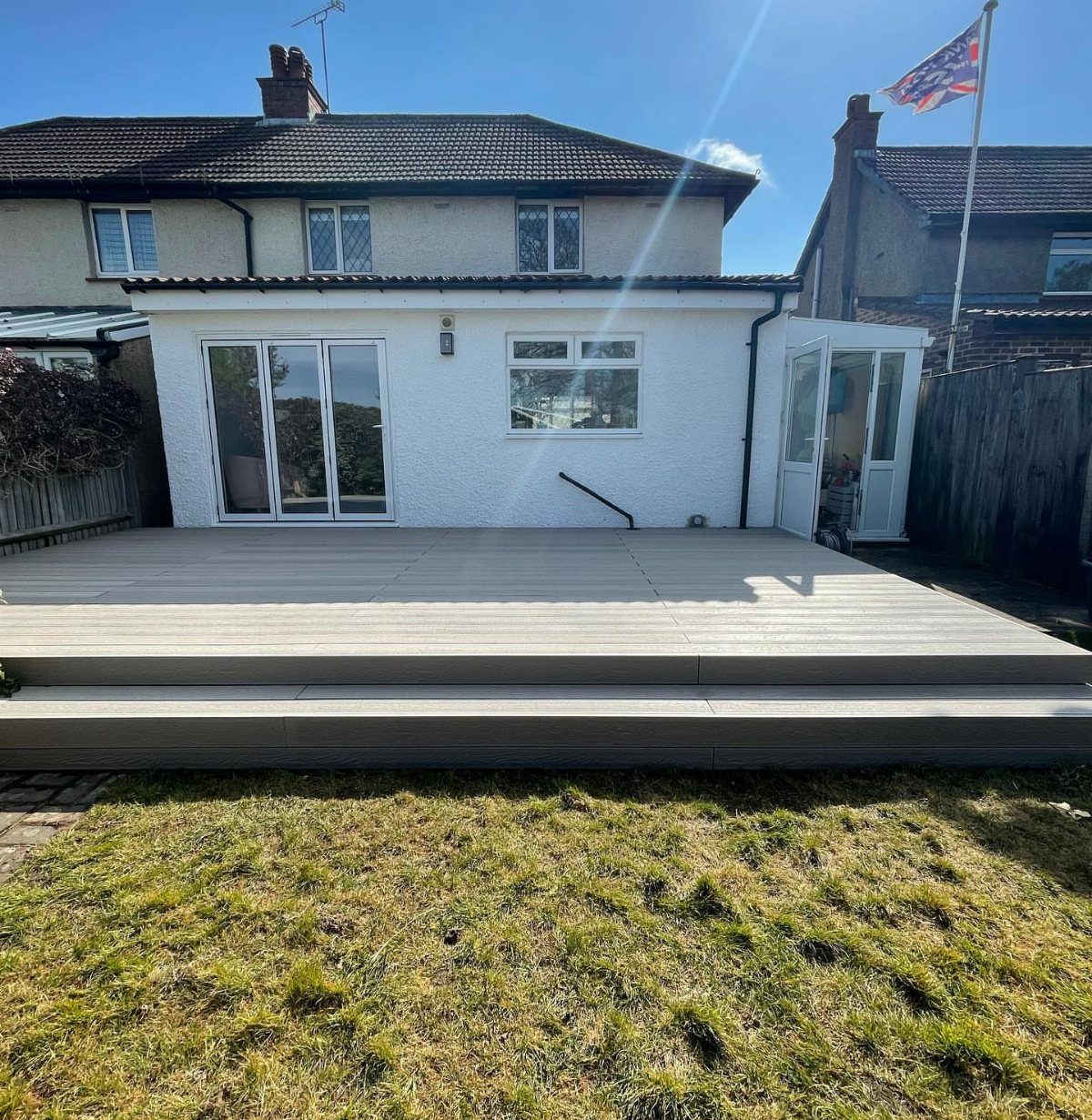
Grey composite reads as concrete or stone from a distance, though in direct sun it runs hotter underfoot than either, and it still needs no sealing.
Wide steps at the edge turn the drop into seating and slow the walk down into the yard.
Low-profile decks skip railings in most codes, which saves money and keeps the view open.
Check your local height limit: most have a threshold above which railings are required, but jurisdictions measure from different points so the same deck can pass in one town and fail next door.
The grey tone hides pollen and dust better than tan or brown, so it suits yards with overhanging trees.

【EVERYTHING YOU NEED IN ONE BOX】 Get started right away with our complete kit: 105 elegant round balusters (26" x 3/4"), 210 straight connectors, 30 angled connectors(30 degree), all necessary screws, and a professional-grade screw bit. Perfect for creating stunning 36" rail heights on both level and stair applications.
9. Tan Deck with Contrasting Dark Trim
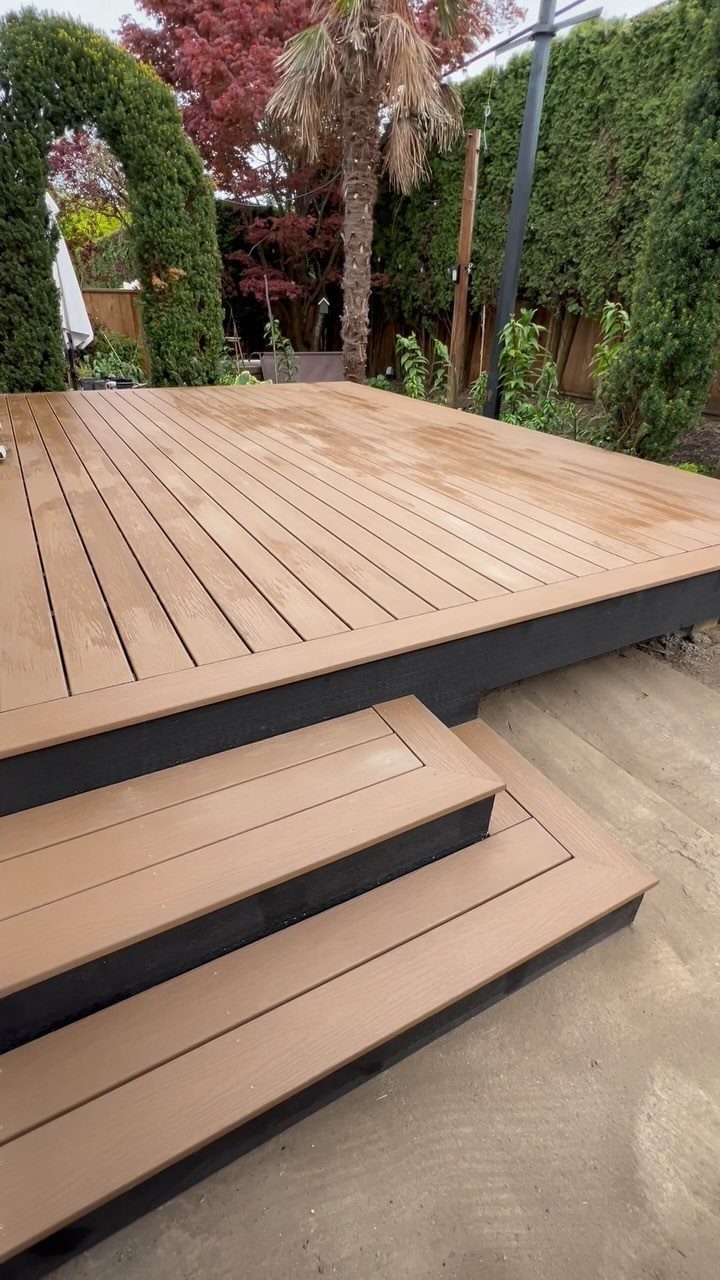
Dark trim around a tan field frames the deck the way molding frames a door. The contrast also hides the ends where boards meet the rim, and it carries onto the steps so the vertical faces read as one band.
Match the trim to a color already in the house: the roof, the window frames, or the foundation.
A grey that clashes with warm brick will look like a mistake every time you walk outside. Order fascia boards in the same batch as the decking; dye lots shift enough to notice across a joint.
10. Matching Slat Wall and Decking
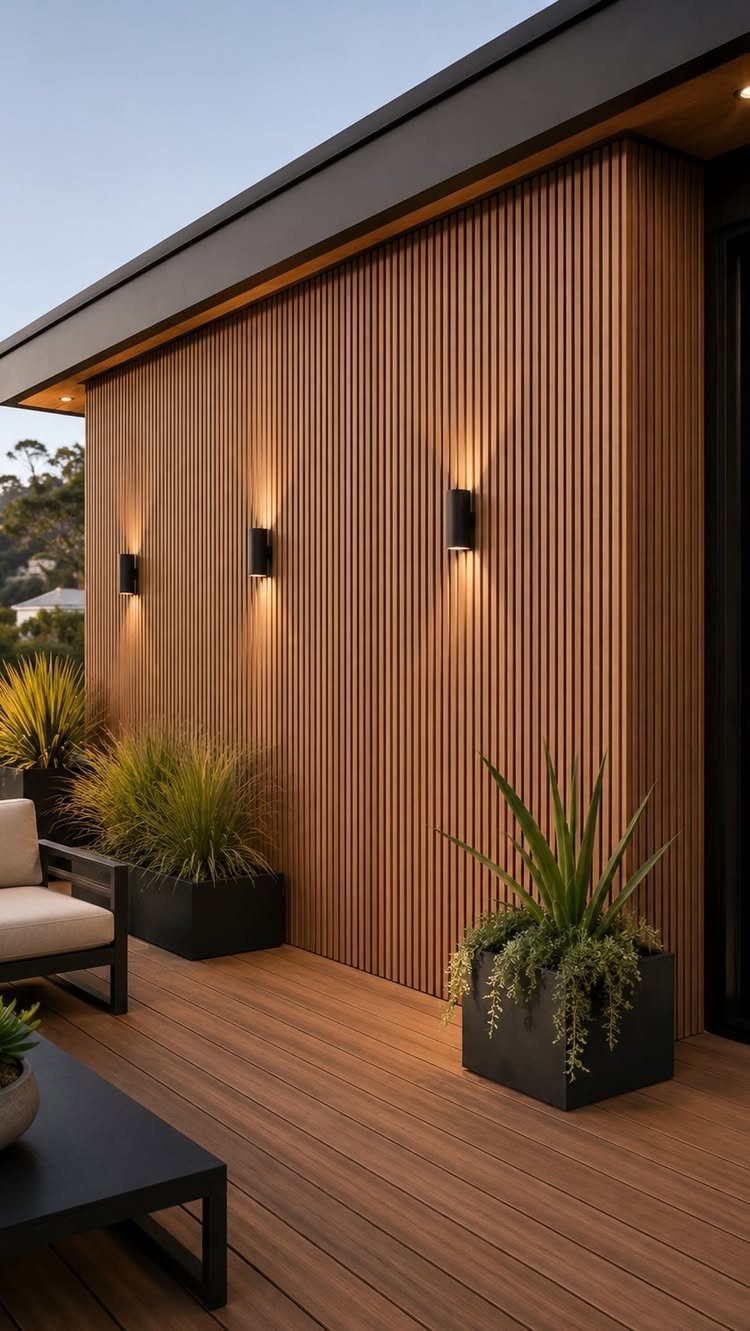
Running the same composite boards vertically on a wall turns two surfaces into one room. Slats spaced to let air through matter in humid climates where solid panels trap moisture against the framing.
Black sconces and planters against brown slats give the eye a place to rest.
I would keep the furniture low and simple so the wall stays the feature. The vertical lines draw height from a flat yard; in a tight space, that upward emphasis buys you visual room you do not have horizontally.

Designed to fit traditional 1” metal railings and 2x4 (1.5x3.5”) railings with the included stabilizers.

Versatile Design for Gardening & Decor: Measuring 16.9"L × 7.2"W × 5.7"H, these flower boxes outdoor are ideal for small and medium plants. The window flower boxes outdoor fit perfectly on balconies, apartment patios, herb garden, kitchen windowsills and fences decor. Grow herbs, flowers and fresh veggies easily to make the most of your limited space.
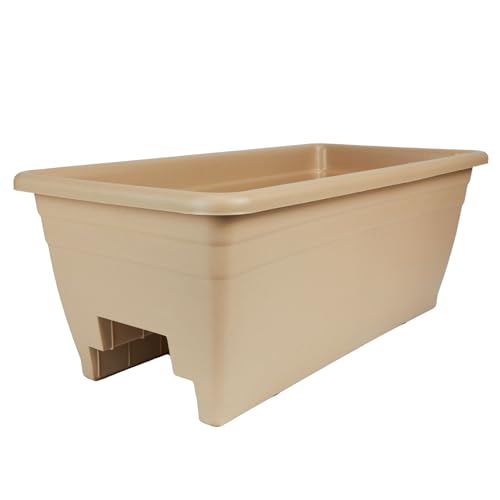
VERSATILE USE: Measuring 12" D x 24" W x 9" H, these outdoor planters fit standard 2" x 4" and 2" x 6" deck rails. Ideal for flowers, herbs, or plants, and suitable for patios, decks, railings, fences, or garden areas.
11. Light Brown Wood-Grain Deck
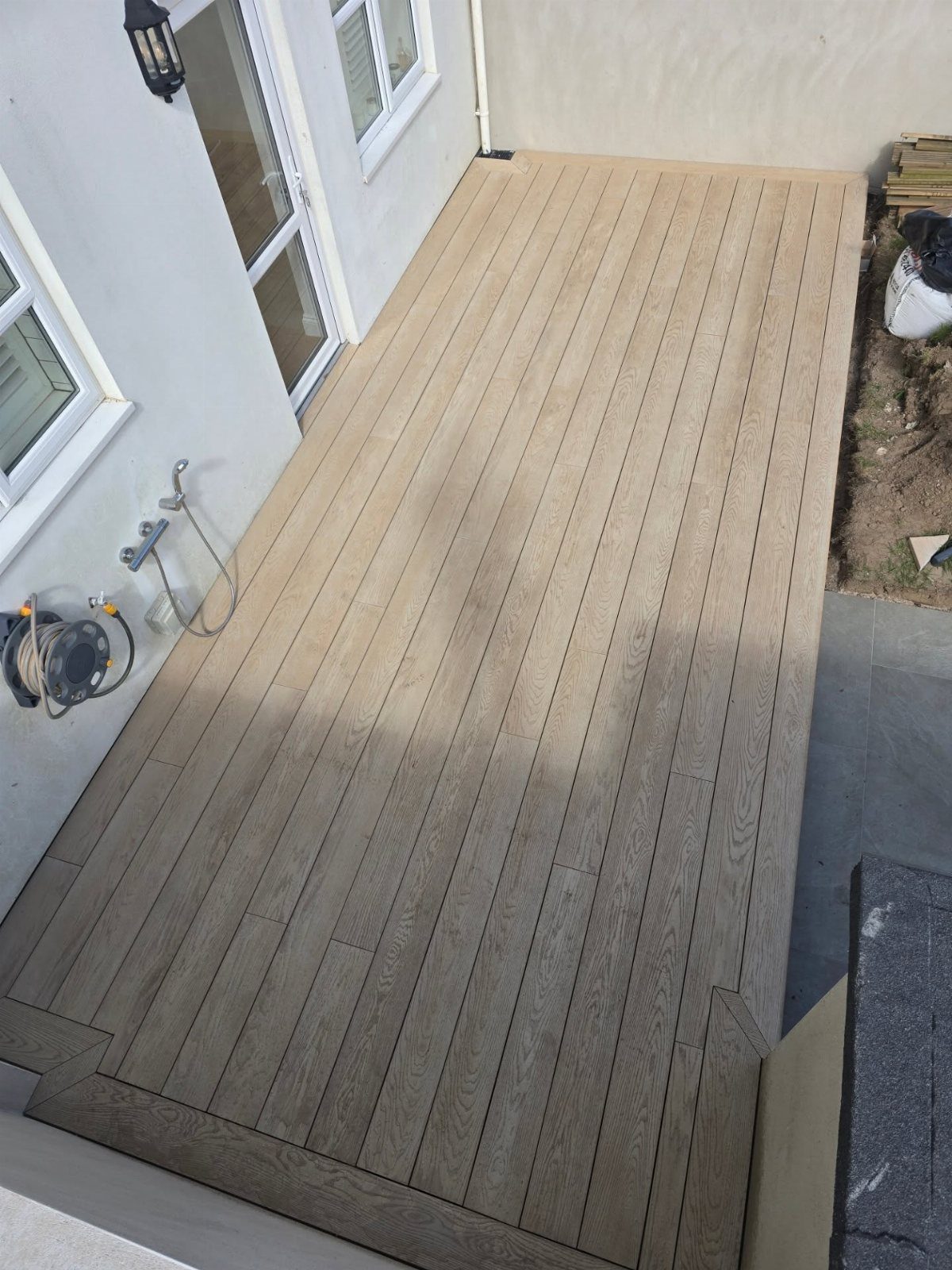
Light brown with graining looks like cedar that someone stained last week and will not have to stain again. The tone brightens a shaded wall or a north-facing yard where darker colors go flat.
Check the grain direction before you buy: some boards run the pattern lengthwise, others across, and mixing the two on the same deck looks careless.
Boards laid straight out from the doors take the simplest cut and go down fastest. A border in the same color but a different grain pattern would mark the edge without adding a second material.
12. Composite Decking Balcony
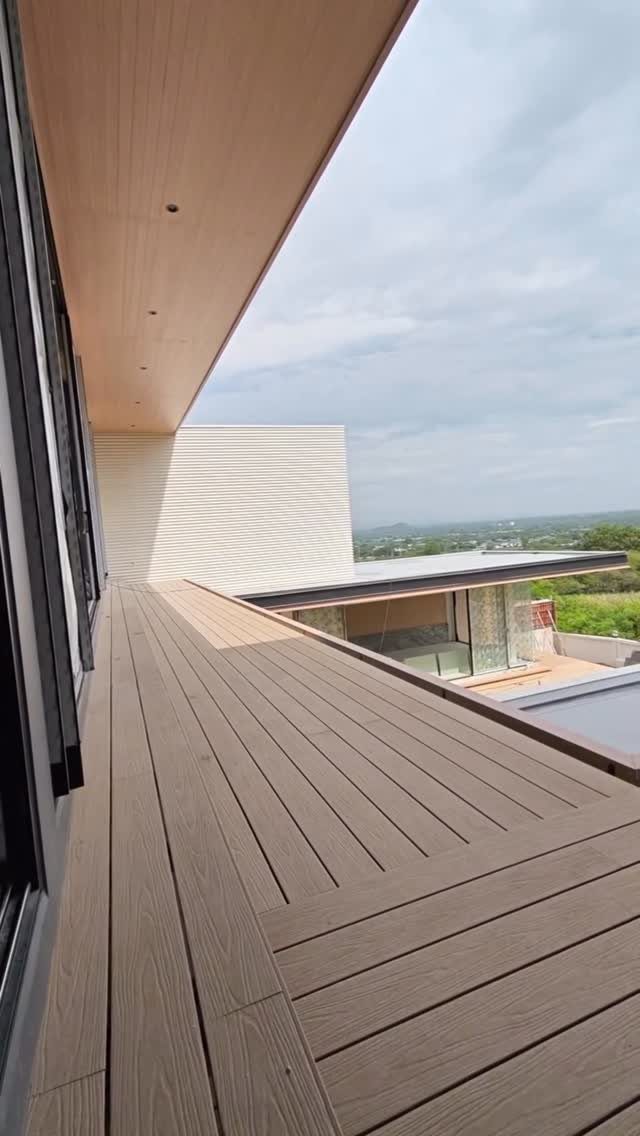
A balcony is a deck with no ground underneath, which means every drop of water needs a place to go. Composite boards shed moisture better than wood, and the gap between planks lets air reach the framing from below.
An overhanging wood ceiling suggests new construction or a full rebuild; retrofitting composite onto an existing balcony means checking that the joists can handle the weight, which runs heavier than pressure-treated pine.
I would add slope toward a drain so standing water does not find its way to the ceiling below.
13. Geometric Plank Garden Deck
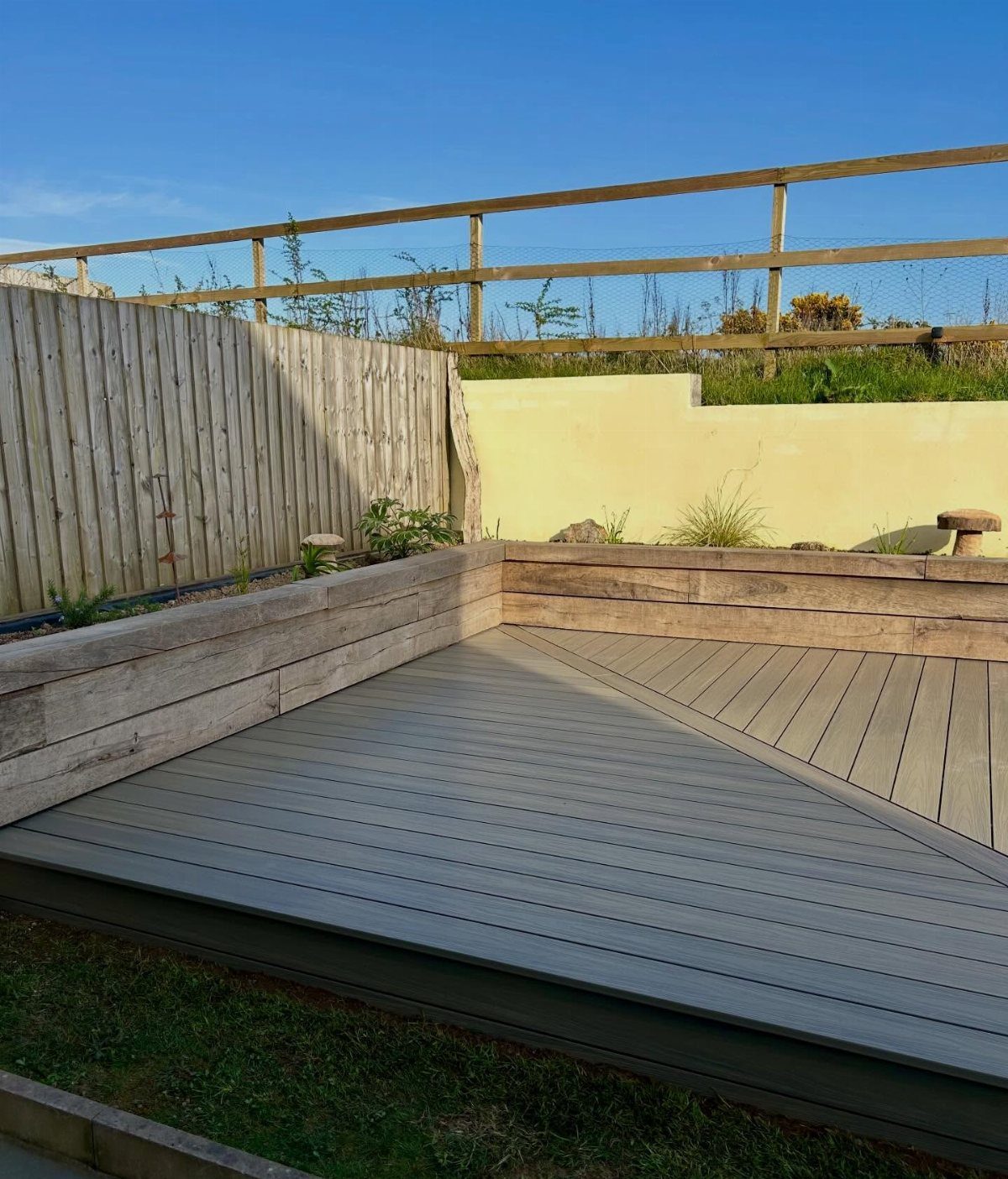
Diagonal lines set against straight borders turn a flat rectangle into something that looks designed rather than assembled. The grey composite reads modern against raw wood sleepers, and the pattern hides the fact that standard board lengths built it.
Raised beds around the edge mean you are gardening at waist height, not on your knees.
The retaining walls need drainage behind them or the soil will push through in wet seasons; I would line the back with gravel and a sleeve of landscape fabric before filling.
Composite holds color in full sun where wood would silver, so the geometry stays visible.
Solid boards handle foot traffic but weigh more than hollow; plan the delivery route before the truck arrives, because a full pallet will not move on grass without help.
Maintenance Tips
Soap and water handle most of what lands on composite. I clean mine when pollen season ends and again after the leaves fall, more often if something spills.
Harsh chemicals strip the cap on capped boards and can cloud the surface on uncapped ones.
Pressure washers do the same if the fan tip sits too close; keep the nozzle back and use a wide spray. A soft brush and a bucket cost less and do less harm.
Environmental Impact
Composite boards start as plastic film and wood fiber that would otherwise reach a landfill.
Trex and other big composite brands build their boards from plastic that was already headed to landfill or worse, so the material starts its second life on your deck instead of in a river.
That recycling happens once, at the factory. The boards themselves are not recyclable again at the end of their life, so the waste reduction is front-loaded.
Wood carries a different cost: even pressure-treated lumber draws on standing timber, and older treatments leached chromate copper arsenate into soil and water. The newer formulas replaced CCA, but the history is what it is.
I see the choice as picking which problem you would rather own. Composite delays it; wood spreads it across more frequent replacements.
Cost Considerations
Composite decking costs more at the register than pressure-treated pine, and the gap widens if you start adding hidden fasteners, fascia boards, or any of the trim pieces that make a deck look finished.
The gap is real on day one.
The crossover happens in years ten to fifteen, when the first wood deck nears replacement and the composite surface still reads as new.
Stain, seal, and the labor you either pay or give up weekends for: over thirty years that total can flip the math. I have watched neighbors recalculate after their second full strip and re-coat.
No material is maintenance-free. Composite cuts the schedule from annual to occasional, and the savings are in hours more than dollars.
Design Flexibility
Composite bends to a radius for curved borders and flower beds, something solid lumber resists without steaming or lamination. The heat blankets and jigs are rental items, not purchases, for a one-weekend project.
Color runs through the entire thickness on some lines, or sits as a cap on others. Capped holds against fading but limits your sanding options later; uncapped weathers more openly and can be refreshed.
I would match the board width to the scale of the space. Narrow planks read as traditional, wide ones as modern, and mixing widths within a single deck asks more of the layout than most weekend builders want.
Frequently Asked Questions
What are the downsides of a composite deck?
The sticker price at checkout runs higher than pressure-treated pine, and the difference widens once you add hidden fasteners, fascia boards, and matching trim.
Dark-colored boards soak up summer sun and scorch bare feet, though several brands now sell lighter, heat-reflective caps that stay cooler. Capped boards cannot be sanded or refinished later, so scratches and stains stay unless you replace the piece.
How much does a 20×20 composite deck cost?
A 400-square-foot deck runs roughly $12,000 to $24,000 for materials alone at $30 to $60 per square foot, with installation adding another $6,000 to $12,000 on top.
Trex and TimberTech boards alone sit in that $30 to $60 range, while their premium cool-decking lines push toward $60 to $80. Your final number shifts with railings, stairs, and how complex the layout gets.
Is composite wood good for decks?
It is good if you want to trade maintenance weekends for a higher upfront bill.
Composite shrugs off rain and rot, keeps its color through years of full sun while wood turns silver-gray, and flexes into curves that solid lumber resists.
Around the 10 to 15 year mark, a stained pine deck is usually headed for replacement while the composite surface still passes for new.