The 6 ideas below run from a free afternoon with scavenged cardboard to a tiered cedar planter that costs more than basic lumber but outlasts it.
What settles the choice is how long you have in one place: renters and short-timers need the cinder block stack you dismantle, while owners of the patch can sink posts for a permanent A-frame trellis or log-sided bed.
The 10 by 12 ft bed of pale compacted sand and clay I keep reading about shows up in more than one section because that soil is the real project; the box is just where the amendment happens.
[link-whisper-related-posts]1. Building Raised Beds from Wood
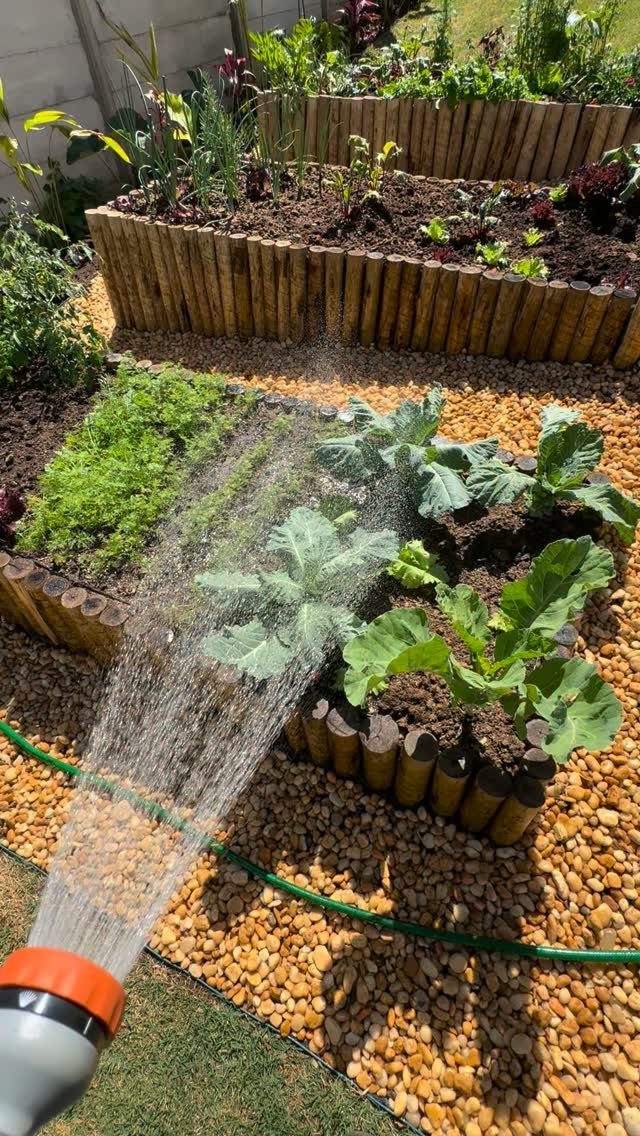
A raised bed built from wood logs sits on pebble ground cover, the wood itself doing the containing while the stone handles drainage and walking space around it.
Wood is the default choice for a reason: a basic box runs about as much as a decent power tool in lumber and an afternoon with a drill, and you can size it to whatever patch of yard you have.
Steel troughs from feed stores work as an alternative, and I have seen them used for beds on legs high enough to stand at; that setup suits renters or anyone who bends poorly, though you trade the ground’s natural insulation for portability.
For soil over sand and clay, start fresh inside the box rather than fighting what is underneath.

Elevate Your Garden - Opt for a brilliantly engineered raised garden bed to revolutionize your gardening. Its spacious design, measuring 48x24x30 inches, allows for the cultivation of multiple vegetable varieties alongside a plethora of herbs, optimizing your gardening space for ease and diversity.


This solid wooden rectangular planter can accommodate a considerable number of plants or flowers
2. Raised Beds with Climbing Trellises
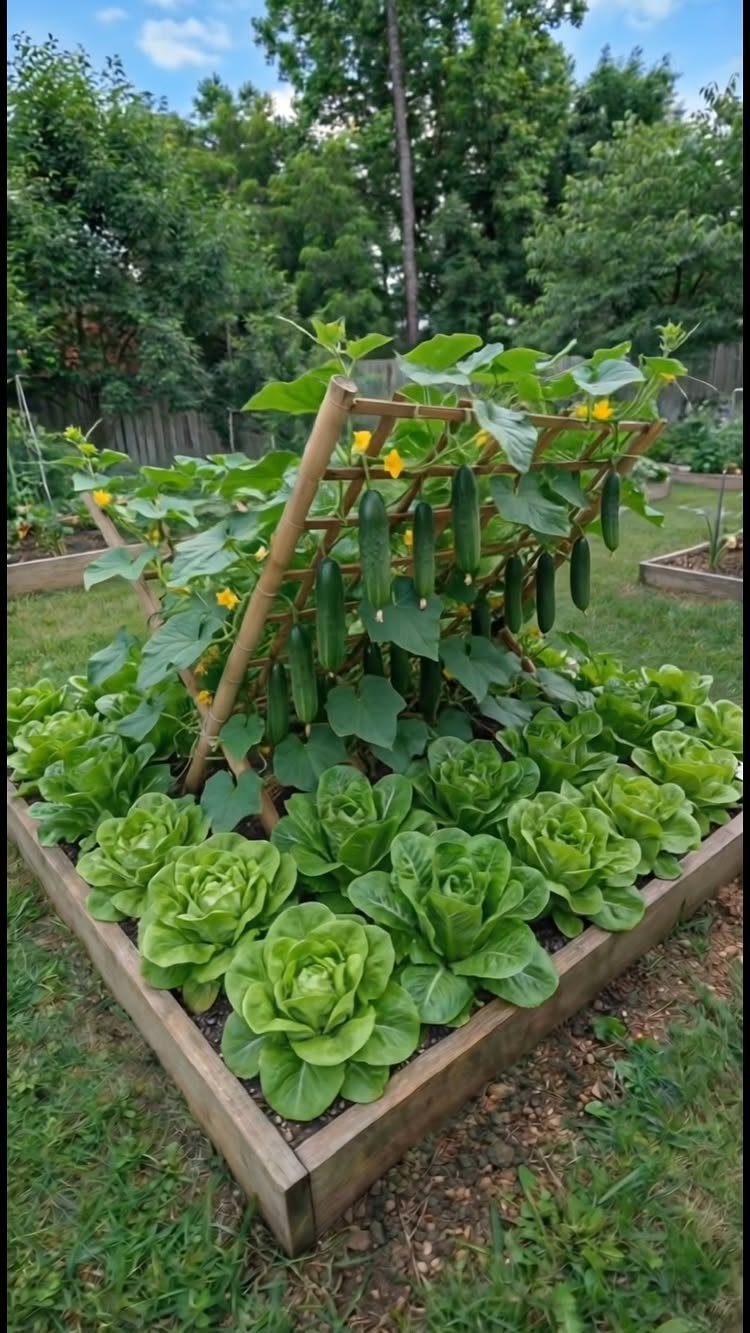
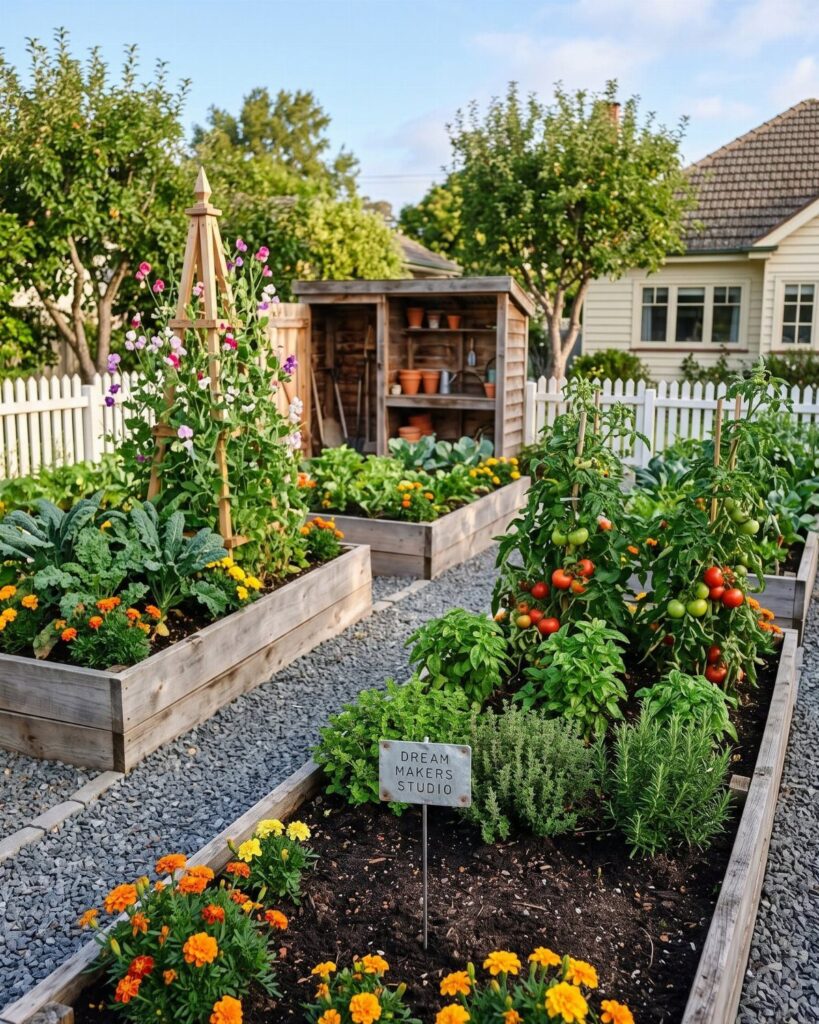
An A-frame bamboo trellis rises from one end of the bed, letting cucumbers climb above lettuce that stays low and shaded.
The pairing matters: you are growing two crops in the footprint of one, and the trellis buys vertical space when horizontal is scarce.
Bamboo is light, cheap, and lasts a few seasons before splitting; check that your variety of cucumber actually climbs, because bush types will just sprawl and smother what is beneath them.
The frame warms up faster than open ground in spring, so you can plant earlier, and a simple cover thrown over turns it into a cold frame when frost threatens.

Heavy Duty Trellis: You will get 2 pack trellis for climbing plant outdoors. The trellis measures 4ft/47.2'' high x 18'' wide. The average diameter of the stake is 14-16 mm/0.55-0.62 inches (due to the handmade nature of the product, the measurement error range is ≤±2cm/0.7'')

Package Includes: You will get 3 pack A-frame garden trellis for climbing plant outdoors. The trellis measures 4ft/47.24'' high x 15.5'' wide. The average diameter of the stake is 14-16 mm/0.55-0.62 inches (due to the handmade nature of the product, the measurement error range is ≤±2cm/0.7'')

Package Includes: You will get 3 pack A-frame garden trellis for climbing plant outdoors. The trellis measures 4.8ft/57.48'' high x 15.5'' wide. The average diameter of the stake is 10 mm/0.39 inches (due to the handmade nature of the product, the measurement error range is ≤±2cm/0.7'')
3. Working Soil in Black Raised Beds
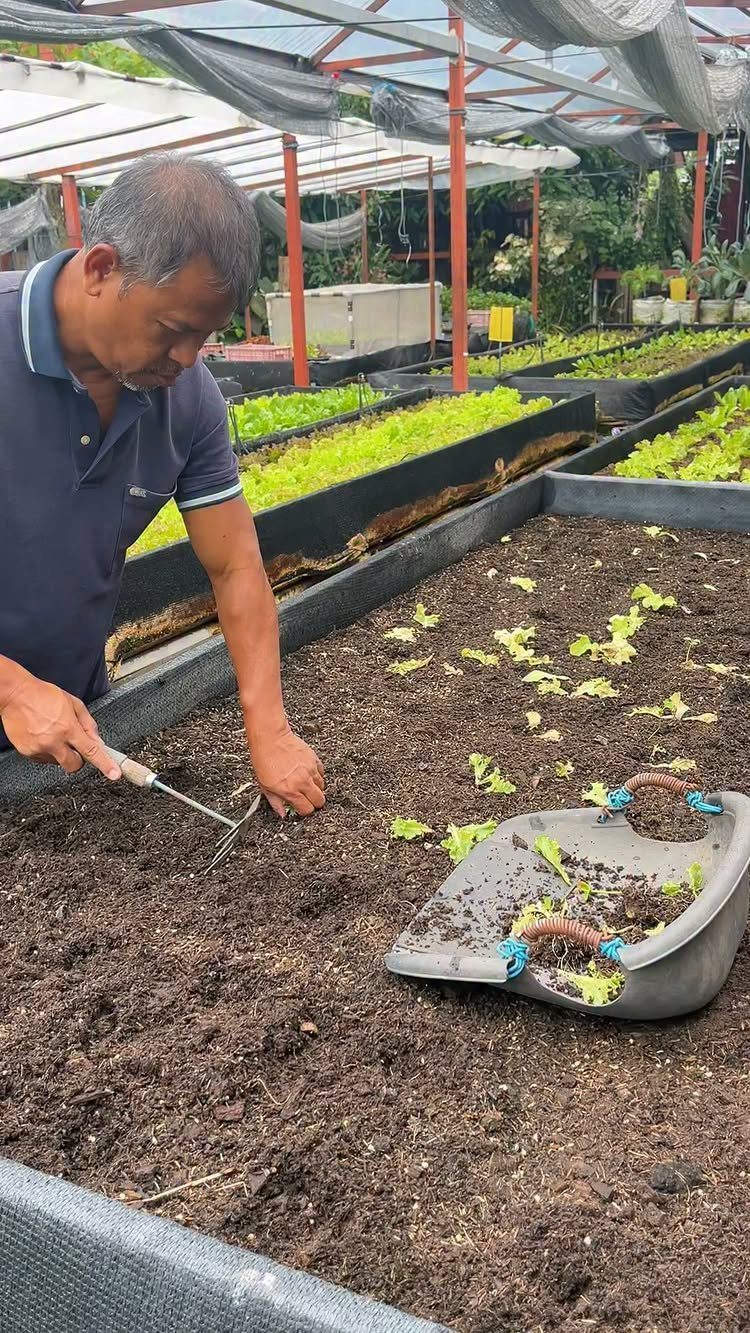
Black raised beds under a greenhouse roof hold dark, worked soil that a gardener loosens with a hand cultivator.
The color is not cosmetic: black plastic or fabric sides absorb heat, warming the soil faster in spring and keeping roots active longer into fall.
What you put inside still matters more than the container. A 10 by 12 ft bed of sand and clay, pale and compacted, will stunt plants even with perfect edges; the fix is amendment, not better borders.
Mix in compost until the texture crumbles in your hand, and expect two or three seasons before the biology catches up.

7in Raised Design for Divide Areas Perfectly: The edging is 8.7in total, and it's a 7in raised design, which more effectively blocks grass roots, weeds, stones, and mulch than standard low borders, delivering longer-lasting partitioning results

7in Raised Design for Divide Areas Perfectly: The edging is 8.7in total, and it's a 7in raised design, which more effectively blocks grass roots, weeds, stones, and mulch than standard low borders, delivering longer-lasting partitioning results

Sturdy and Durable: Made of thickened PP material, it has excellent durability, can withstand all kinds of weather in the sun, rain, wind, and wind, and can minimize the occurrence of cracking, peeling, or breaking.
4. Cinder Block Raised Beds
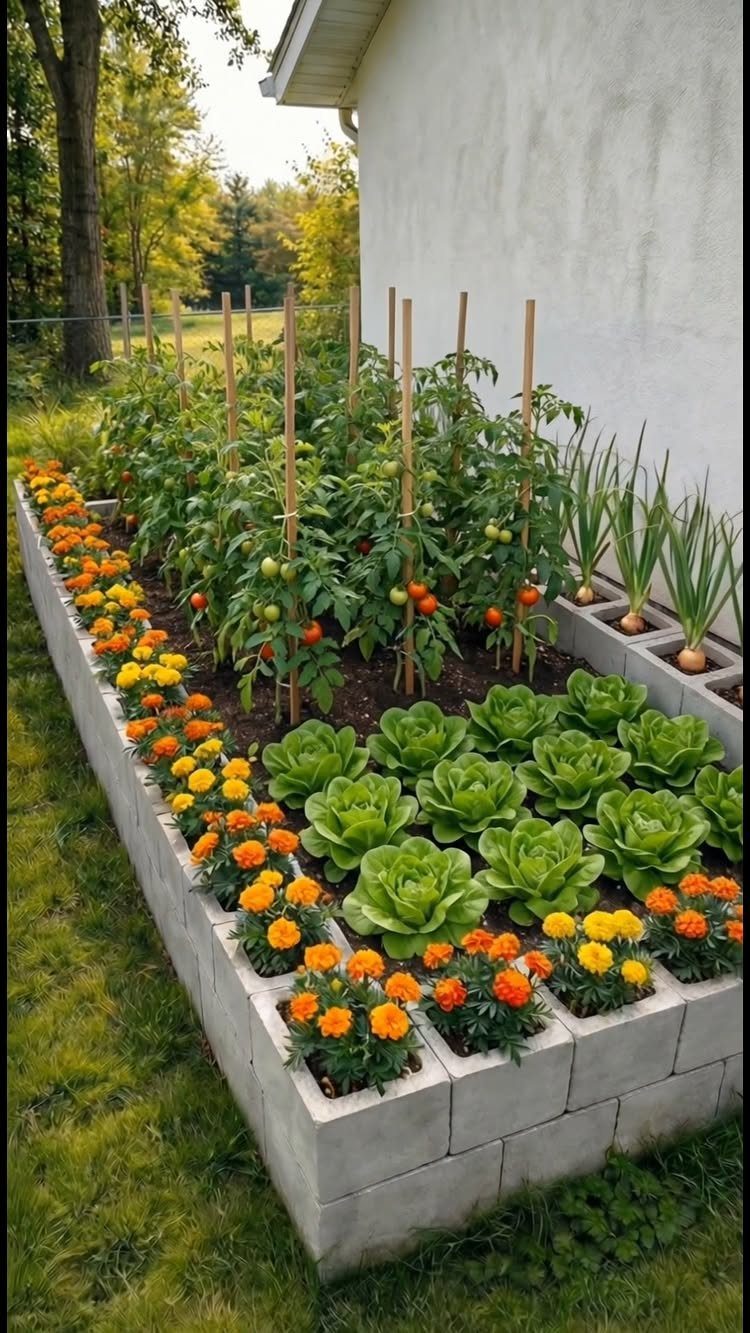
Cinder blocks stack dry, no mortar, into a bed whose outer holes become extra planting pockets.
Grey concrete is cheap, permanent, and heavy enough to stay put; the holes can hold marigolds, which are not decorative filler but companion plants that confuse pest insects with their smell.
Check whether your blocks are the old style with wide cavities or newer solid ones, because only the hollow kind plant this way.
Concrete warms soil early because it holds heat, but that same quality bakes it in high summer, so this suits cooler climates or crops that finish before August heat.

Each raised metal garden bed size: 4×2×1ft ,7.14Cu

Raised Garden Bed - Add a new level of convenience to your gardening experience with the Galvanized Raised Garden Bed. Enjoy expanded yield and a more assembled garden layout with this garden accessory, each sized at 120 cm X 60 cm x 30 cm.

ULTIMATE PRACTICALITY: The planter box measures 96"(L) x 24"(W) x 12"(H), has a huge capacity, any plants and flowers you want to grow can be planted, happiness is overflowing.
5. Tiered Wooden Planter
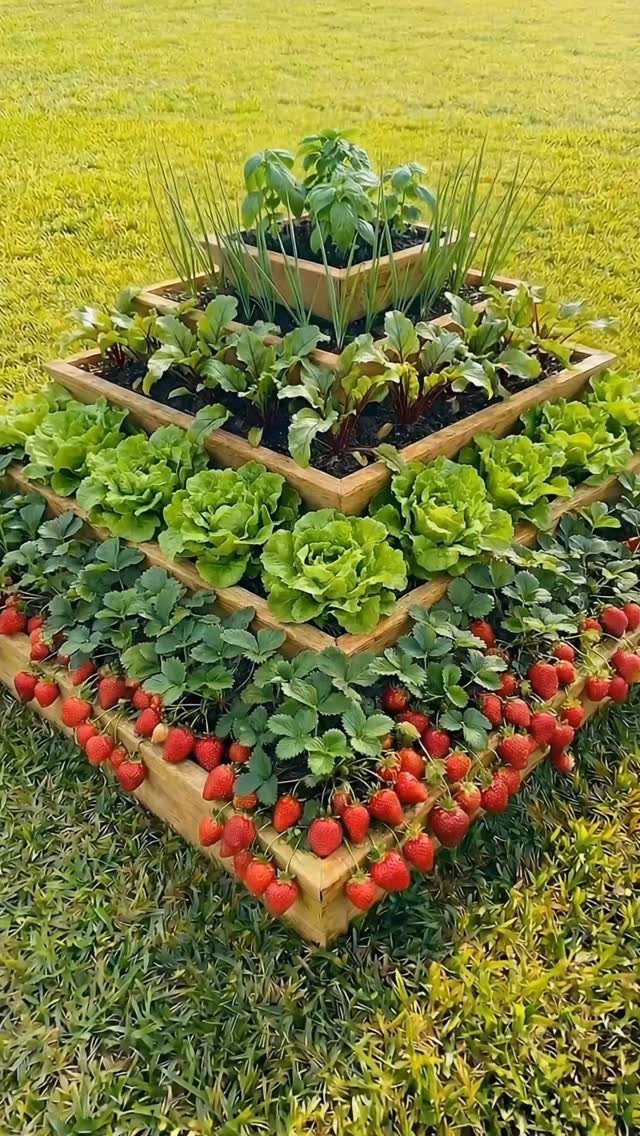
A tiered wooden planter steps up in stacked square levels, strawberries spilling from the bottom rim, lettuce and greens above, herbs at the top.
The pyramid shape puts every plant in reach from outside; you never step inside, so the soil stays loose and the footprint stays small enough for a lawn or patio.
Wood this exposed rots faster than ground-contact lumber, so cedar or a stained hardwood is worth the extra cost over pine. Sitting on grass means leveling the base or the water runs to one side and the stack leans.
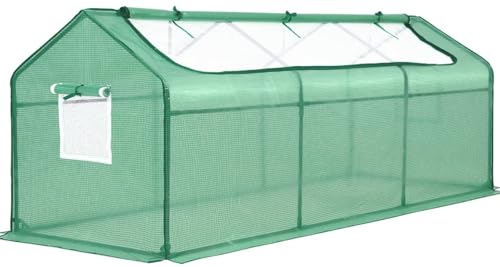
[Optimal Small Greenhouse] - Designed for a variety of creative uses, this mini greenhouse works perfectly indoors and outdoors—ideal for plant protection or as a dry, visible potty house for small dogs like Chihuahuas. Consisting of a powder-coated steel frame and transparent PE cover (80% high transmission, waterproof & reinforced), this setup provides a durable sanctuary for both your garden starts and your small pets.

Garden Hoops DIY Kit Include: Our frost cloth plant‑freeze‑protection kit contains all gardening supplies to build your winter greenhouse: 30 Pcs hoops frame (15.2" in length), 25 connectors, 20 garden clips, so you can DIY a sturdy freeze‑proof tunnel that delivers stable support against snow and wind and keeps your vegetable plants from being crushed.

2 COVERS FOR CHANGING SEASONS: Switch between the reinforced PE greenhouse cover and breathable mesh cover as the seasons change. The PE cover helps retain warmth during cooler spring and fall weather, while the mesh cover provides ventilation and protection during warmer months.
6. Cardboard Lining for Weed Prevention
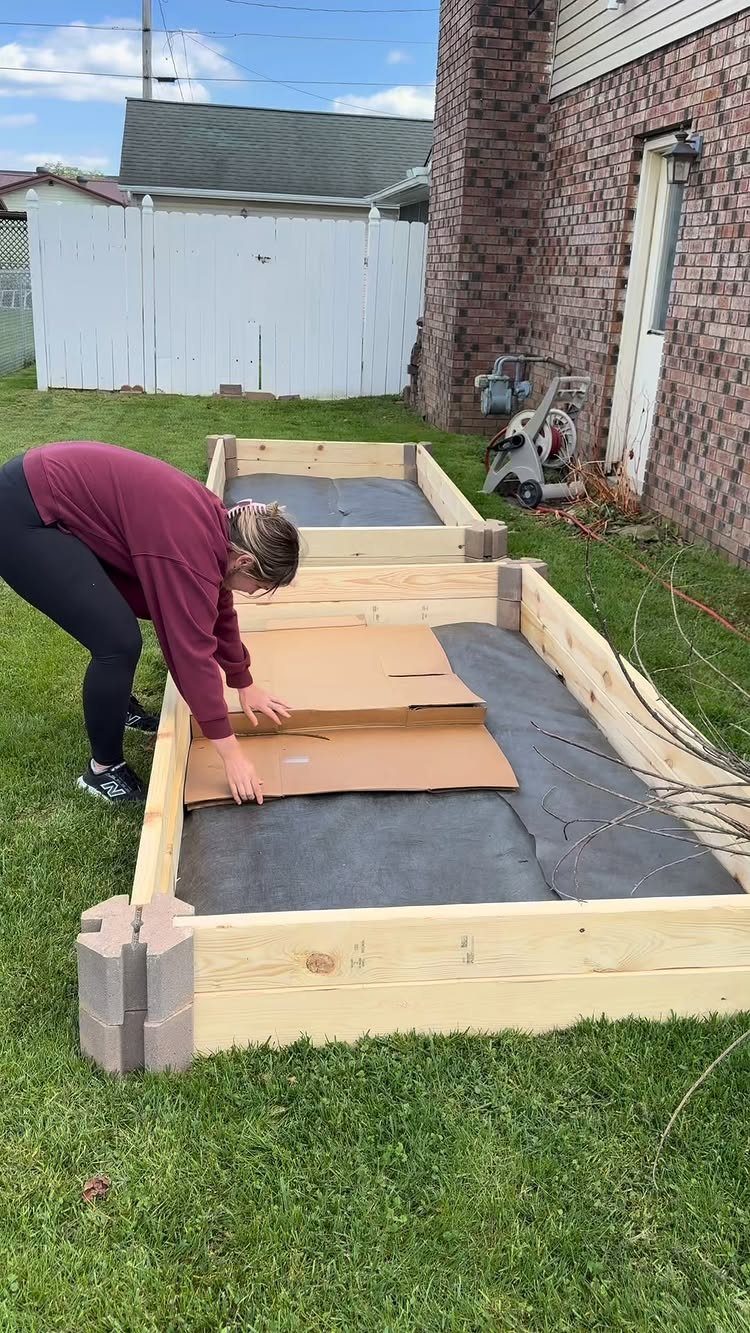
Cardboard sheets press flat over landscape fabric inside an empty wooden frame, the last layer before soil goes in.
The fabric blocks perennial weeds from below; the cardboard smothers anything already sprouting on the surface and draws worms up as it softens.
Both together is overkill for some yards, but cheap insurance if you are building on lawn or a weedy patch. Use plain brown cardboard, stripped of tape and labels, and overlap sheets generously so roots cannot find gaps.
Wet it down before adding soil, or it will blow away in the first breeze. The fabric stays; the cardboard disappears into the bed within a season.

DIMENSIONS: 48 in. W x 48 in. D x 29. 12.6 in. H

Durable Wooden Construction: Made from solid wood without paint for long-lasting use.

【Multifunctional】This garden planter is separated into two growing areas for different plants or planting methods. The baffle can be removed to form a bigger growing area. You can also buy several garden beds to design and build your own dream garden.
Soil Quality Improvement
In my own reading, the disagreement on how to fill them is sharper than most gardeners realize. The safer route, and the one I follow, is filling the full depth with soil and amendment.
For sand and clay mixes like the 10 by 12 ft bed mentioned above, pale compacted soil can turn into a brick that drowns roots before anything grows. Compost changes the feel of the soil until it breaks apart in your fingers.
Two or three growing seasons usually pass before the living stuff in the soil really gets going. Black sides help by absorbing heat and extending the active root season, but they do not replace amendment.
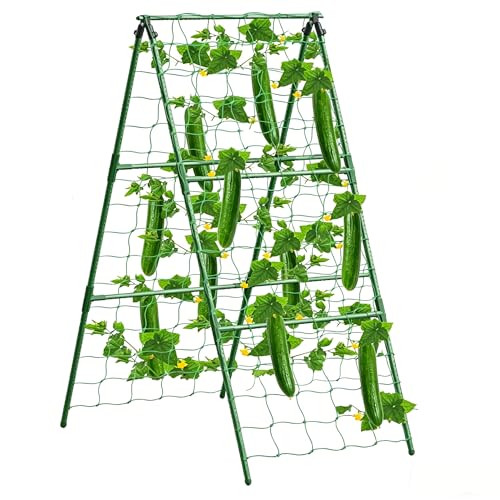
【Package included】:This Trellis for Climbing Plants Outdoor comes complete with everything you need to get started: 17pcs metal stakes, 8pcs T shape connect pipe, 2 A-shaped connectors, and a 0.9x1.8meter plant net.
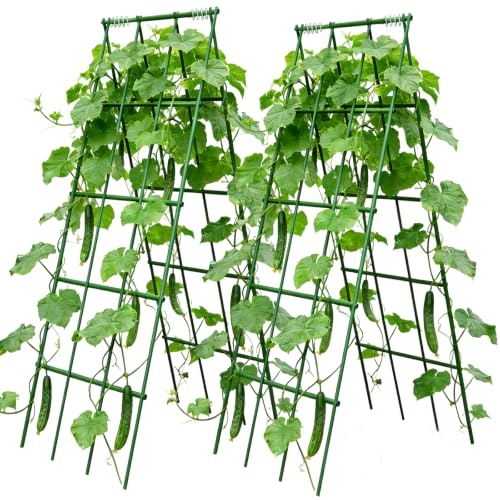
【No Assembly Required】Cucumber Trellis Out of the Box - From Packaging to Garden, Only 3 Minutes. While Other Bracket Kits Force You to Wrestle with More Than Ten Parts and a Wrench, Our No-Assembly-Required Bracket Panel Has Already Been Moved to the Garden for You, Providing a Simple and Quick DIY Erection Experience

【A-Frame Trellis】Our detachable Cucumber Trellis is widely used in gardens and backyards; It allows you to adjust the width as needed for compact storage; By utilizing vertical space, this Plant Grow Support elevates vines off the ground, maximizing sunlight exposure for better quality fruits and vegetables while boosting overall harvest and yield
Maintenance Ease
The self-contained shape matters more than I expected before I started reading into this.
The border keeps your boots out of the bed, so the dirt stays soft and you skip the yearly re-till that flat ground demands. That alone cuts spring prep to an afternoon.
Weed control splits between prevention and maintenance. Cardboard and landscape fabric together block most problems at the start; after that, the raised height puts the surface at arm’s reach for the few that sneak through.
Earwigs, which seem to plague raised beds in some years, respond to targeted sprays rather than broad application.
A frame that is already built makes it simple to throw on row cover or plastic and keep plants alive past the usual frost dates.
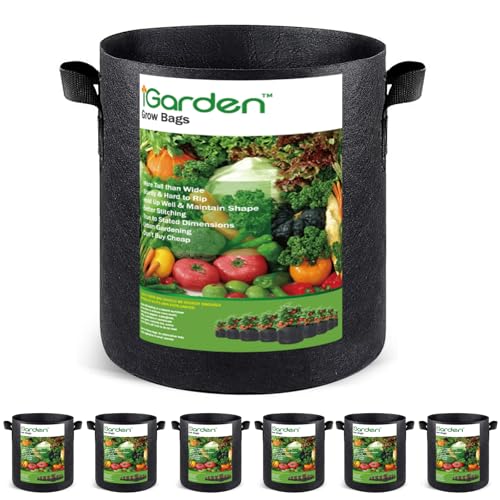
TALL AND STRAIGHT DESIGN & STURDY MATERIAL- Made of 280g thickened nonwoven fabric, fairly permeable, environmental-friendly, clear design, well-analyzed depth, bags can stay upright when unfilled

【Large Planting Area】 This 6x3x1ft galvanized raised garden bed provides 16 square feet of planting space for your favorite vegetables and herbs. The 11.4-inch depth allows for proper root development while keeping soil temperatures warmer than in-ground beds, supporting an extended growing season for your outdoor garden.
Frequently Asked Questions
What veggies grow best in a raised bed?
Tomatoes, cucumbers, and zucchini are the usual favorites. A raised bed’s warmer soil and contained space suit them well, and a trellis over the bed lets cucumbers climb while lettuce stays shaded below.
The self-contained shape also means you start with cleaner soil and can cover the frame to stretch the season past frost.
How deep should a raised bed be for vegetables?
A raised bed only needs to be deep enough for the roots to work the soil you fill it with; eight to twelve inches handles most vegetables, though root crops want more.
When the ground below is heavy clay or loose sand, building upward with imported soil beats trying to amend what nature left you.
The bed is a container for soil you control, not a frame laid on top of poor ground.
What do you put in the bottom of a raised vegetable bed?
Plain brown cardboard laid over landscape fabric is the pairing that works; the fabric stops deep perennial weeds, the cardboard smothers surface growth and softens enough to draw worms.
Strip the tape off brown cardboard, overlap sheets so roots cannot thread through, and soak it before the soil goes on or the wind will scatter your work.