These corner garden ideas run from a weekend and a few bags of gravel to a pergola build that asks cedar lumber and more patience.
The one that fits depends on whether your corner stays damp or drains fast, whether sun hits it most of the day or almost none, and whether you need to walk through it or finally stop and sit.
[link-whisper-related-posts]1. Colorful Flower Beds
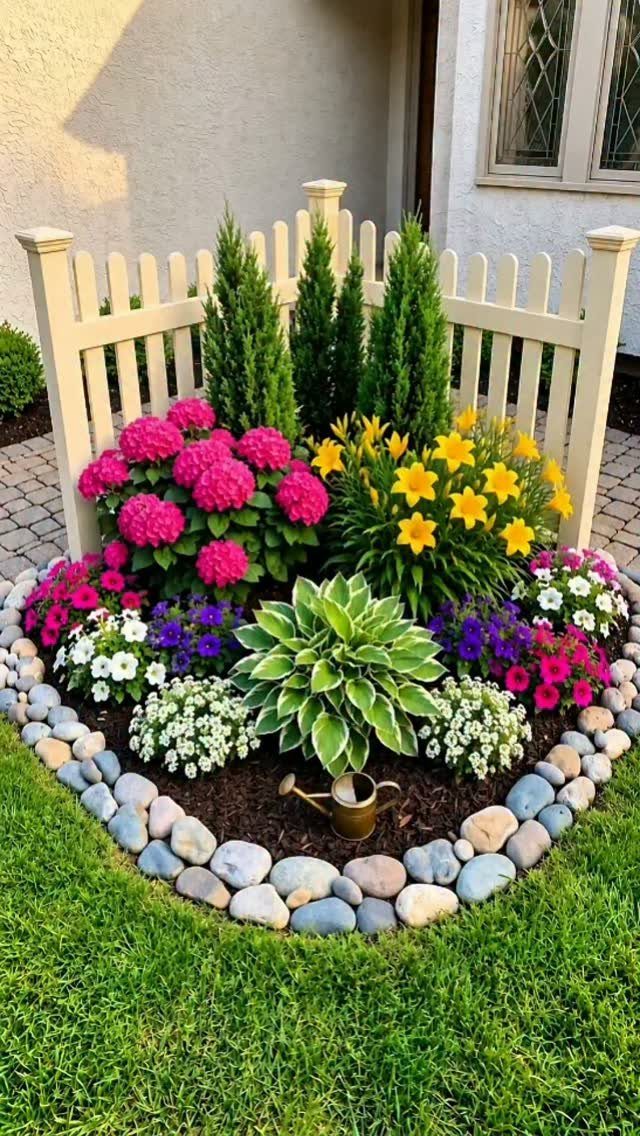
A corner flower bed turns the spot where 2 fences or walls meet into the brightest part of the yard.
Pink hydrangeas, yellow lilies, purple petunias and a variegated hosta set against white picket fence; the mix of heights is what keeps it from reading as a flat stripe of color.
I would put the tallest plants where the corner itself is deepest, then step down toward the edges. River rock around the bed, like the grey stones visible, buys you a season or two without edging grass back by hand.
Hosta in front handles shade if your corner sits under a tree; swap in sedum or portulaca for full sun.

Heavy-Duty Steel: Made from thick powder-coated steel, these L-shaped raised bed corner brackets are rust-resistant, corrosion-proof, and provide strong support. They are durable, resistant to deformation or breakage, ensuring stable use in various outdoor environments

Only Fits 0.79‑Inch Thick Lumber, Includes 4 End Caps Designed for 1‑inch thick lumber only. Does NOT fit thicker Trex planks, standard deck boards or cedar boards. Pre‑drilled holes align perfectly with 1‑inch boards for quick, tool‑free assembly. Comes with 4 plastic end caps to protect deck from scratches
2. Wooden Garden Arches
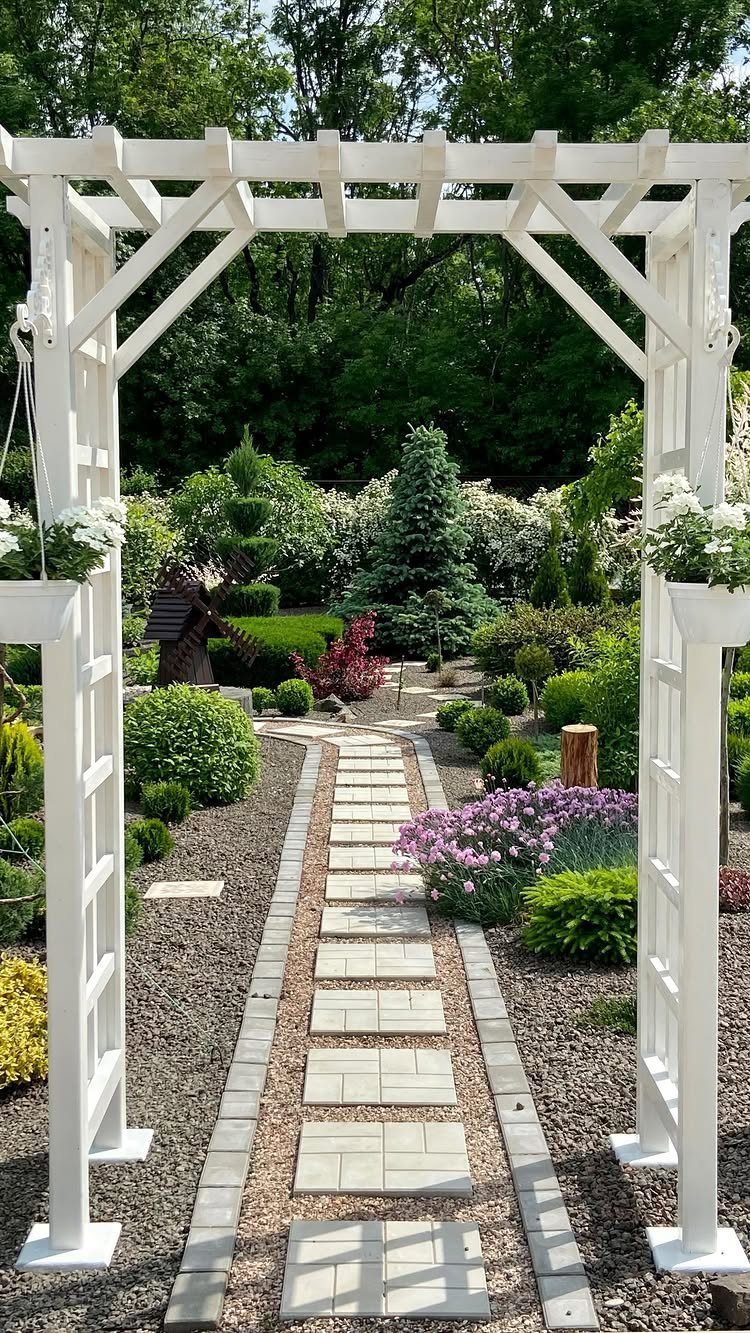
Wooden arches give a corner somewhere to go instead of something to look at.
A white-painted arbor frames a stone path and draws the eye through to whatever sits behind; a climbing vine on either post would close the frame in a couple of summers.
I would set the feet on compacted gravel, not directly in dirt, and check that the opening is wide enough for a wheelbarrow if you still need to haul mulch past it.
Clematis or jasmine covers fast; roses need more sun and more patience.

ELEGANT GARDEN ARCH TRELLIS – Transform your backyard into a beautiful garden retreat with this classic black metal garden arch. Create an inviting entrance along pathways, over garden beds, or among your favorite flowers and climbing plants.
3. Stone Pathways
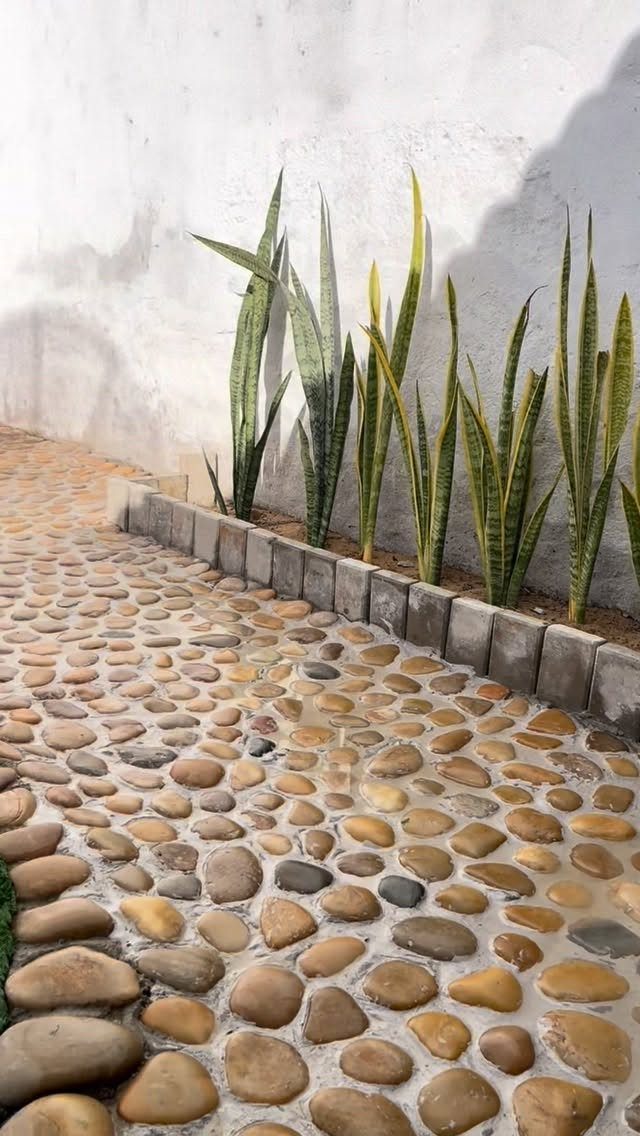
Stone pathways solve the problem of how to walk through a corner without wearing a mud track into the lawn.
River pebbles set in mortar against a white wall make a narrow, clean line; snake plants alongside mean this is a dry corner, or one with sharp drainage.
Mortar sets the stones permanently, which I would only do where the route is certain. For a first pass, irregular grey flagstone on compacted sand lets you shift the line next year when you realize you cut the bed wrong.
Ornamental grasses at the border soften the edge and move in wind the way hard stone cannot. Budget two weekends: one to dig and level, one to lay and settle.
4. Raised Garden Beds
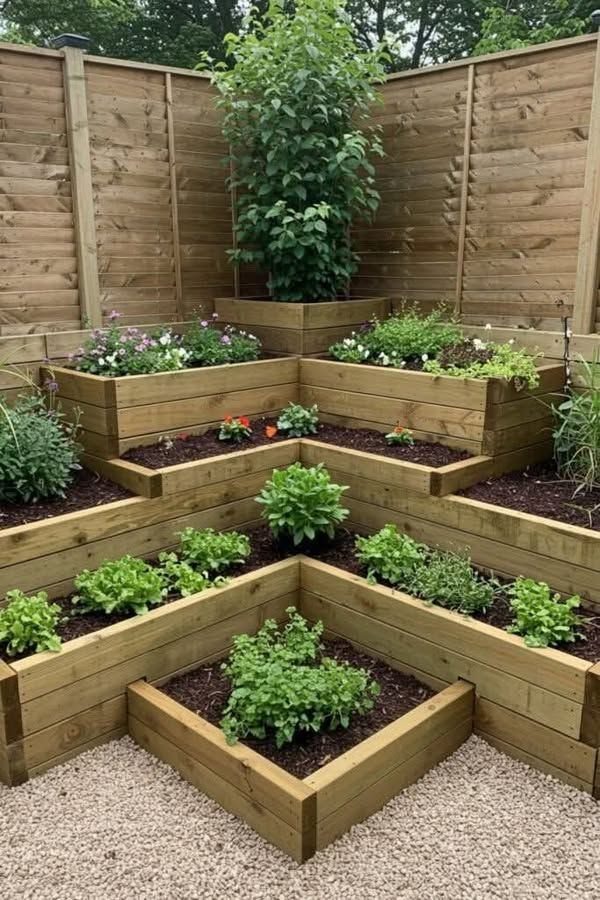
Raised beds built for a corner fit the angle instead of fighting it.
A tiered light-wood bed steps up toward the fence, so the back row of plants still catches sun and the gardener does not have to kneel at the fence line to reach them.
Drainage is the real reason to raise: clay soil or a low spot that puddles will rot tomato roots in ground-level planting.
I would line the inside with landscape fabric to keep the soil from washing through the plank gaps, and fill the top tier with herbs that tolerate drier soil, since water moves down.
Cedar or a rot-resistant composite costs more up front than pine; count what you spend on replacement before you decide.

Elevate Your Garden - Opt for a brilliantly engineered raised garden bed to revolutionize your gardening. Its spacious design, measuring 48x24x30 inches, allows for the cultivation of multiple vegetable varieties alongside a plethora of herbs, optimizing your gardening space for ease and diversity.
5. Cozy Seating Nooks
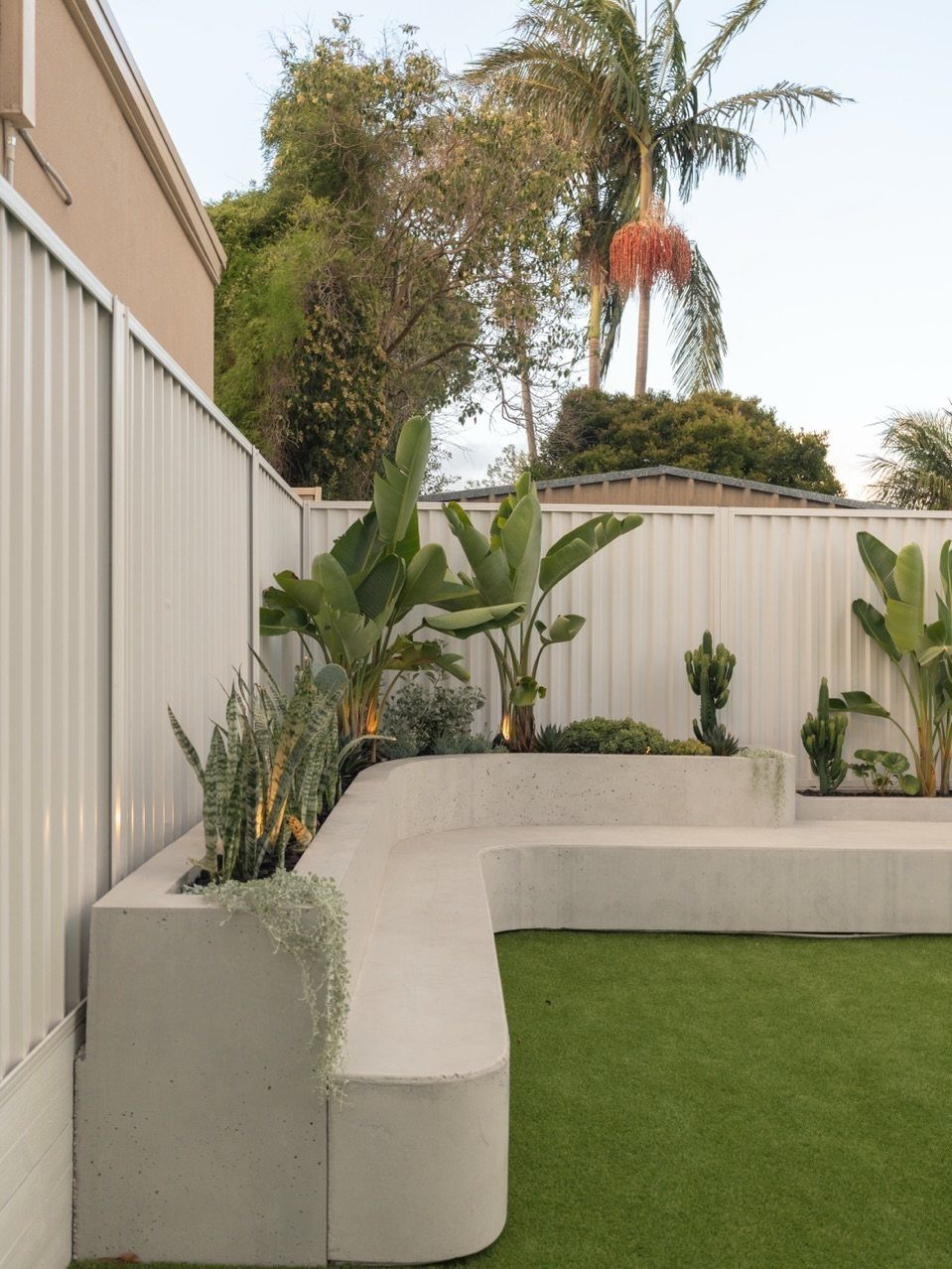
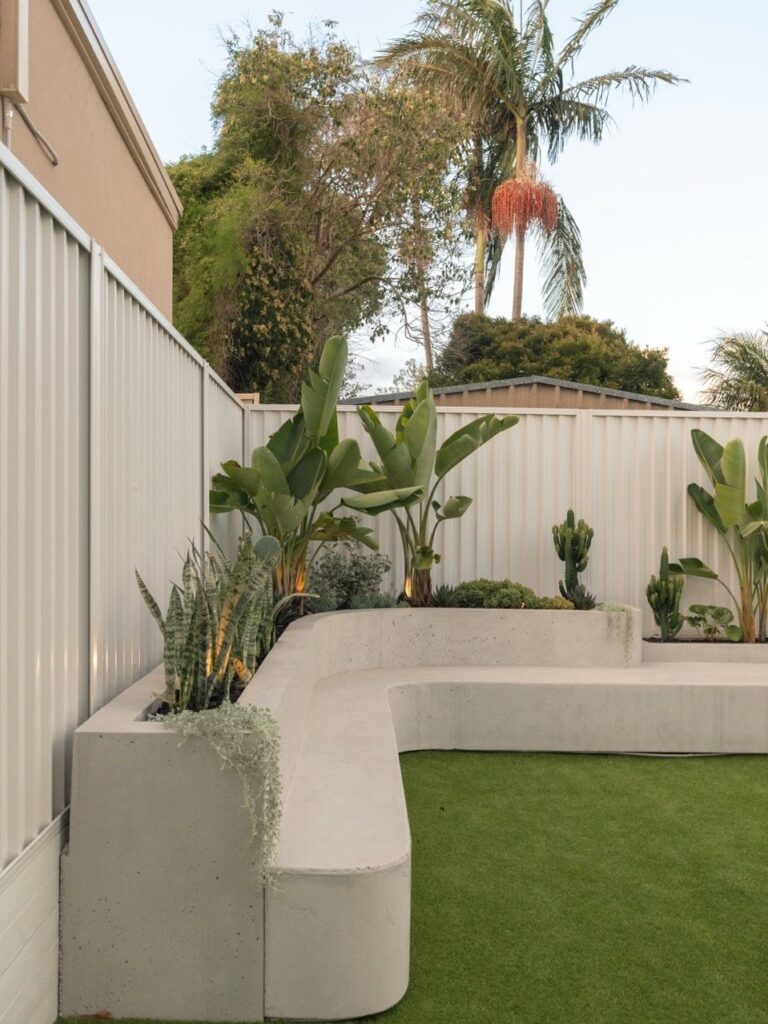
A built-in bench turns a corner into a reason to stay outside.
Concrete is permanent and expensive; a gray Adirondack chair and a gravel pad moves if the sun shifts. I would check the curve before pouring: sit on a cardboard mockup and see whether your knees hit the planter edge.
The tradeoff is heat: concrete holds afternoon sun, so place this where shade arrives by 4 pm or plan for cushions.
6. Vertical Planters
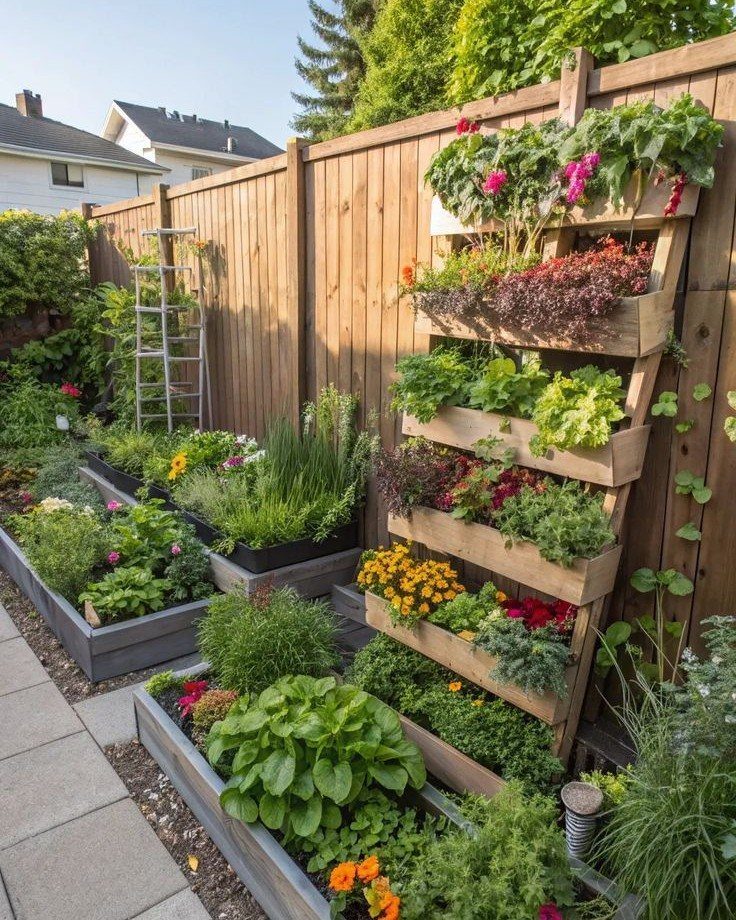
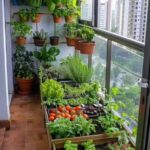
Vertical planters grow up when the corner has no room to grow out. A leaning ladder-style planter stands against a tall wooden fence and holds flowers and leafy greens in stacked boxes; the footprint is narrow at the base.
This suits herbs or shallow-rooted annuals, not tomatoes or peppers that want depth. I would check that the lean is fixed, not hinged, before I trusted it in wind; a freestanding ladder needs staking or a wall behind it.
A corner that is only fence and paving can still produce basil or bloom with petunias.
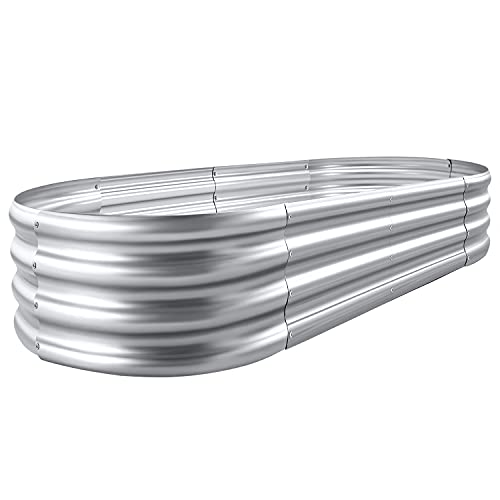
Each raised metal garden bed size: 4×2×1ft ,7.14Cu
7. Decorative Gravel
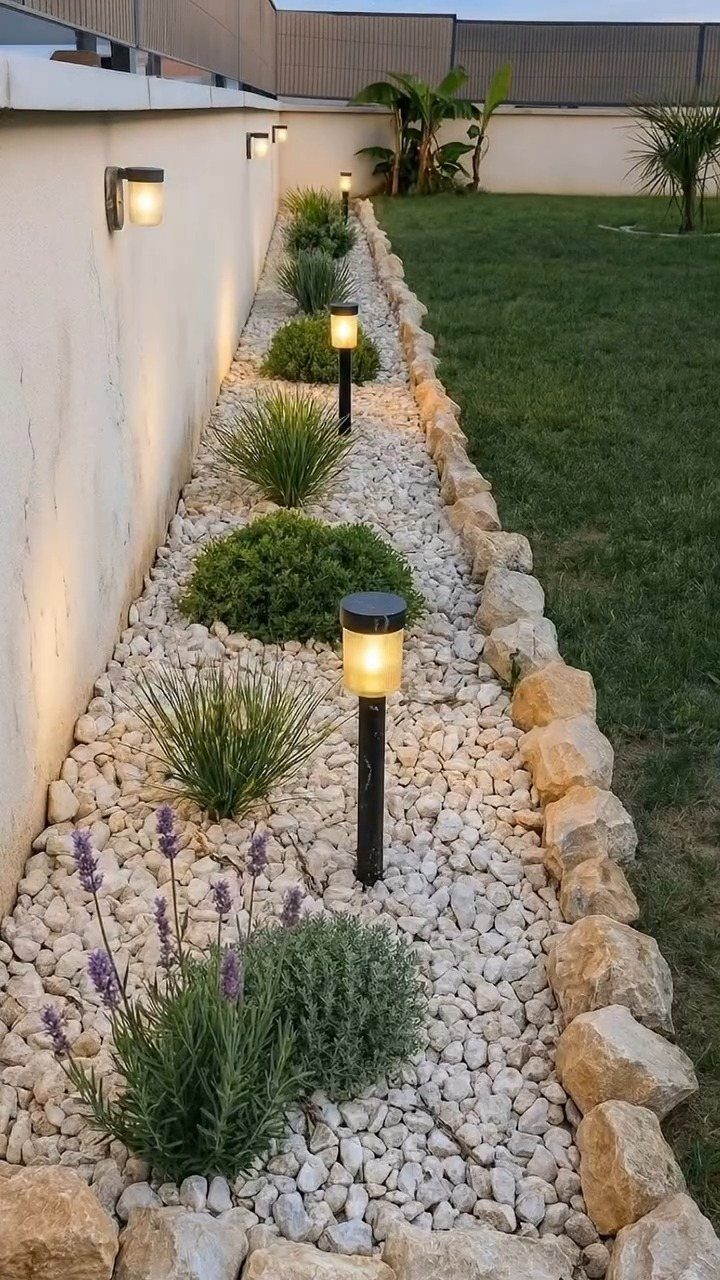
White gravel reflects light into a corner that fences or walls would otherwise leave dim. Lavender and compact shrubs sit on top of it, not in it; the stones stay shallow so roots reach soil beneath.
A gravel bed along the lawn edge stays put if you set a few larger rocks as a buffer; no raised bed wall needed. Solar stakes mean no trenching for low-voltage wire, though the cells need wiping after pollen season.
Gravel deep enough to suppress weeds still lets plants root without sinking; I aim for a layer you cannot see the soil through. Darker stone hides fallen leaves; white shows every one and asks for a rake.
8. Corner Pergola Structure
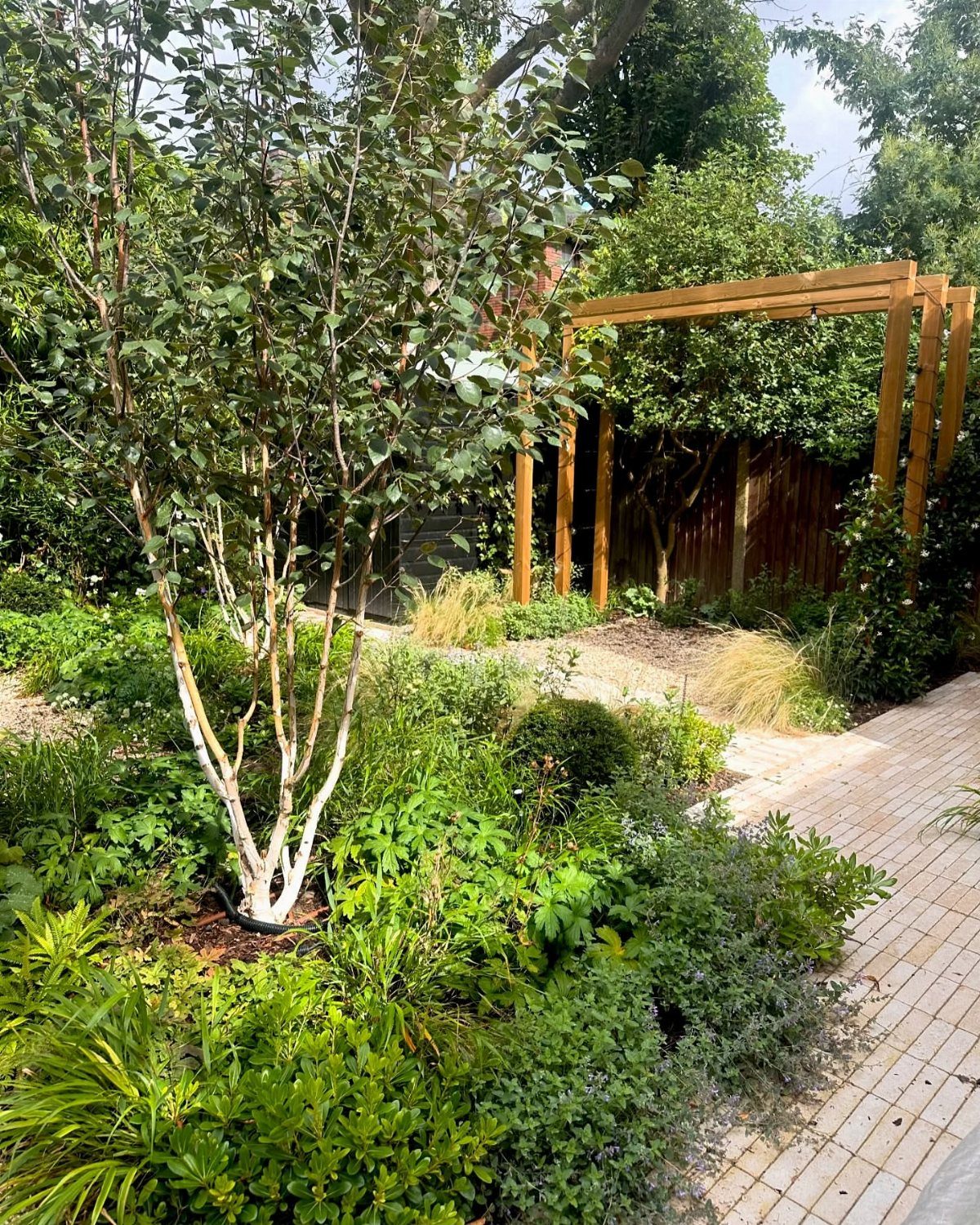
A pergola in the corner gives the eye a ceiling where the sky was open.
The birch at its center draws vertical lines that repeat the posts; brick underfoot keeps mud off shoes in a spot that sees morning coffee and evening drinks.
Multi-stem birch stays narrow enough for tight corners but wants acidic soil and summer water. I would check the mature spread before planting: a canopy that grows wide will crowd the structure.
The wood needs sealing on some schedule in a wet climate, or it greys to silver which some prefer anyway. A corner this settled is the last place you redesign; build it to stay.
Maximizing Small Spaces
Access is the hard part: in a tight corner you are working from one side, so keep the bed depth to what your arm reaches or you will step in soil to prune tomatoes.
Gravel underfoot stays cleaner than turf you cannot mow properly against 2 fences meeting at an angle.

SPACIOUS GROWING SPACE WITH EXTRA PLANTING DEPTH:Measuring 91.5" L × 47.3" W × 22.06" H, this galvanized raised garden bed holds approximately 412 gallons of soil, providing generous planting space and extra depth for vegetables, herbs, flowers and fruits. The spacious design allows roots to grow naturally while supporting tomatoes, peppers, cucumbers, broccoli, beans, lettuce, carrots, potatoes and other popular garden plants. Ideal for backyard gardening, raised vegetable gardens and outdoor planter box projects.
Plant Combinations
Height and bloom time do the real work of making a corner read as layered, not accidental. Burgundy Japanese maple against white hydrangea extends that logic to shrubs, with purple salvia bridging the gap in mid-height.
Terracotta pots clustered in sizes let you test a purple-and-green scheme before digging; move them around until the eye lands where you want it.
Lavender needs the same sharp drainage that gravel beds provide, so pair them rather than fight clay with one and drown the other.
Bloom time is where most corners go flat in August; mix early bulbs, summer perennials and ornamental grasses that hold shape into frost.
Seasonal Considerations
Year-round interest means something green or structural when flowers quit. Multi-stem birch in a pergola corner gives white bark and vertical lines through winter; ornamental grasses at a stone path border move in wind and catch frost.
Hosta handles shade under trees but dies to the ground, so the corner needs a winter skeleton from fence, arch or gravel geometry.
Clematis or jasmine on a wooden arch is bare wood January through March; plan for the look of the structure itself, not just the vine.
Lavender and compact shrubs on white gravel stay evergreen in mild zones; in hard winters the gravel itself becomes the interest, bright against dormant beds.
Maintenance Tips
Low maintenance starts with matching the plant to the spot’s real conditions, not its imagined ones.
Mortared river pebbles stay put forever, but flagstone on sand shifts if you guessed the path wrong, and guessing wrong once is cheaper than chipping out mortar.
Landscape fabric inside a raised bed keeps soil from washing through plank gaps; without it, you are topping off every spring.
Frequently Asked Questions
What can I put in the corner of my garden?
Colorful flower beds, wooden arches, stone pathways, raised beds, seating nooks, vertical planters, gravel beds, or a pergola each solve a different corner problem.
A flower bed brightens the spot where fences meet; an arch draws the eye through; a bench gives you reason to stay.
I would pick based on whether the corner needs color, a path, a destination, or just something to look at from the kitchen window.
What are some ideas for a corner shade garden?
Hosta handles shade under trees and gives you leaf color where flowers struggle; pair it with ferns or other shade-tolerant plants that do not need direct sun.
Hours of shade matter more than most people check: partial shade and full shade want completely different plants, and the tag at the nursery will not save you.