Some of these ideas cost next to nothing for cardstock prints, others run higher for a full tablescape, and the one that fits depends on whether you are dressing a single surface or an entire room.
[link-whisper-related-posts]1. Plaid Ribbons
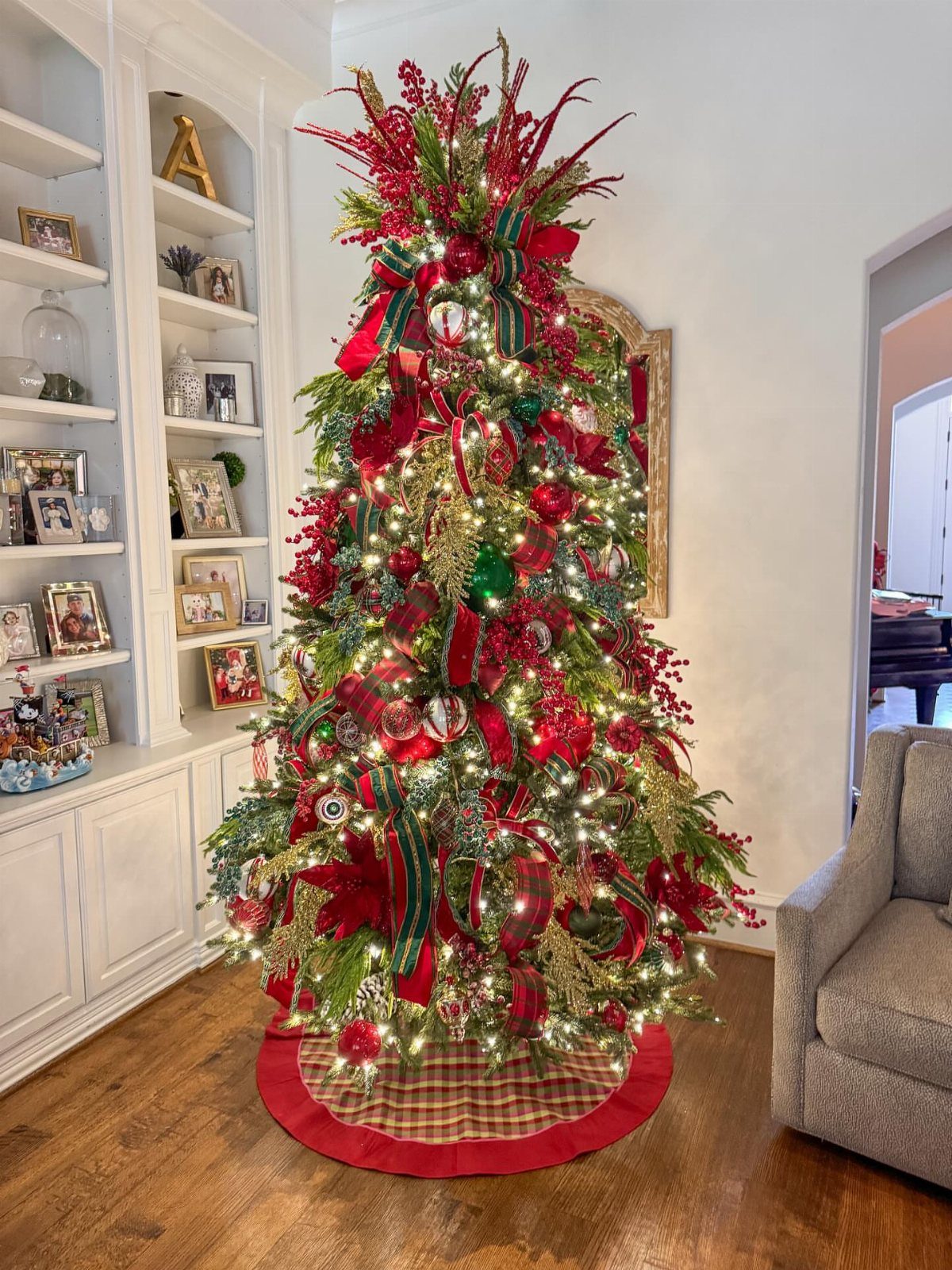
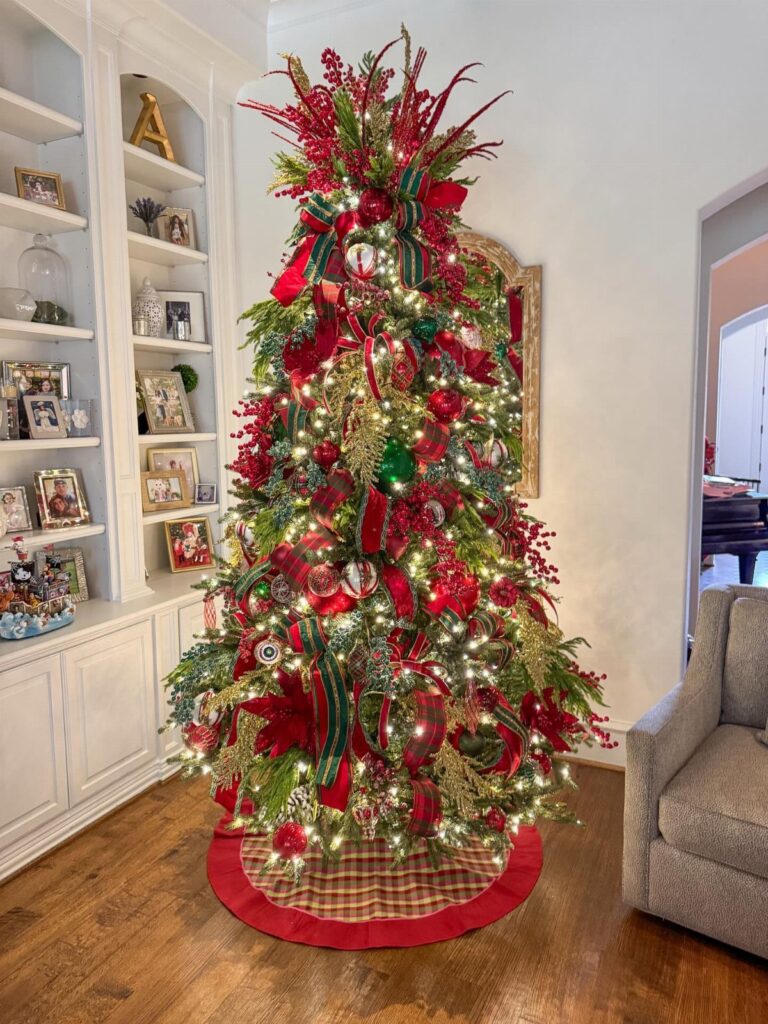
Plaid ribbon turns a basic green tree into something that reads intentional without reading expensive.
I spiral the ribbon from the top down, letting it hang naturally and tucking sections into the branches so the tree still has room for ornaments.
Red bead garland layered between the ribbon strands adds depth without clutter. The same ribbon wraps gifts and ties bows on stockings, which pulls the room together without buying anything extra.
Plaid throw blankets in matching colors finish the look on couches or chairs. Ribbon goes on sale at Joann or Michaels often enough that the spiral is the real investment, one afternoon of fussing with the tuck and curl.

CLASSIC PATTERN - Our wired ribbon is designed with red and green plaid with gold line, simple and classic, which is perfect addition to any bow for wreaths or garlands, enhancing the joyful festival atmosphere to your home, yard or office

Nice Size: the classic red green tartan Christmas ribbon pack includes 6 rolls, each measuring approximately 3 yd/ 9 ft and 2.75 inches wide; With a total length of 18 yd/54 ft, this package offers ample buffalo plaid Christmas decorations for any festive need, be it indoor or outdoor

Classic Tartan Christmas Style: Featuring a traditional red and green tartan plaid with black accents and subtle gold metallic threads, this Christmas ribbon brings a warm farmhouse and classic holiday look to Christmas trees, wreaths and seasonal décor
2. Red and Green Ornaments
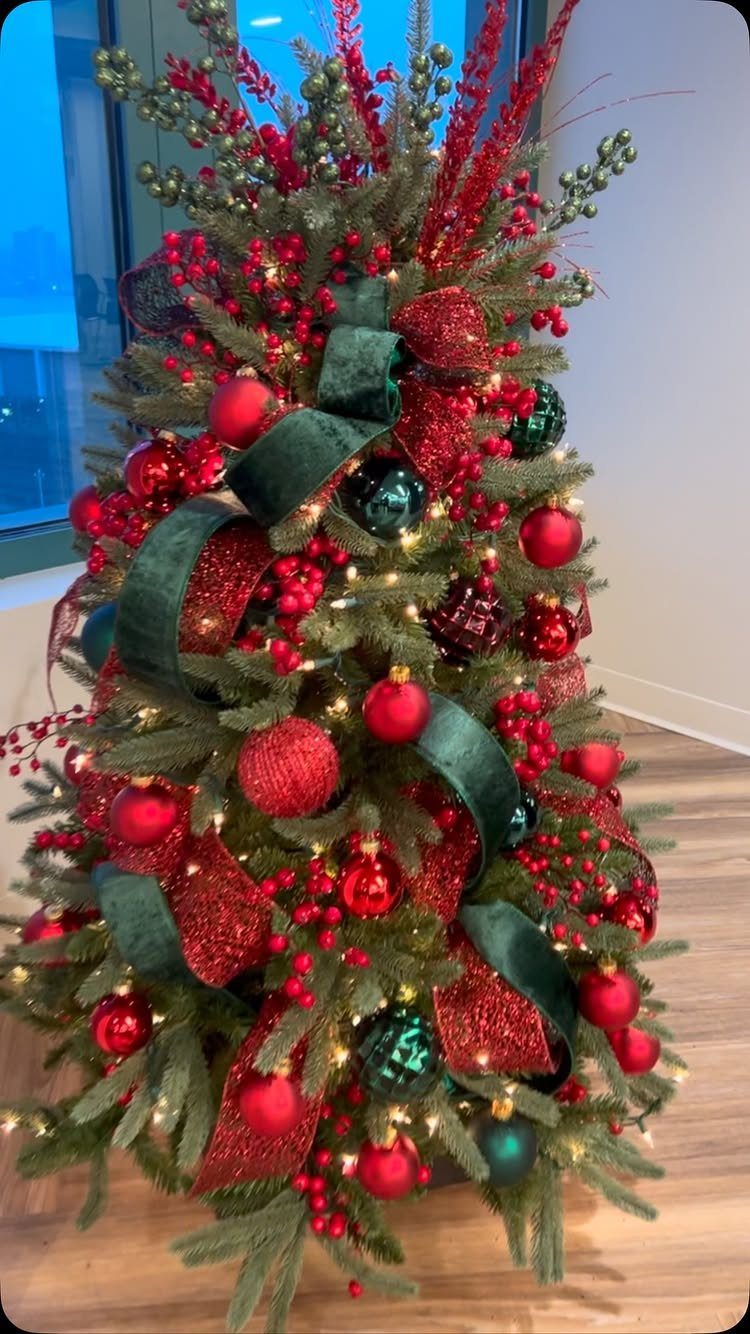
A tree in straight red and green ornaments avoids the scattered look that happens when you mix too many colors.
Dark green balls, red balls, and green velvet ribbon with berry sprigs give the limited palette room to let texture, flocking or real needles, show through.
If you are buying a faux tree, thickness matters more than height.
A tree that fills out fast beats a taller sparse one that needs hours of branch-spreading to look full. Flocked versions read brighter against dark red and deep green ornaments; plain green reads more traditional.
Add pine cones, berries, or a few white ornaments if you want variation, but keep the main story red and green.
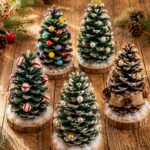
Clusters of small trees in the same colors work for entryways or side tables where a full tree will not fit.

Two Sizes Xmas Ornaments: includes 24 fabric wrapped hanging ornaments in two matching sizes, 12 pcs measuring 1.57 in/4 cm and 12 pcs measuring 2.36 in/6 cm; Mix both sizes to create fuller tree displays with added depth; These christmas tartan ornaments and christmas plaid ornaments arrive with soft velvet hanging loops for quick decorating

Christmas Plaid Design: these Christmas glass ball ornaments feature tartan plaid patterns in red and blue green tones, accented with fine gold line details for a festive and elegant look; The classic plaid style pairs beautifully with farmhouse, rustic, traditional, and vintage Christmas tree themes, adding a warm holiday touch

Complete Velvet Christmas Ornaments: this velvet Christmas ornaments set for Christmas tree includes 36 assorted velvet hanging ball ornaments in 4 different size, likes 2", 2.4", 2.8" and 4", and 24 velvet ribbon bows; Both velvet bow and balls are red, green, and white colors, offering plenty of options to decorate trees, garlands, or holiday scenes throughout your home
3. Nutcracker Decorations
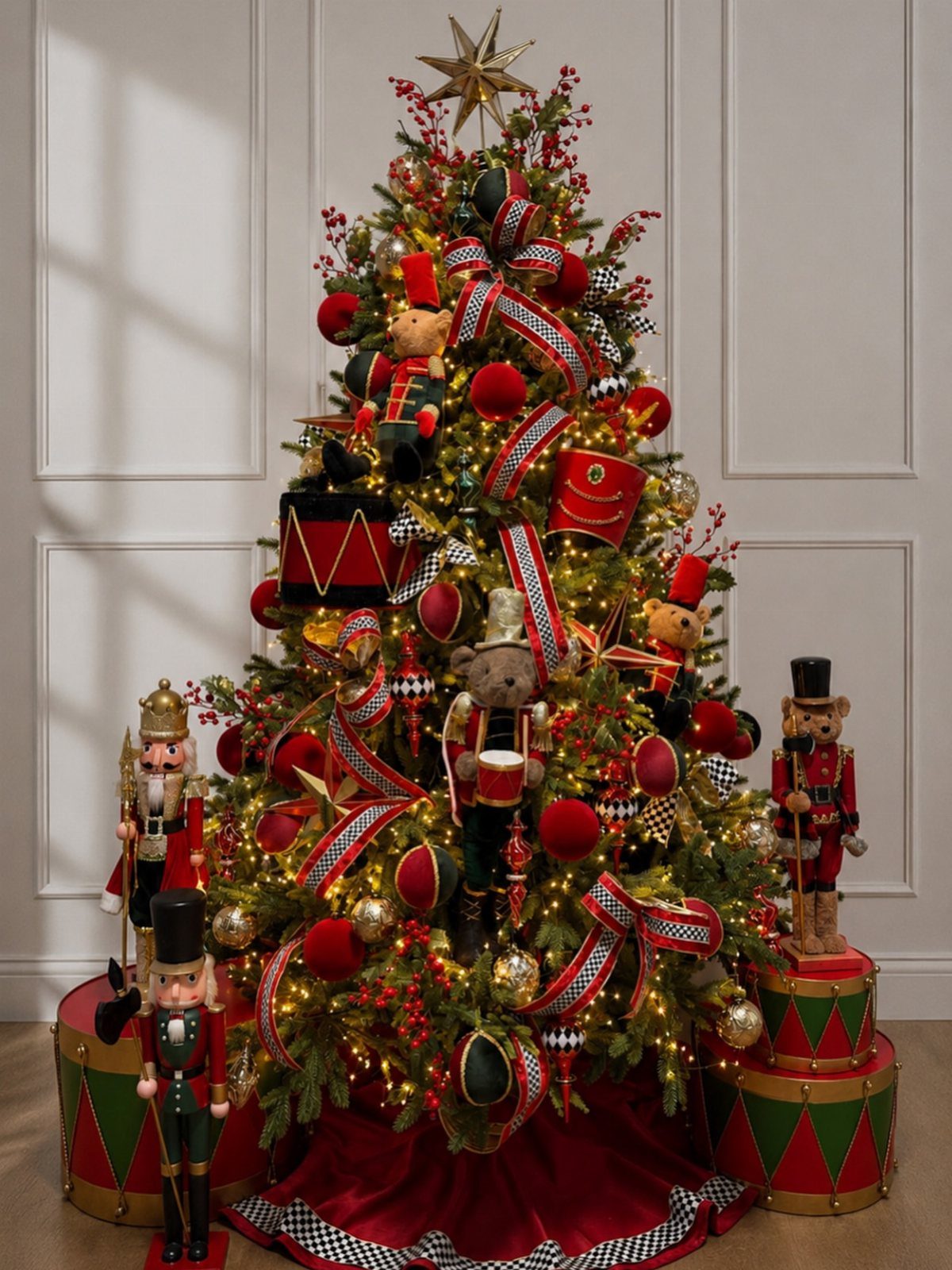
Nutcracker figures carry more color and detail than most holiday accessories, so a few pieces go a long way.
Soldier figures and drum-shaped ornaments against red and green keep the military styling from feeling random, like a toy box tipped over.
Painted wood figures in uniform colors turn up at craft stores and discount shops in a range that covers most budgets.
I look for ones that stand on their own; the hanging ornaments are harder to place and tend to spin.
Odd numbers at the base of a tree, on a mantel, or on a console table draw the eye up better than even groupings.
Dyed or painted versions chip less than hand-painted collectibles if you have kids or pets moving through. Skip the full regiment unless you collect them; a tight, chosen set beats a crowd of mixed styles.

Paintable DIY nutcracker figurines: you can use watercolor pens to paint these unfinished nutcracker figures according to your imagination, and then, you can get a vivid and realistic nutcracker figure

Paintable DIY nutcracker figurines: you can use watercolor pens to paint these unfinished nutcracker figures according to your imagination, and then, you can get a vivid and realistic nutcracker figure

ENESCO MINIATURE FIGURINE: from the Jim Shore Heartwood Creek collection
4. Vintage Holiday Prints
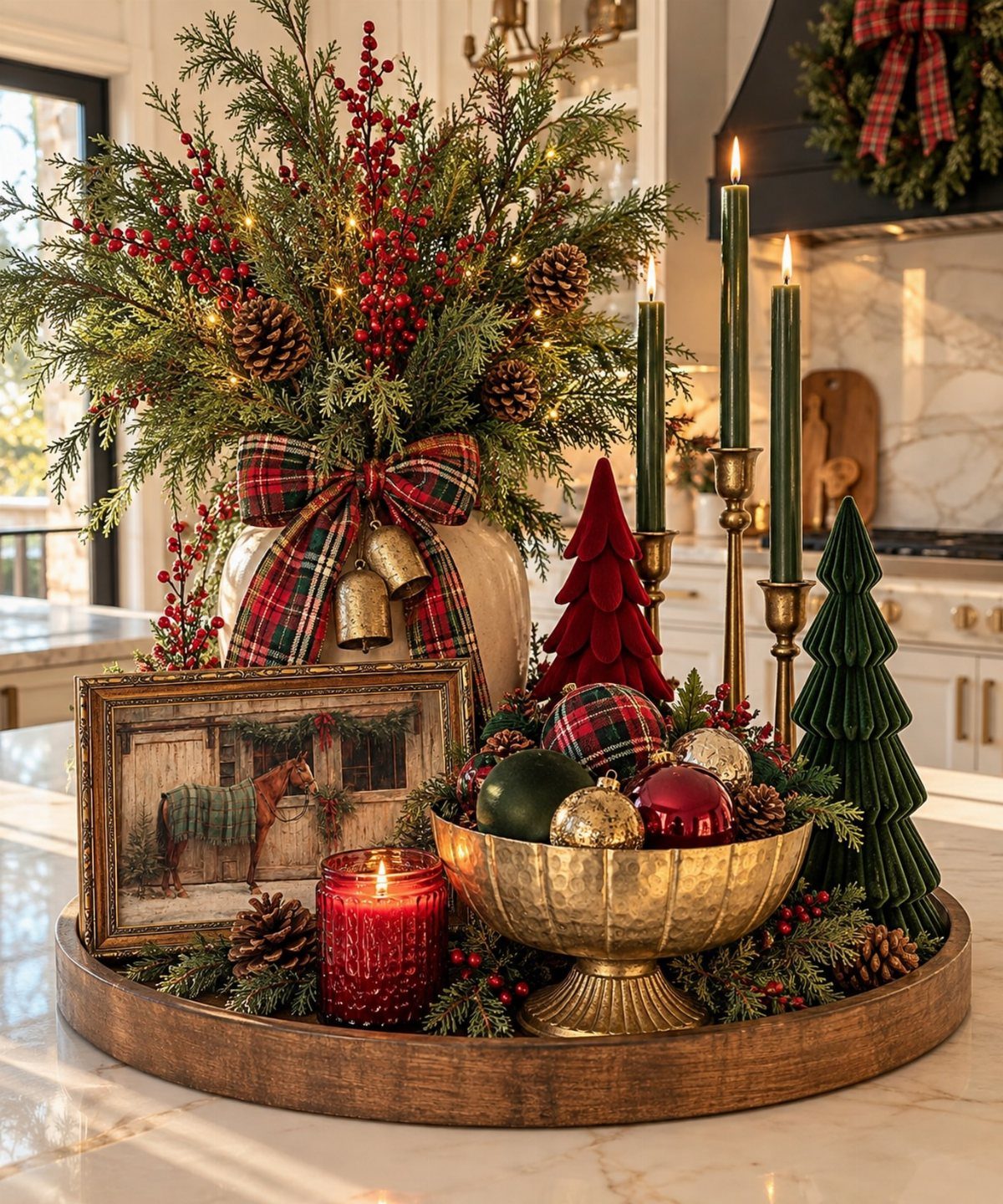
Swapping wall art for the season sounds like a project, but it goes fast if your frames are already hung.
A framed vintage horse print on a tray reads holiday without being a Santa or snowman you are tired of by mid-December.
Free vintage images from sites like The Graphics Fairy print on cardstock and drop into existing frames. I keep a second set of prints rolled in a drawer; swapping back after New Year is the work of a coffee break.
The look works best in kitchens, hallways, or anywhere you already have a gallery wall that feels bare in winter.
Botanical prints, winter landscapes, or old advertisements in red and green tones fit the palette without matching it exactly. Cost is ink and paper, spare change if you already have cardstock on hand.

What You Will Get: 10 sheets Christmas theme wall art prints in different design, will offer enough quantity and multiple styles to meet your various needs. Please note that they are not framed

The Package Includes - 10 sheets Christmas wall art prints, different designs make them great decoration for home and other places. Please note that they are not framed.

【Vintage Christmas Canvas Wall Art】Set of 9 festive prints featuring Santa Claus, Xmas trees, snowy streets, and winter scenes, bringing warmth and nostalgic holiday spirit into your home.
5. Christmas Wreaths
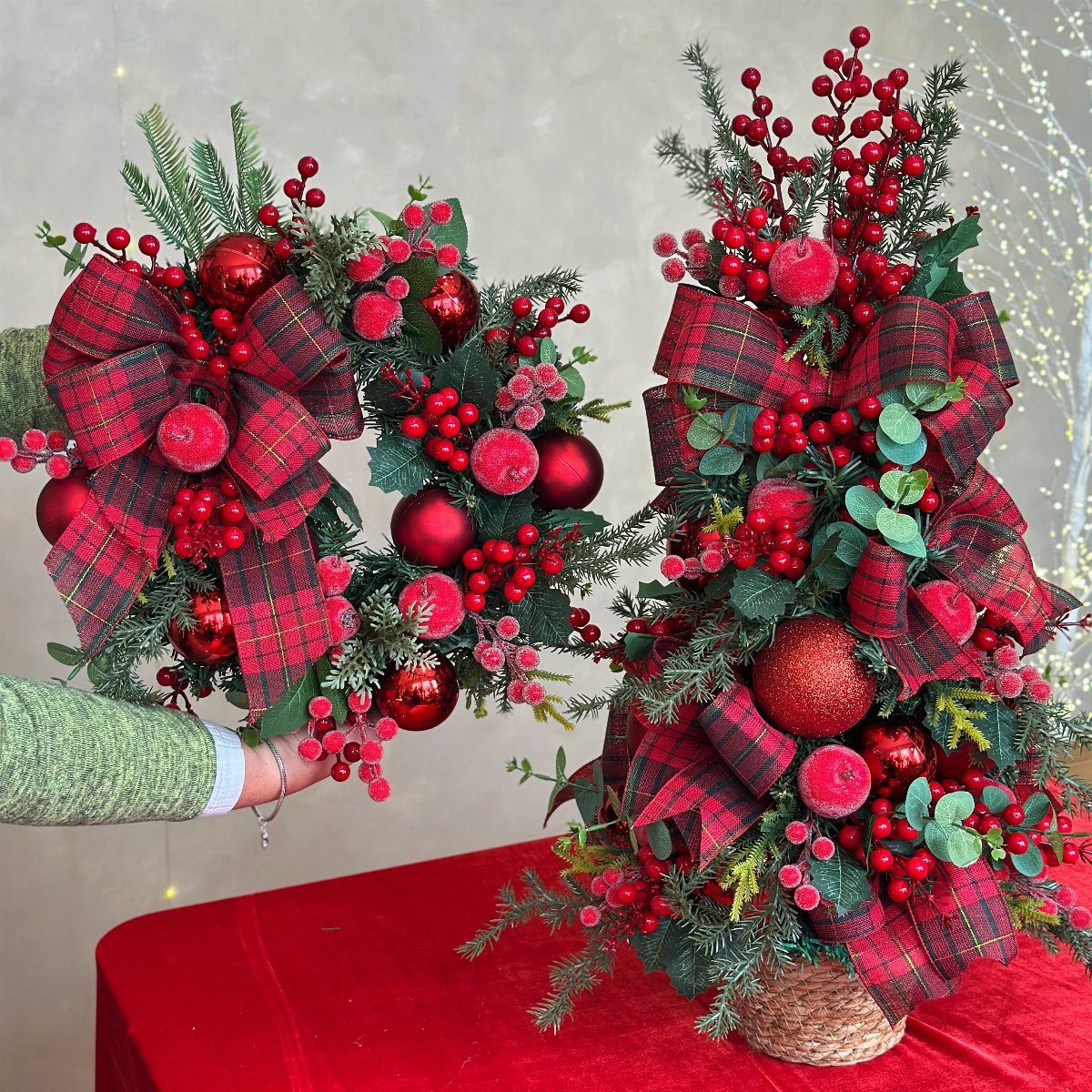
A wreath on the door or a wall inside sets the tone before anyone sees the tree.
Red plaid bows and berries layered over deep evergreen let the dark red and green read sharp without either color washing the other out.
Fresh greenery wreaths smell better but drop needles and dry out fast enough to make you regret the choice before the holiday ends.
A faux wreath in classic red and green goes up after Thanksgiving and holds its color through the season without the neighbors counting your early decorating against you.
I hang mine inside first, where the close-up view matters, then transfer it out when the weather turns.
Most standard doors need a wreath that leaves room around the frame; too large and it crowds the hardware.
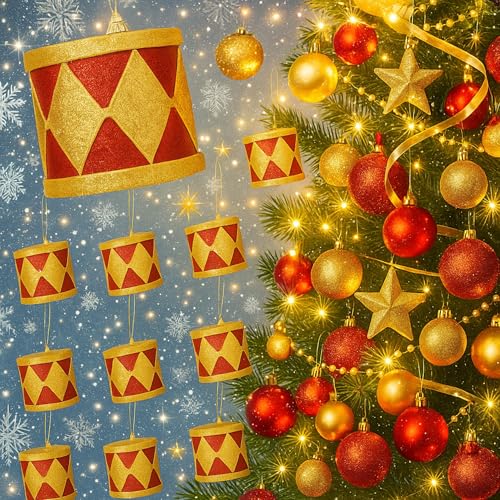
Package Content: you will get 12 Christmas tree drum ornament, with a rope for easy hanging, special style, exquisite details, ideal for the Christmas theme of the nutcracker and harlequin, its exquisite design and elegant details enhance your holiday decorations, creating a festive atmosphere in any space it decorates

8 Unique Nutcracker Soldier Ornament Set: create a classic holiday display with this 8-piece glass Christmas nutcracker ornament collection; Featuring 8 different royal soldier designs, including candy cane, drum, trumpet, and Christmas tree details, each ornament adds unique character and visual variety to Christmas trees, mantels, wreaths, and seasonal displays

Size: 12 inches - 320mm - tall
6. Red and Green Christmas Tablescapes
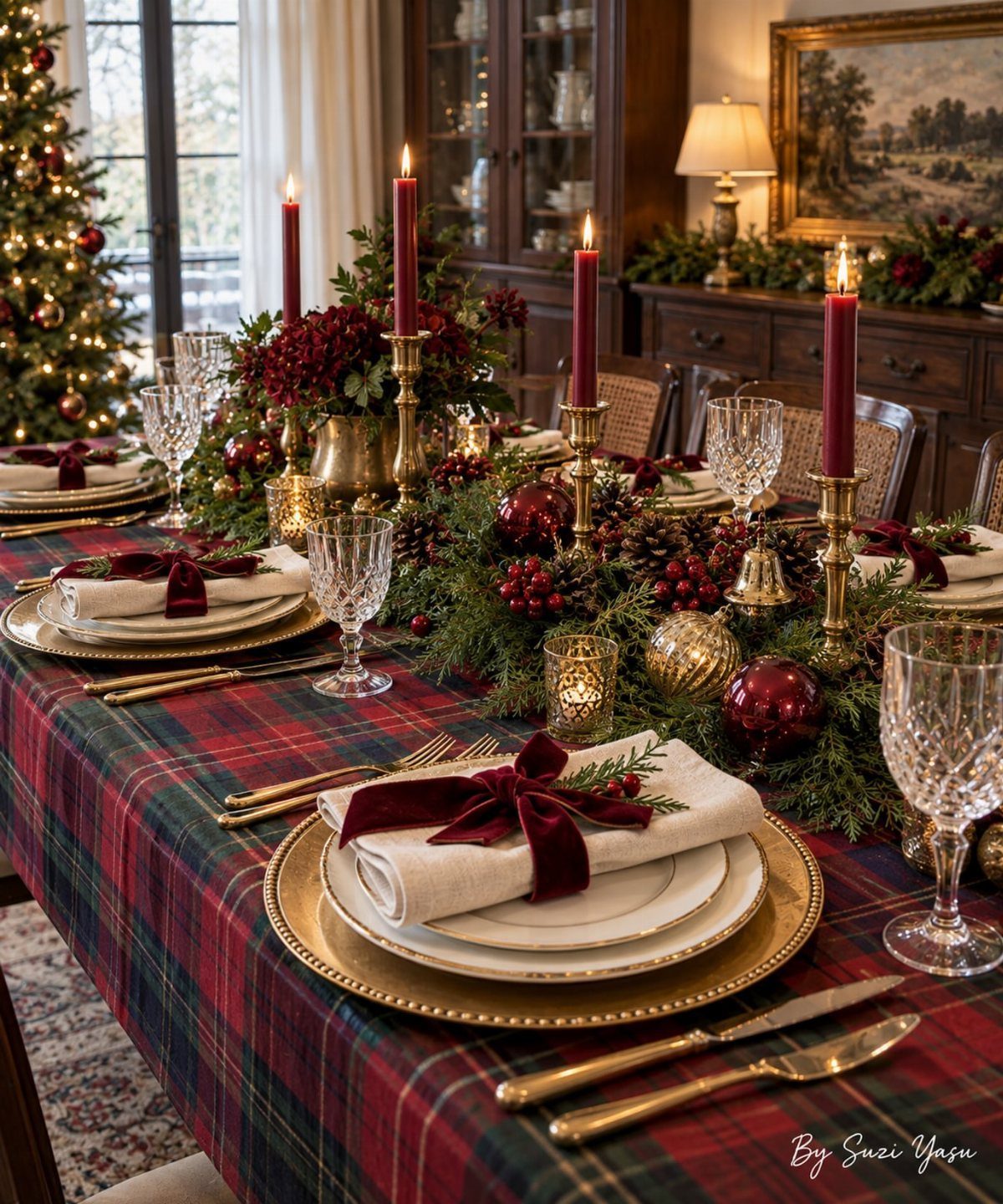
A table set for Christmas dinner is where the red and green palette proves it is not just for trees.
A plaid cloth, gold chargers, red taper candles, and a centerpiece of greenery and ornaments run together when the gold keeps it from reading like a diner color scheme.
Plaid tablecloths or runners anchor the look and hide the spills that happen when family gathers.
I use what I own for dishes and glassware, adding color through candles, napkins, and the centerpiece. Tapers in brass holders give height; votives alone read flat and get lost across a long table.
For the centerpiece, a low bowl of ornaments and greenery lets people see over it. Tall arrangements work only on a sideboard or buffet where no one is trying to talk through them.
The whole setup takes an hour if you gather materials first, and breaks down fast when you need the table for breakfast the next morning.

Christmas Ribbon Elegance: receive 2 rolls of Christmas red green and blue checkered ribbon, each 2.76 inches wide and 10 yards long; They are ideal for meeting your holiday decoration, gift wrapping, and DIY craft needs

Ultra-Soft Comfort: Girls christmas nightgowns, made from premium breathable fabric, these long sleeve pajamas dresses ensure all-night comfort while maintaining that magical princess silhouette your little one loves

Traditional Tartan Plaid: Red, navy blue and dark green bands cross with white accent lines for a classic holiday look. The textured face adds visual depth to bows and coordinates with seasonal greenery
7. Botanical Floral Christmas Trees
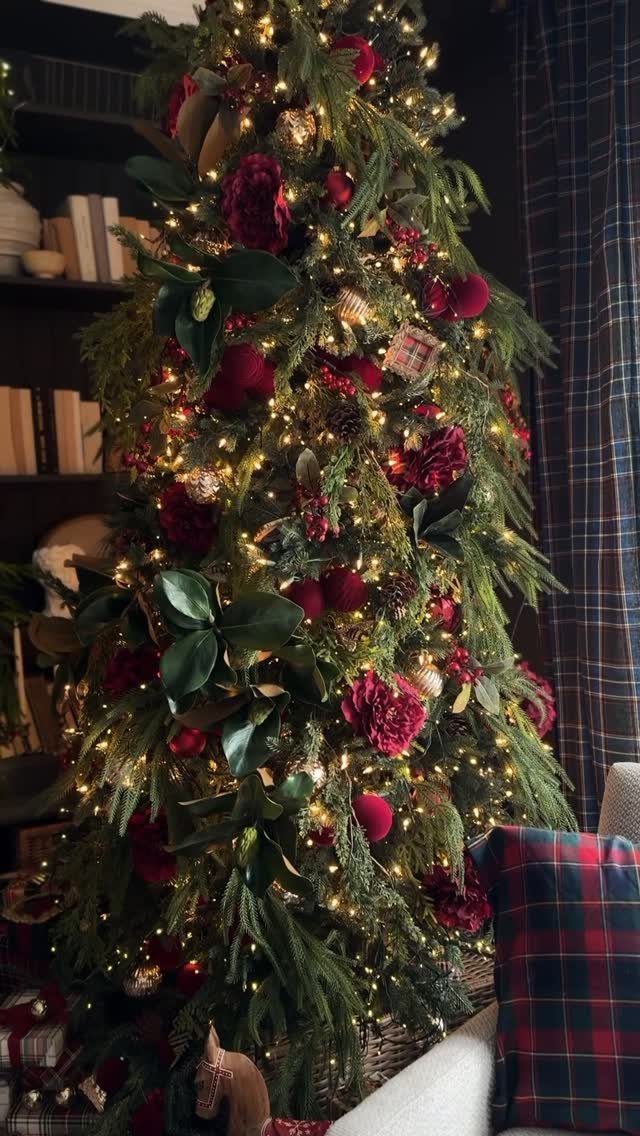
A tree dressed in magnolia leaves and red flowers reads fuller than the same tree in ornaments alone.
Floral picks from craft stores, bought on sale, push into branches where the tree is thin. The leaves stay year to year; berries and cones do too if you store them dry.
I cluster the red blooms where the eye lands first, usually mid-height and toward the front, then fill behind with green so the depth shows from an angle.
Warm lights matter more than bright white with this palette; the flowers look painted under cool bulbs. A sparse tree with gaps between branches takes these picks best, since they fill the holes without you bending every limb into place.
Faux flowers avoid the water and wilt of real ones, and they survive the season without browning. The trade is a slightly stiffer look up close, which matters less across a living room than on a dining table.

Package Includes: You will receive 40 pieces of velvet Christmas ball ornaments in 3 different sizes, including 10 pieces measuring 2.36 inches/ 6 cm, 12 pieces measuring 1.97 inches/ 5 cm and 18 pieces measuring 1.57 inches/ 4 cm. Pair with red, green and white colors to create a classic holiday decor. Different sizes for you to make your own elegant Christmas home decorations
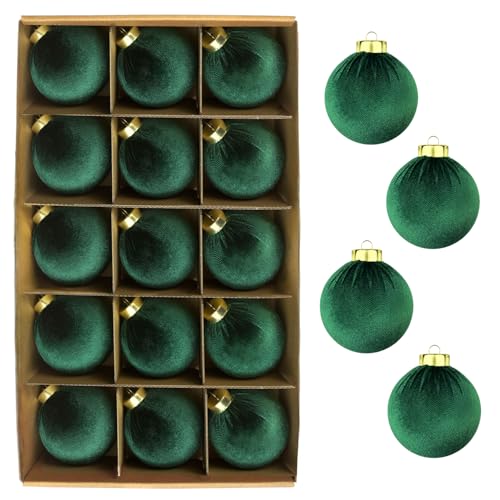
Green Christmas Balls - This set includes 15 ball-shaped ornaments in emerald green, measuring approximately 3.15 inches in diameter, creating a cozy and heartwarming atmosphere on your Christmas tree.
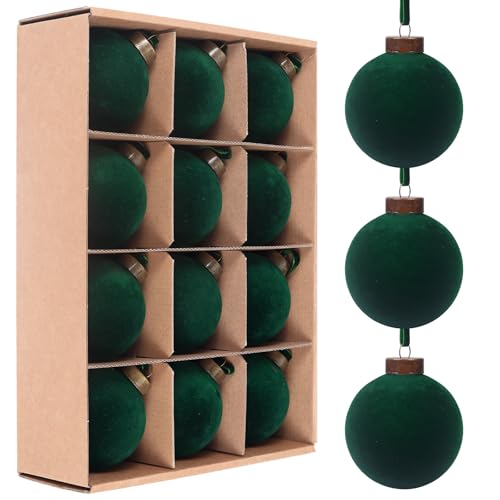
package includes: Our Xmas Tree Holiday Decor accessories come in different quantities, sizes, and colors for you to choose from. The quantities are 6, 12, and 24 pieces, with diameters of approximately 2.36, 3.15, and 3.94 inches. The rich range of sizes and colors can meet your decoration and sharing needs, creating holiday decorations that suit your style
Use of Natural Elements
Fresh greenery does the work of 3 decorations at once: color, texture, and smell. I use fir branches in place of manufactured garlands on mantels and stair rails, which saves money and looks less stiff.
Fresh branches dry fast inside heated rooms, so I cut them late or buy from a lot the week before Christmas.
Red berries on real stems, not plastic picks, drop color into green arrangements without looking painted.
I cluster them where the light hits, since the waxy surface catches lamps better than matte faux versions. A basket of mixed branches and berries on the floor reads rustic without the farmhouse sign that usually comes with the look.
Lanterns with real candles need watching, but the flame color beats LED orange. I use them on covered porches where wind is low and the glow shows through windows from the street.

1.PREMIUM DIY CRAFT KIT: Giant 14.7-inch (approx. 37.5cm) unpainted wood nutcracker soldier, perfectly sanded and ready to be decorated. A fun project for adults, teens, and families.

Reliable Wood Material: the nutcracker ornament kit boasts quality wooden materials for durability and longevity; Each element of the kit, from the nutcracker figures to the paint brushes ensures a great crafting experience. Proper for people desiring a quality crafting endeavor

Unpainted Soldier to : Start with a blank wooden nutcracker-style figurine and choose the colours that suit your holiday decorating. Paint a traditional uniform or create a different look for a handmade seasonal accent that feels personal
Simplicity in Decor
A room does not need every surface decorated to feel finished.
I start with one red element and one green, placed where the eye travels naturally: the tree, then the mantel or a side table. Everything else is optional.
Stockings in a dark red with one neutral partner carry the color scheme without a full set in matching fabric.
A single nutcracker and a tree skirt in the same rustic red do the rest. The tree itself supplies most of the green; adding more is where rooms tip into overload.
Tiny bits of ornamentation read better than coating the entire room.
I have walked into spaces where every pillow, candle, and coaster matched, and the effect was tiring by December 15. Leaving walls and shelves alone in spots lets the decorated areas matter more.

Vintage Christmas Gallery Wall Art :Featuring vintage winter landscapes, Christmas trees, snowman, reindeer, and Santa's sleigh, these prints add christmas charm and winter beauty to your room.

🎄 【Seasonal Christmas Decor】: Bring the nostalgic warmth of a rustic Christmas into your home. Our vintage Christmas wall decor canvas prints feature classic holiday elements like a joyful snowman, serene pine trees, and Santa in a snowy landscape, perfectly capturing the essence of a cozy, farmhouse winter celebration. This vintage Christmas oil painting effortlessly adds a touch of timeless charm to any room.

🌲【Vintage Christmas Wall Art Prints】: Enhance your space with the rustic charm of our "Christmas Santa Claus Wall Art". This vintage Christmas wall decor brings a touch of nostalgia to your surroundings. Embrace the beauty of winter with this Christmas art, perfect to add a rustic and neutral touch to your holiday home decor.
Color Palette
Dark red and forest green read quieter than the bright Christmas green and cherry red of drugstore displays. The muted pair works in rooms with wood tones, brass, or cream walls that would fight brighter colors.
Dollar store ornaments come in these deeper shades now, which was not true when I started decorating my own place.
I buy sets there to fill the back of the tree where no one examines the finish up close. The darker palette also hides gaps in a sparse tree better than light colors, which show every hole.
Gold or brass with dark red and green keeps the combination from looking like a diner booth.
I use it in candleholders, picture frames, or a deer head mount if the room already runs rustic. The metal warms both colors without adding a third strong hue.

Package Includes: our set includes 24 pcs nutcrackers christmas decorations with 12 distinct figures, 2 pieces per design to meet your needs; Features 12 classic roles including staff soldiers, sword knights, drummers, trumpeters, gift bearers and royal kings, each with unique details like crowns, scepters, trumpets, gift boxes and tiny Christmas trees; The timeless red gold and green palette brings a warm festive vibe, letting you create a layered non monotonous Xmas tree display easily

Christmas Ornament Set: you will receive 10 nutcracker hanging ornaments in a package, there are 2 different styles and each style has 5, enough quantities and styles for you to meet your needs of decoration and replacement requirements; Our Nutcracker decorations are 3D, Very cute and vivid

Size: Dimension: 12 inch - 300mm
DIY Decorations
Mercury glass ornaments look expensive and cost little to make.
The technique uses spray paint and vinegar on clear glass or plastic balls, which takes an afternoon and dries overnight. I made a dozen last year for the price of two store-bought ones.
Wood slice ornaments are faster: a drill, some twine, and paint or stain if you want color.
They suit a rustic tree better than shiny finishes and survive drops that crack glass. I write the year on the back of each one, which turns them into a record without extra effort.
Garlands from paper, popcorn, or dried orange slices take longer than buying plastic, but they store flat and smell better while they hang.
I replace mine every few years as they yellow, which feels right for something meant to last one season.
Frequently Asked Questions
What is the name of the red and green plant used to decorate for Christmas?
Poinsettia is the classic red and green plant for Christmas.
Its bright red bracts against dark green leaves fit the palette without any extra decoration needed. Most grocery stores and garden centers carry them from late November through December, and they last the season with water and indirect light.
What are the different shades of Christmas green?
Forest green carries more weight than the thin, loud green of seasonal aisle displays.
Against wood, brass, or cream walls, the quieter shade settles in instead of shouting. Dollar store stock now runs deep enough to fill a sparse branch without the holes showing through.
What colors will be popular for Christmas 2026?
Dark red and forest green need gold or brass between them to keep the pairing from flattening into diner upholstery. This combination has survived trend cycles because it already lives in rooms with wood and cream, not against them.