These ideas stretch from a free afternoon with a hammer to a stone-lined bed that takes a full weekend to level and fill.
The one that fits depends on whether you rent or own, how much sun your space gets, and whether you need this year’s salad or a setup that still looks good when the tomatoes are done.
[link-whisper-related-posts]1. Vertical Gardening
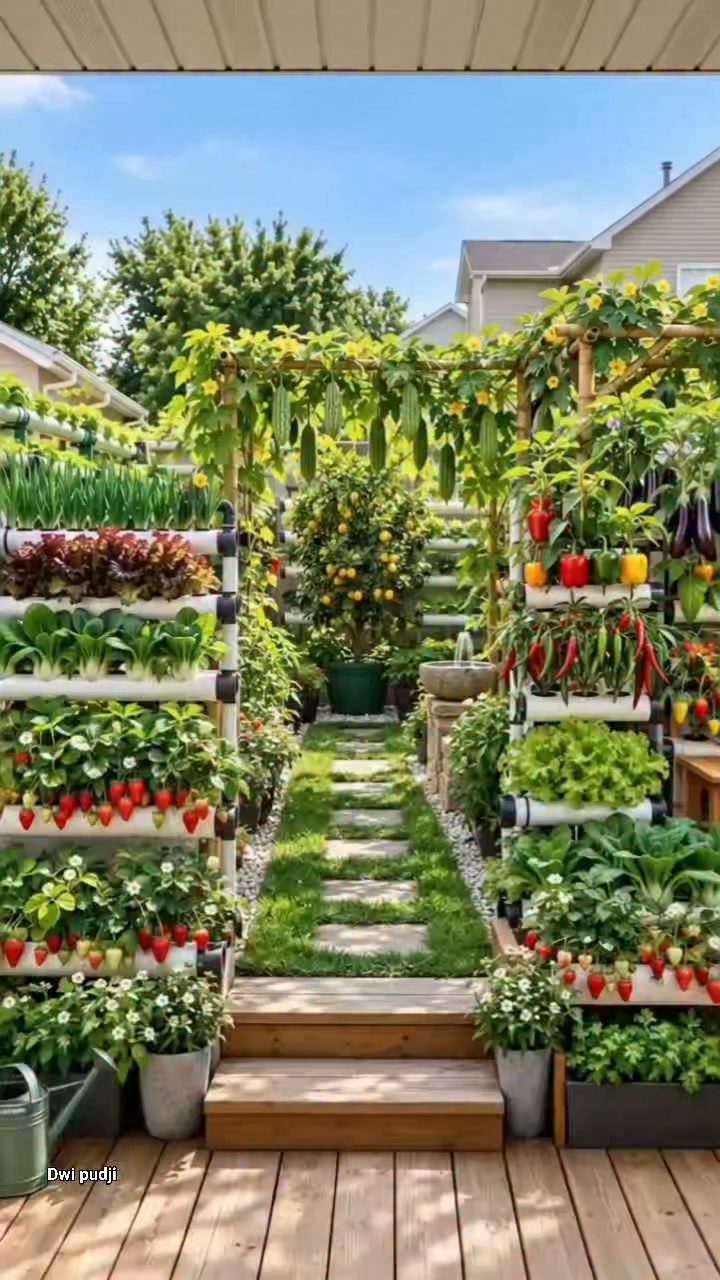
Plants grow up instead of out.
A PVC pipe tower with holes cut for strawberries or greens takes up little patio space and feeds one person salad through summer. Vertical pipes and an overhead arch for gourds keep the footprint small while stacking production upward.
Trellises suit peas, beans, cucumbers, anything that climbs.
Wall planters work for herbs. The reader with a balcony or a narrow side yard gets production without surrendering walking space.
Hydroponic towers need a small pump and nutrient solution; soil-based trellises need only twine and stakes. Either way, the vertical plane is free real estate most gardeners ignore.
Start with one arch or one pipe column. Add height only after the lower levels prove out.

【Smart Top to Bottom Watering & Nutrient Circulation】The timed pump delivers water from the top down through all 14 layers, ensuring every plant receives consistent moisture and nutrients. Unlike drip systems that clog, this flow design minimizes waste and prevents dry spots—so your tower garden thrives with less effort.

【Multi-Scene Growing Solution】Professional hydroponic tower system for indoor/outdoor/commercial use, featuring corner-friendly design to maximize space efficiency in homes, apartments or greenhouses

Utilize vertical planter to optimize outdoor space effectively. With its tiered design, you can grow a diverse range of herbs, strawberries, and various plants in a compact tower garden format. This innovative solution allows for abundant yields.
2. Pallet Planters
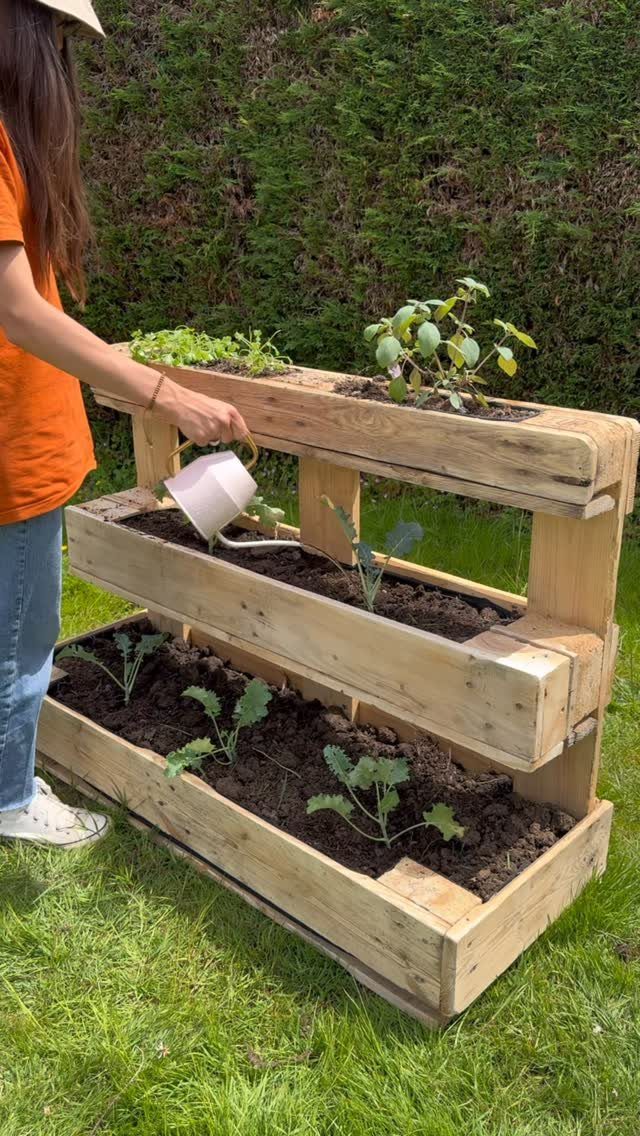
Shipping pallets become three-tier planters with an afternoon of work and a hammer.
Standard pallet builds run slats horizontal, pack soil between, and tuck plants into each level. A coat of exterior paint makes the wood last and ties the color to a fence or house trim.
Drainage matters most.
Pallet slats leave gaps; line the back and sides with landscape fabric to hold soil while water escapes. Without it, the bottom tier turns to mud.
This suits the gardener who wants raised beds without the lumber bill.
Pallets are often free for pickup at hardware stores or warehouses. Check for heat-treated stamps (HT), not chemical-treated (MB), before planting food in them.

【Extra-Large Height & Space for Climbing Plants】Standing at 65 inches tall—3 inches higher than standard versions—this trellis provides generous vertical space for vigorous climbers. The 51×17.7-inch frame with dense netting ensures even plant distribution and maximum sunlight exposure, effectively improving fruit yield and quality.

【Rust-Resistant Material】: Cucumber trellis is constructed with high-quality galvanized steel inner pipes and an exterior plastic coating, forming a dual-layer rust-proof barrier to ensure long-lasting durability

38-GALLON EXTRA-DEEP PLANTING SPACE:Featuring a generous 38-gallon planting capacity and overall dimensions of 27.4"(W) × 17.72"(D) × 72.83"(H), this planter provides deep soil volume for flowers, herbs, vegetables, shrubs and climbing plants while maximizing vertical gardening opportunities.
3. Container Gardening
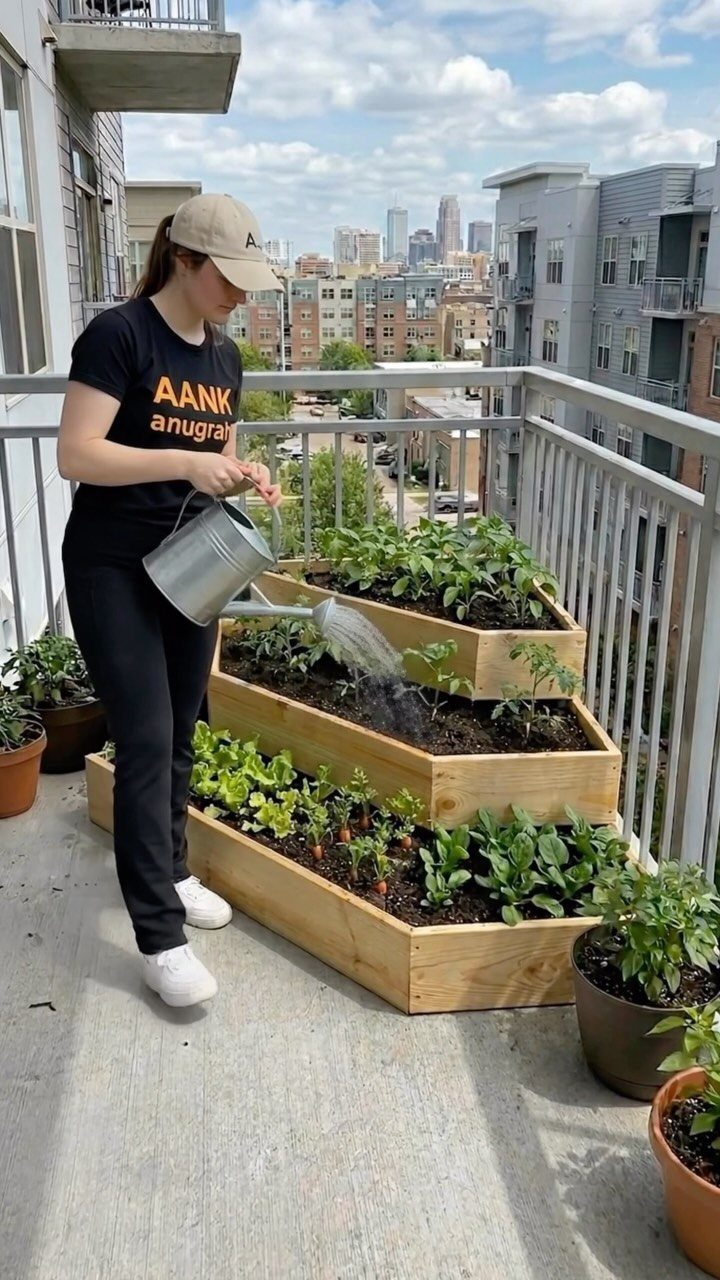
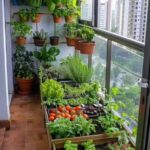
Tomatoes and peppers in pots on a balcony, moved for light, dumped when the lease ends. Tiered wooden planters on a balcony work anywhere you have sun and a flat surface, city or not.
Matching containers read as intentional.
Terracotta, black planters, galvanized tubs, wood boxes, stone-look: pick one material and repeat it. A random collection looks like storage, not design.
Drainage holes are non-negotiable.
A pot without holes drowns vegetables after heavy rain. Set pots on feet or shims so water exits freely.
Renters in the Northeast can run cool-season containers into October: kale, lettuce, parsley, chives, pansies, violas, ornamental cabbage. Growth slows but the display holds.

Multi-tier Storage: Compact 3-tier plant stand lets you separate herbs and small green plants to build mini garden displays. Neatly organize your foliage without taking up extra space

Durable Cedar Construction – Made from natural cedar wood with thickened panels for enhanced stability and weather resistance. Designed to resist warping and decay, offering reliable performance through multiple seasons of outdoor use.

【Perfect Design】: The 3-tier planter box design will not take up too much floor space, which can separate and organize the sections as well as grow different kinds of plants. In addition, the trapezoidal design allows all plants to enjoy full sunlight for better growth. The box bottom of each tier is equipped with drainage holes to help drain excess water and prevent root rot.
4. Raised Garden Beds
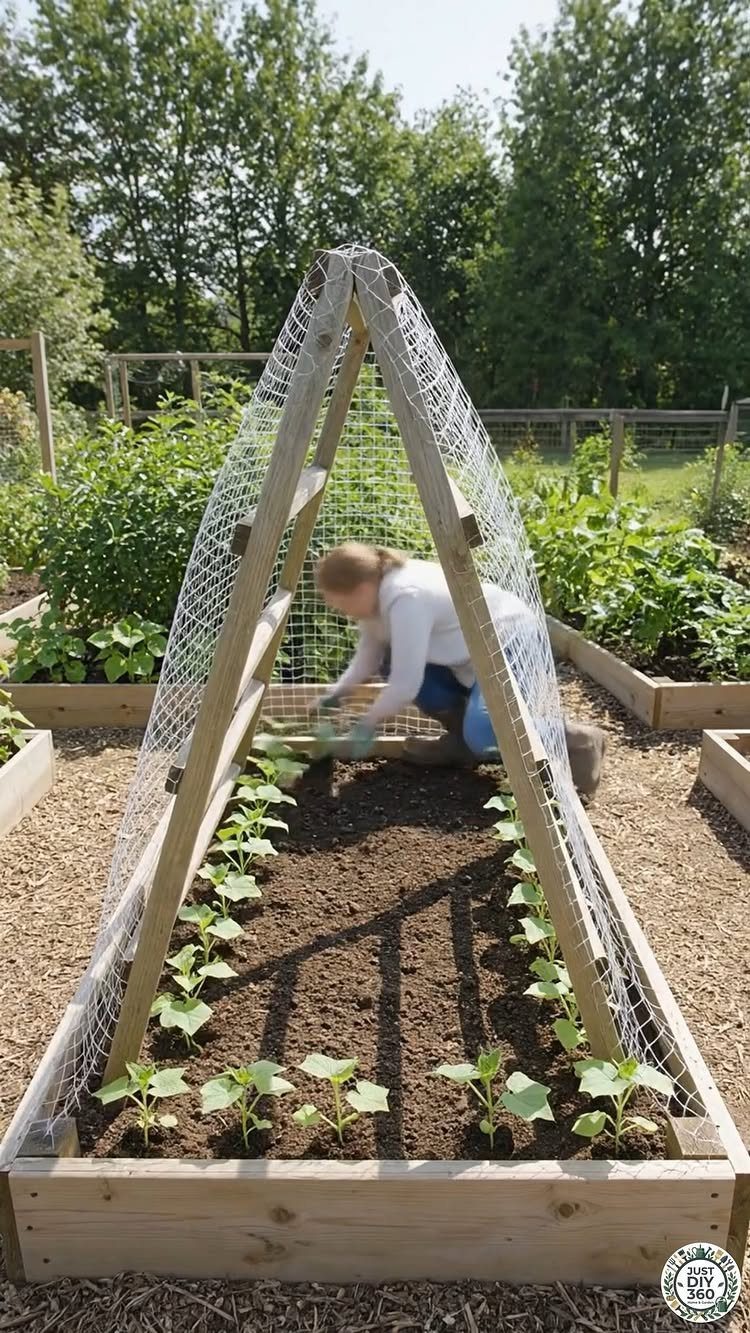
A wooden frame lifts soil above grade, defines the bed as a designed object, and keeps the gardener from compressing roots by walking through.
An A-frame trellis and net protection over a bed is one way to build; metal, stone, or composite boards work too.
Raised beds drain faster and warm earlier than in-ground soil. They also let you engineer the mix: compost, topsoil, and drainage material in proportions your native dirt won’t match.
Construction scraps, unaged wood, random fill: these rob nitrogen as they decompose and sink the bed unevenly.
For properties where the vegetable patch must read as garden, not farm, raised beds integrate with paths, fencing, and the house style more cleanly than tilled rows.

2X Larger Planting Area for Higher Yields - This extra large tomato planter grows more tomatoes, with a sturdy tomato cage that supports heavy vines for larger crops.

Self-Watering Convenience: Each planter has a built-in water reservoir that delivers consistent moisture to roots for up to a week, reducing frequent watering. Ideal for busy gardeners and vacations, it helps maintain healthy plants.

Scientific Design: Bottom Water Reservoir and Air hole circulation system that provides ample moisture to the plants. This reservoir acts as a constant water source and oxygen, promoting healthy root development and overall plant vitality.
5. Keyhole Gardens
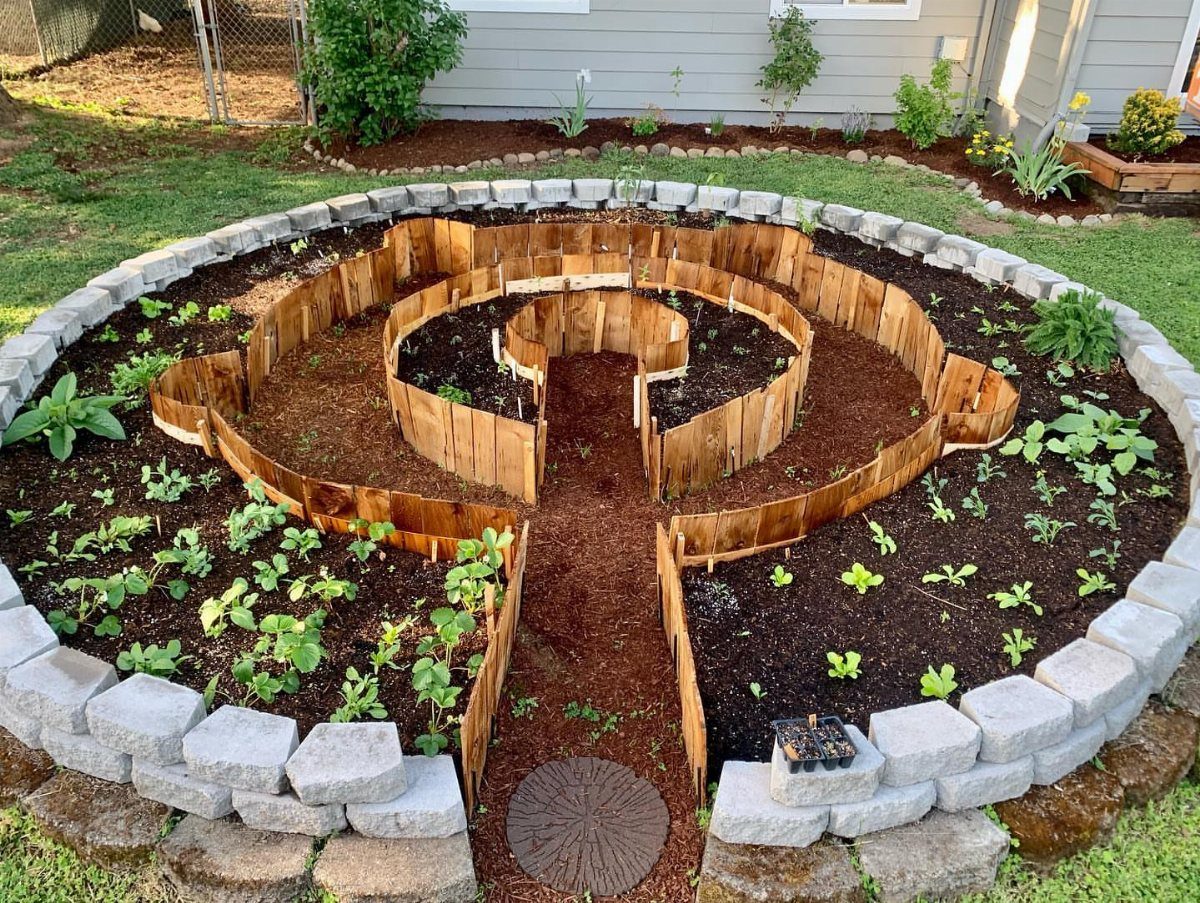
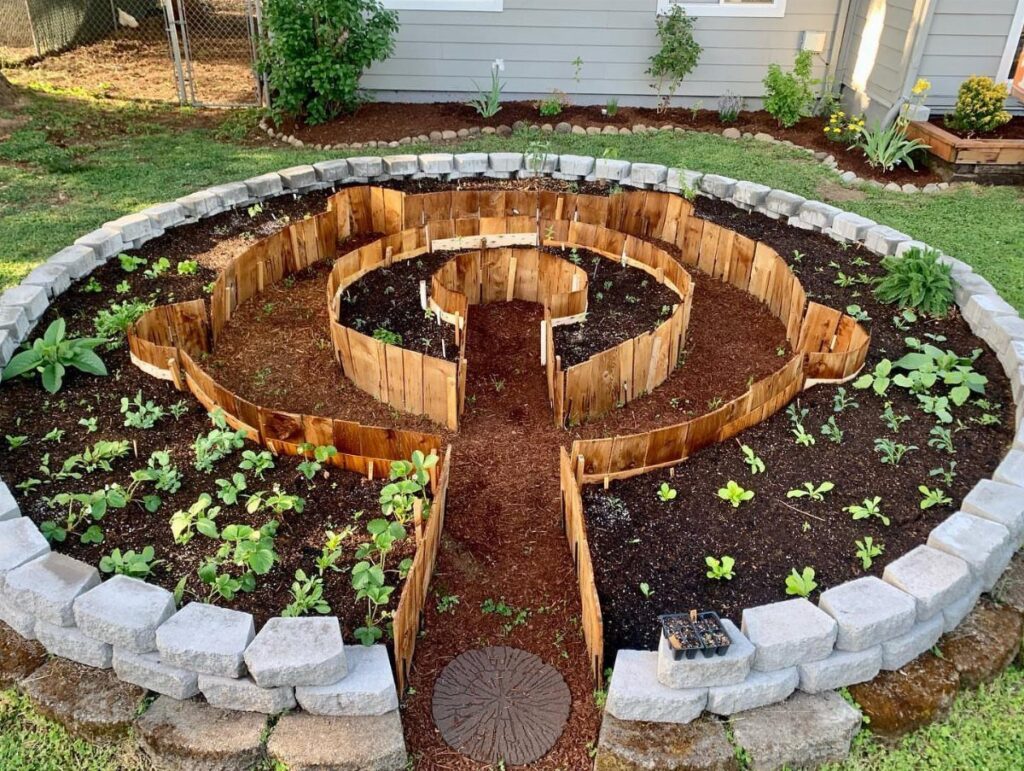
A circle of stone and wood with a notch cut inward, just wide enough to stand in.
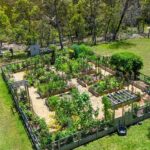
From that central point the gardener reaches every inch of soil without stepping on it. Tiered levels and a keyhole path from above are the classic form.
The traditional center holds a compost basket, fed from the path and leaching nutrients outward. This is optional but elegant; the shape itself is the innovation.
Circular beds suit small spaces where rectangles would feel mechanical.
The curve reads as garden design, not utility infrastructure. Stone block and wood slat, or all metal, or rammed earth: the geometry carries the idea.
Build to a diameter you can span with your arms. Any wider and the center becomes dead space you lean toward but cannot tend.

【Package included】:Crafted from robust hollow steel, this garden stakes features a fade-resistant green plastic coating, offering reliable protection against wind, rain, and rust. This Trellis for Climbing Plants Outdoor comes complete with everything you need to get started: 17pcs metal stakes, 8pcs T shape connect pipe, 2 A-shaped connectors, and a 0.9x1.8meter bird net.
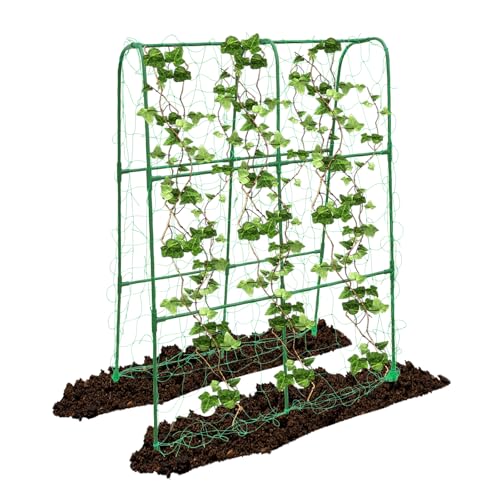
U frame Vegetable Trellis -- Dimensions (W x H):80 x 120cm / 31.5 x 47.5inches, nylon garden netting included
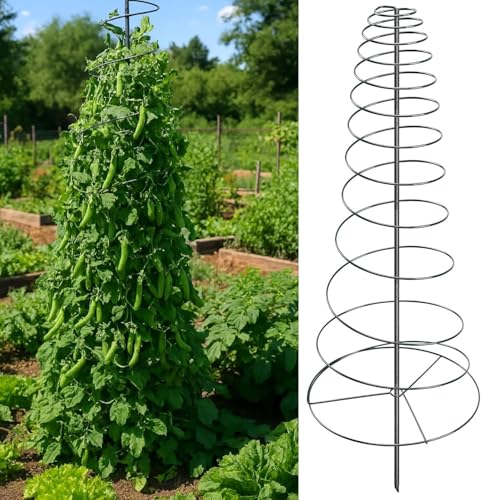
Heavy-Duty Metal Trellis: Rock-Solid Support for Climbing Plants - Made with 0.6mm thick stainless steel and a 0.63-inch reinforced center pole, this garden trellises stands firm through wind and rain. Perfect for pole beans, snap peas, tomatoes, cucumbers, and flowering vines like bougainvillea and morning glory, it provides season-long stability and prevents your plants from falling or bending.
6. Beds Connected by Pathways and Trellises
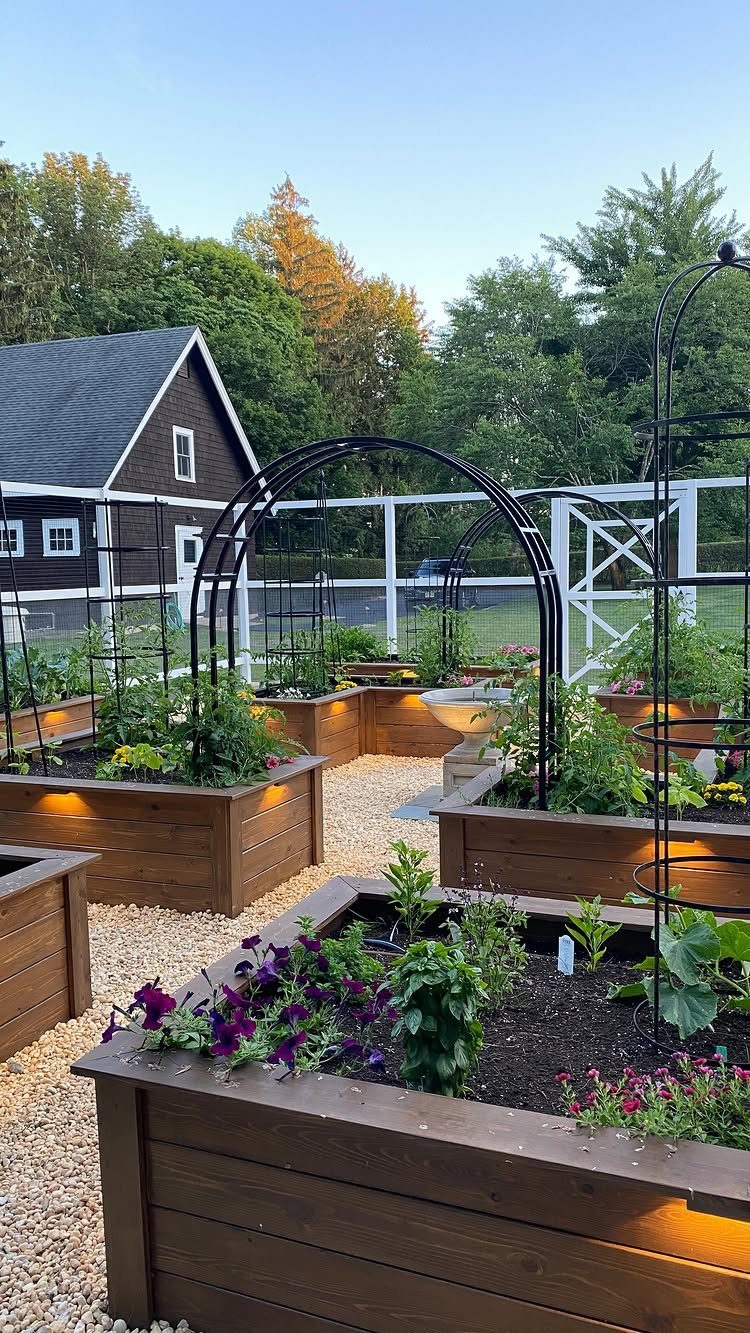
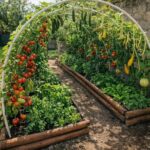
2 beds become a room when gravel runs between them and a black metal arch rises overhead. Raised wood, pea gravel paths, trellises ready for climbers, and lighting along bed edges turn separate beds into one working garden.
This is incremental by nature. Start with two beds and one arch.
Add paths, lighting, additional trellises over seasons as budget and time allow. The design philosophy is coherence, not completion on day one.
Path width matters. Gravel or pavers need to carry a wheelbarrow comfortably; anything narrower and you are stuck carrying soil by the bucket.
LED strips under bed edges, solar corner lights, or string lights extend use into evening and shift the space from production to destination.
The gardener building toward something, rather than solving for this season only, gets the most from this approach.

High-Yield, Premium Quality: The 3-tier hydroponic growing pipes with 108 planting sites, promote plant growth. It maximize space compared to soil cultivation. Cleaner, more sustainable, and ideal for growing lettuce, fruits, and flowers at home, greenhouses

7. Integrated Edible Landscape Bed
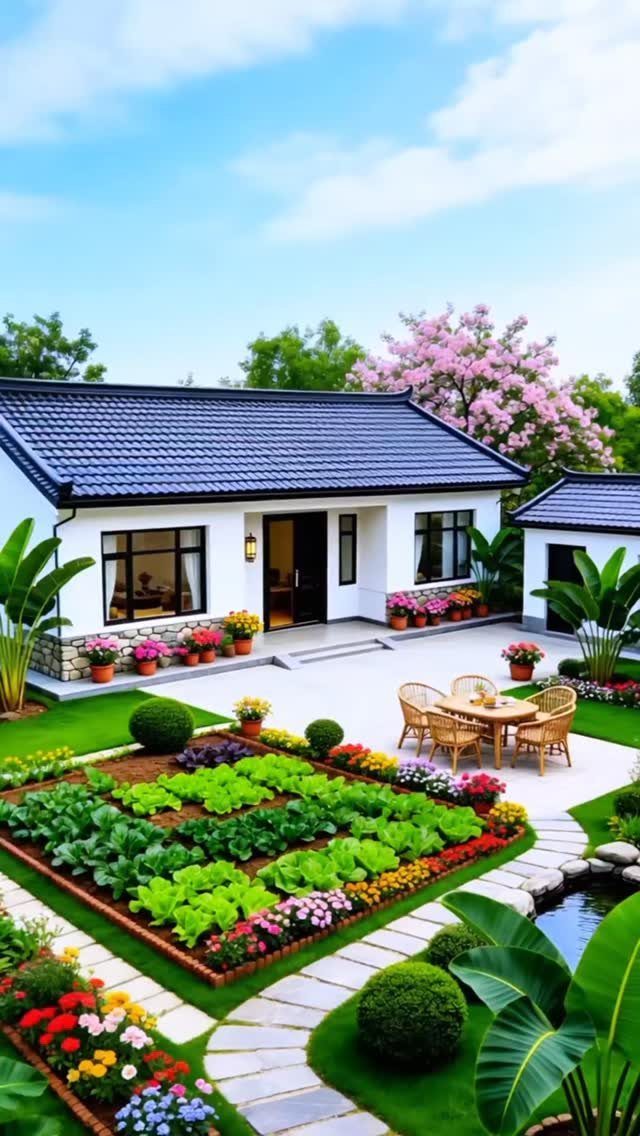
A vegetable bed reads as landscape when its edges are sharp and its neighbors are flowers, not more vegetables.
A rectangular plot keeps the lawn on one side and a curved stone path on the other, with a flowering border softening the boundary between them.
Raised construction keeps the geometry clean and the soil controllable. Boston-area designers favor this for exactly that reason; the bed stays intentional all season instead of dissolving into weedy rows.
Cool-season borders of lettuce, kale, parsley, chives, and pansies bridge the gap between production and display. Swiss chard, purple basil, thyme, and calendula add color where flowers would otherwise go.
The trade is harvest space for visual coherence. A bed half flowers produces fewer tomatoes but belongs in a yard that guests walk through.
“If you want vegetables in your landscape but lack the room for a dedicated raised bed, don’t jettison the idea of growing your own edible plants,” she writes.

Sturdy solid wood construction: This planter box with trellis is made from FSC-Certified wood, which is sturdy and eco-friendly. With an interior size of 26.8 ” L x 13.4 ” W x 8.3 ” H, the large grower box offers plenty of space to grow a variety of plants, whether fruits, vegetables, herbs, or flowers. Our plant bed is made from FSC-Certified wood

The GreenStalk Vertical Planter is proud to be designed and manufactured completely in the USA. Made with high quality, BPA-free, UV-resistant plastic with a 5 year warranty.

【Upgraded Tower Design】The tomato planter box height is 58in, features a unique 4 corner tower design, provide strong support for the plants,vine,vegetables,flowers in your garden, reduce the situation that the branches break due to heavy weight. This design maximizes the vertical space, allowing plants to grow taller and spread out.
8. Garden Beds with Water Feature
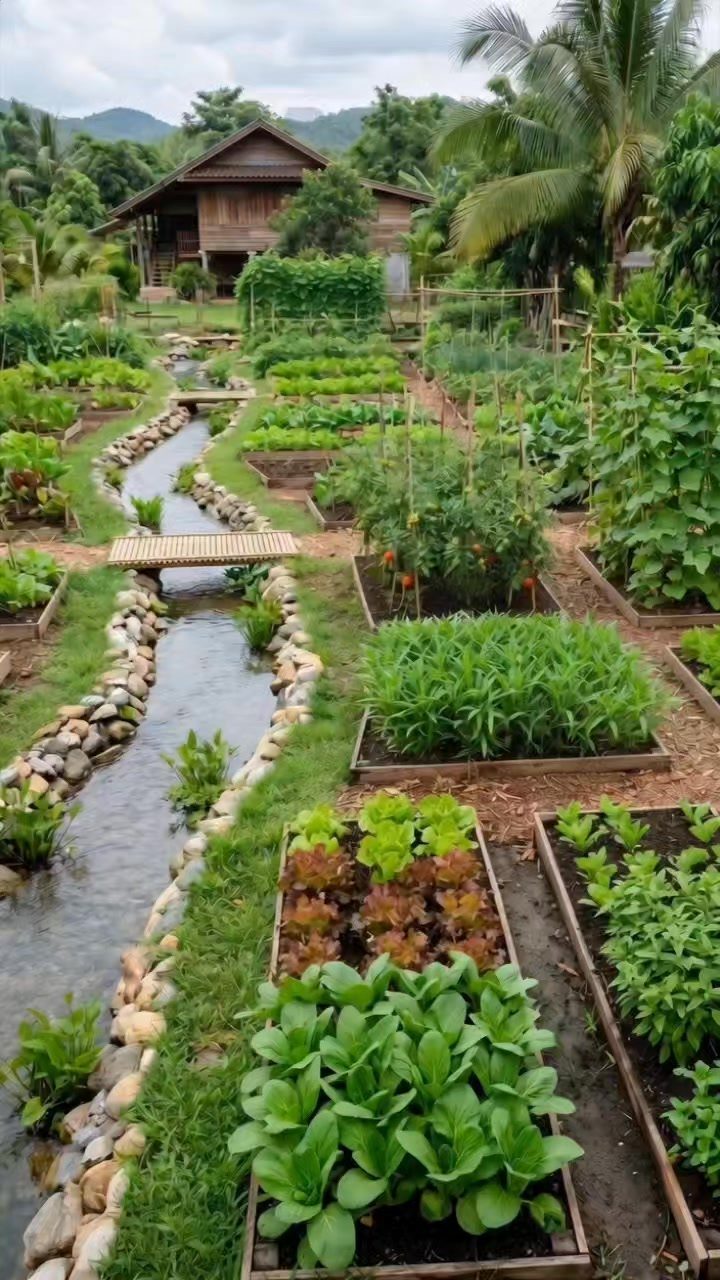
Stone-lined water moving between raised beds turns a vegetable plot into a garden you walk through instead of work in. The stream itself becomes the path; small bridges carry you over it from bed to bed.
This is the long focal bed idea pushed further.
A single raised wooden bed already draws the eye; water parallel to it multiplies that effect and adds sound. Tall crops center-back, lower herbs cascading forward, the layering stays the same.
Lining, grading, and circulating water properly takes planning, and a stream that goes stagnant becomes a mosquito breeder. Solar pumps exist for off-grid flow; a simple recirculating fountain between 2 beds gives some of the effect with less commitment.
The gardener building toward a destination space, not just this season’s peppers, is the one who gets here.

Space-Saving 3-Tier Design: The 3-tier planter box design will not take up too much floor space, which can separate and organize the sections as well as grow different kinds of plants. The trapezoidal design allows all plants to enjoy full sunlight for better growth. The box bottom of each tier is equipped with drainage holes to help drain excess water and prevent root rot

🌼Folding Design & Easy Setup🌼 No tools or accessories required. So simple its structure it is that there is no need to worry about how to put all parts together. By following the detailed instruction, just need unfold the frame and put the bottom panel into the planter. More, folding design makes the wooden planter box easy to store and save much space.
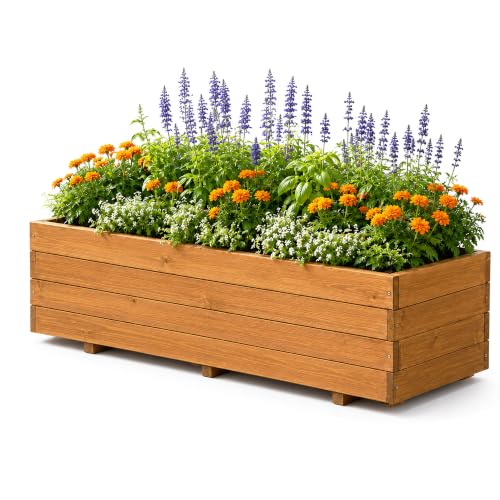
[ Solid Fir Wood Garden Box ]: Made by ScienGarden from solid fir wood, this wooden planter box features a smooth water-based paint finish for a cleaner, sealed surface. The natural wood look makes it suitable for outdoor garden decor, patios, porches, balconies, and backyard spaces.
Planning and Placement
Vegetable crops need at least 6 hours of direct sun daily to produce; anything less and you’re already behind.
Winter sun sits low and angled, so beds on the south side of a tall fence or wall still catch enough light to grow.
Lay drip irrigation tubing before the beds go in; threading it around plants already growing in July is slow, messy work.
Proximity to water matters as much as proximity to sun. A bed parked far from the nearest spigot, rain barrel, or irrigation line gets skipped more often than I care to admit.
Distance from the kitchen is the hidden variable.
Even 30 extra feet becomes a barrier on busy evenings. The garden you walk past gets harvested; the one behind the garage does not.

SELF-WATERING SYSTEM: Self watering tomato planter with trellis has a built-in reservoir that ensures the plants receive consistent hydration. The bottom grid design utilizes the siphon effect, allowing the roots to pump water efficiently, minimizing the risk of under-draining or over-draining. There is a water injection port on the side, and the right amount of water is poured into the sowing box, without daily watering.

SELF-WATERING SYSTEM: Self watering tomato planter with trellis has a built-in reservoir that ensures the plants receive consistent hydration. The bottom grid design utilizes the siphon effect, allowing the roots to pump water efficiently, minimizing the risk of under-draining or over-draining. There is a water injection port on the side, and the right amount of water is poured into the sowing box, without daily watering.

Upgraded Self-Watering System: Tired of daily watering? Our self-watering planter features a built-in reservoir and a unique bottom grid design that utilizes the siphon effect for consistent hydration—preventing both root rot from overwatering and drought stress. Ideal for busy homeowners and frequent travelers who need low-maintenance planters.
Maintenance Considerations
A vegetable garden is not passive. A garden designed to run itself becomes a garden that runs itself down.
Plan who monitors irrigation, keeps beds tidy, refreshes seasonal plantings, and manages plant vigor before the first seed goes in.
That support may come from you; it may come from a broader maintenance program. Either way, decide early.
Plan the layout so one crop slides out and the next slides in; the switch from lettuce to tomatoes goes smoother.
Structural plantings and clean bed edges keep the garden orderly even as the mix of plants changes and certain areas peak while others decline.

【Package included】: This Trellis for Climbing Plants Outdoor comes complete with everything you need to get started: 17pcs metal stakes, 8pcs stainless wire connect pipe, 2 A-shaped connectors, and a 0.9x1.8meter Bird net.
Materials Selection
Front yard beds are visible all year. When frost kills the tomatoes, the beds, paths, edges, and trellises stay right where they are, still visible.
Cedar and other rot-resistant woods look warm and hand-built.
Galvanized steel boxes look factory-fresh and sharp. Stone and brick look like they were meant to be there forever, and cost like it too.
Composite lumber and high-quality modular kits are additional options. Bargain beds that bow and split after one summer look worse than no beds at all.
Avoid questionable reclaimed wood, old railroad ties, utility poles, or anything that may leach unsafe substances into edible soil.
A liner keeps soil from washing through gaps in metal or wood, but punch holes in it or water pools and rots roots. Soggy soil damages roots.
Kits should look decent sitting empty in March before anything’s planted. Clean corners, matching hardware, and stable frames matter.
Seasonal Considerations
Lettuce, spinach, and peas handle light frost and go in weeks before the tomatoes go out.
Tomatoes, peppers, eggplant, and melons need soil that has warmed and no more nights below freezing. Frost charts list averages, not promises; I have planted too early and paid for it.
Some neighborhoods allow them but regulate bed height, fences, structures, or visibility.
Frequently Asked Questions
What is the 70/30 rule in gardening?
The 70/30 rule means planting about 70 percent of your garden with reliable, proven plants that do well in your climate and soil, and reserving the remaining 30 percent for experiments like new varieties or unfamiliar crops.
This keeps the garden productive while leaving room to learn. A similar idea, the 80/20 rule, puts most effort into the basics that drive results: sun, soil, water, plant choice, and neat edges, with the rest going to style details.
What is a good layout for a vegetable garden?
Tall crops go toward the back of the bed, mid-sized ones in the middle, and smaller plants in front or as a border.
Paths need to carry a wheelbarrow comfortably; anything narrower and you are stuck moving soil by the bucket.
What is trending in garden design?
Modern vegetable garden design trends toward integrating production with visual coherence, not treating the space as purely utilitarian.
Raised beds, clean edges, and flowers mixed with vegetables keep the garden intentional all season. Paths, trellises, and lighting turn separate beds into a destination space rather than just a work area.
What are the top vegetables to grow in a garden?
Lettuce, kale, cherry tomatoes, beans, carrots, spinach, and peas are the workhorses I plant every spring, with parsley, chives, thyme, and basil tucked in wherever I find open soil.